Down by the river – an afternoon at Sambrook’s Brewery (part one)

Image

When we meet up with Duncan Sambrook, the founder and Managing Director of Sambrook’s Brewery, he is still reeling from a Scandinavian takeover of the brewery bar. The previous evening a gathering of fifty Danes downed an astonishing four firkins – nearly three-hundred pints – of their seasonal Battersea Rye ale. They have also, it transpires, pinched his bottle opener.

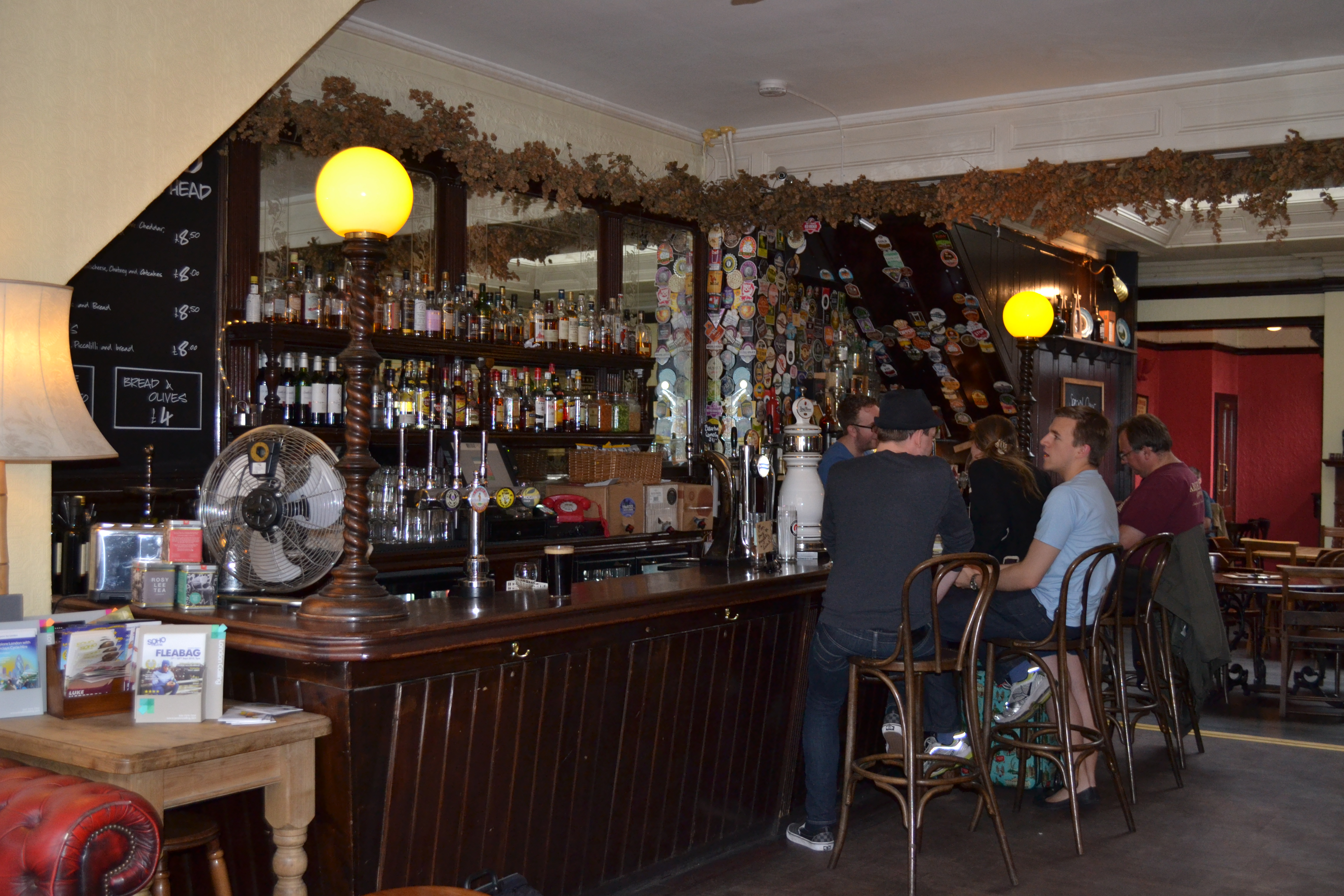
Despite the Scandi marauding, Duncan is in good spirits as he welcomes us to the brewery in Battersea, south west London. Sambrook’s is one of the more mature players in the recent London brewing boom, and has just celebrated its fifth birthday with an event at Morden Hall Park, Beer by the River. Unlike many of the trendy craft breweries popping up almost weekly in east London, Sambrook’s has a more traditional image, brewing a small but popular range of cask ales and supplying around 300 London pubs.

When Sambrook’s launched in 2008, the London brewing scene certainly wasn’t the hot property it is now. “I remember Christine Cryne came down with the [CAMRA] London Tasting Panel to do a tasting when we first opened, and said ‘it’s so nice to have a new London brewery, we haven’t had anything to get our teeth stuck into’,” says Duncan. “I saw her the other week and she said ‘gosh, we’ve got a backlog of about ten breweries to get through!’”. So what inspired him to make the radical career change from accountant to brewer?

“It was one of those slightly pissed ideas, sat with a few friends at the Great British Beer Festival. We’d done this crawl from Cornwall up to London, going from brewery to brewery. We got to London and there was just nothing,’ Duncan tells us as we pull up a barstool. “We looked at the market and saw outside of London there were breweries starting up and being successful. My home county is Wiltshire and there’s about seven breweries there, in a tiny county – it’s only about 300,000 people. We thought if that’s a trend, pushing towards local breweries, perhaps that’s something Londoners could catch onto.”
wandleWith support from family and friends, and with Duncan’s background in capital markets, he was well on the way to bringing his plan to fruition, but it was a fortuitous meeting with another City-worker turned brewer that sealed the deal. David Welsh, formerly of Ringwood Brewery, had sold his share to Marston’s and had some money to invest. “David came on board as a consultant to help us put the kit together and set the recipe for our first beer,” says Duncan, pouring us all a glass of Wandle, Sambrook’s flagship best bitter. With two business minds behind the product, a lot of thought went into its production: “we noticed that there was a really crowded market for the 4.0-4.5% sector. So we crept in with 3.8%,” Duncan explains, pointing out that this made it an attractive session ale for keen drinkers. “We tried to make it more golden than brown, so we’ve got a sunny golden sunset colour. We wanted a bitterness that was complementary to the sweetness”.

Described on Sambrook’s own website as ‘quaffable’, does Duncan think that some beer boffs might find Wandle a bit… bland?

“I know a lot of beer drinkers have said it’s not complex enough,” he admits, “but I think the thing with Wandle is it brings to bring people from lager into the category. I think of it a nice entry-level cask ale which allows people to get access to beers with more complexity.”

Unlike other breweries who have a high turnover of different beer styles and brands, Sambrook’s bided their time before releasing their next product – a whole year, in fact. But when they brought out the darker premium ale Junction in 2009 to mark their first anniversary, it certainly stood out from its older sibling. “Junction was everything Wandle was not. Junction is 4.5%, which changes the flavour profile quite a lot. It is packed with lots of Crystal malt, and we used Challenger hops for the bitterness. Challenger is not as harsh as the Boadicea used in Wandle so you get lots of rounded character.”

Image

It is obvious that a lot of thought goes into hop choice at Sambrook’s. Their passion for localism means they use British hops such as Goldings, Fuggles and Northdown in every beer they brew, apart from the next beer on our tasting tour – the Pumphouse Pale Ale. This beer, a traditional English pale ale at 4.2%, uses a mixture of hops added throughout the brewing process to produce the bitterness and aroma you would expect of this type of beer. “With most of our beers, we add our bitterness hops right at the beginning of the boil and our aroma hops right at the end. Aromas are much more difficult to fix into a beer, so if we carry on boiling they’ll go up the flue and you won’t be left with anything,” explains Duncan. “So with Pumphouse Pale Ale we added the initial bitterness hops, British Admiral, right at the beginning to give it its base character. Then right towards the end we added the other bitterness hops, First Gold, in four stages. We find is that it gives you that lingering finish to the beer.” And how do they get that zingy pale ale nose we all know and love? “ Right at the end we add New Zealand Hallertau and Celeia hops. Not many breweries use New Zealand Hallertau. It’s a German hop which was taken down under and cultivated there to develop a very different characteristic. Celeia is a Slovakian hop.”

Pumphouse Pale Ale was initially devised as a seasonal beer to be sold in the summer, but its huge popularity meant that Sambrook’s decided to release it as part of the permanent range. Its success encouraged the brewery to continue with their seasonal programme, which lead to the development of the beer of choice for Danish invaders – Battersea Rye (4.5%). This is the first beer that Head Brewer Sean Knight has taken full responsibility for and Duncan is delighted with the results. “Brewing is something you have to do 100%. After three months in the brewery I worked out I couldn’t do that, because you’d have a customer turn up or a phone call for a sale and it interrupts the brewing, so I hired somebody to look after it for me. Sean is fantastic; all I said was ‘I think we should do a rye beer – go away and work it out!’, and I think he’s done a really good job for his first brew on his own. He can take a lot of credit for that.”

Is it difficult to brew with rye, ICIP wonders? Not many breweries produce a rye beer. “Sean was bit worried about brewing with rye because he’d not done it before, and it has this ability to really clog up your mash tun so the maximum that people usually brew with rye is about 20-25%. He decided to err on the side of caution and do about 12%.” So how do Sambrooks approach a new and potentially troublesome ingredient such as rye with no experience of brewing with it before? “With all our beers we do a lot of research and spend a good 8 weeks working out what ingredients to use and talking to our suppliers. We understand that our suppliers know an awful lot about brewing. Certainly if you go to a specialist rye supplier they know what kind of flavours you are going to get.”

powerhouse-porterAnother popular seasonal is Sambrook’s Powerhouse Porter (4.9%), named after the iconic Battersea Power Station. Once Duncan has relocated one of his wandering bottle openers, we crack open a couple of bottles. “The porter is not out in cask yet, but it is a lot better in cask,” he says. “That’s the beauty of cask ale – you get the secondary fermentation and it changes the flavour. For the last two years we’ve kept a cask of porter back from the last brew for the whole eight months in between and then taste-test it alongside the first brew of the following year. It mellows the flavour so much and makes it a lot more rounded and you lose a lot of the harsh edges that some of the hops provide when you age it for that long. It’s unbelievable how different it is.” Hops are not the first thing ICIP thinks of when we drink a porter, so we are stunned by Duncan’s revelation: “you wouldn’t know this from the taste, but this has more hop in it than the pale ale. The reason for that is, the sweeter the beer becomes the more hop you need to balance it out.”

Bitter, pale ale, porter… Sambrook’s seem to be going down the traditional route with no super-strong triple-IPAs or gimmicky flavours in sight. “I think a lot of other guys in the brewing in London in the moment have come at it from a brewers’ perspective, and they want to brew the best possible beer, the most eclectic mix of flavours. To me that’s almost a game of roulette because you don’t know if it will be a success or not. When we release a beer we do a lot of research to work out if this is something we can sell. We have to because if we don’t sell this it’s two or three grand down the tube.” Does this mean the brewery is adverse to trying anything new? “Our plan is to use our bottled products as our more experimental area,” says Duncan. “The problem with cask ale is that not only do you need to sell it into a pub, but that pub needs to sell it on. You have a tight window. If it’s not popular, the beer goes off, and if that happens regularly they won’t take any more beer from you. It gives your beer a bad reputation. So for cask ale I would always err on the side of caution and try to make something that will appeal to the majority of people. If you’re doing bottle you can do whatever you want, because a bottle will keep and get better.”

To prove this point, Duncan brings out some bottles of Sambrook’s No 5 Barley Wine. At 8.2% this is a big departure from Sambrook’s usual session ales. They produced it for their fifth anniversary and intend to make it every year from now on. ICIP asks what is involved in making a barley wine as opposed to a standard cask ale?

“Barley wines are usually at least 8%. The British style is lighter, whereas the American styles are much darker. So it’s one of those styles which is more defined by its alcohol content than the the ingredients,” Duncan tells us. “It has a longer fermentation and different yeast to a normal ale. We can get up to 10% on our own yeast. We fortified this so we ran the mash tun and then added some brewing sugars to give it enough sugar to keep it going. Sean decided he wanted to get a very earthy, grassy character to the beer, so he used Northdown and Challenger to get this aroma. I think this will be fantastic in a couple of years.”

Sambrook’s are obviously looking to the future. They have just invested in a bottling plant in Kent with two other breweries – Ramsgate and Westerham – and now bottle their whole range. As Duncan has already intimated, this will free them up to try more experimental recipes such as the barley wine. They have also scored a deal with Tesco to sell Wandle in selected stores in the capital. Does this mean they’re going to make a move from local boozer to supermarket supremacy? “Draught ale is still 90% of all our our production. We’ve gone from bottling 2% to now almost 10% but that’s a big step change for us. Having our flagship product somewhere like Tesco supports our marketing initiatives. I’m thinking about the people who aren’t necessarily that engaged with beer but like to go to a pub and drink a local beer. Having Wandle not just in their local pub but also their local supermarket reinforces that we are your local brewer and that’s an important message for us.”

Read on for part two…

– PS
Baking With Beer: Ale Bread

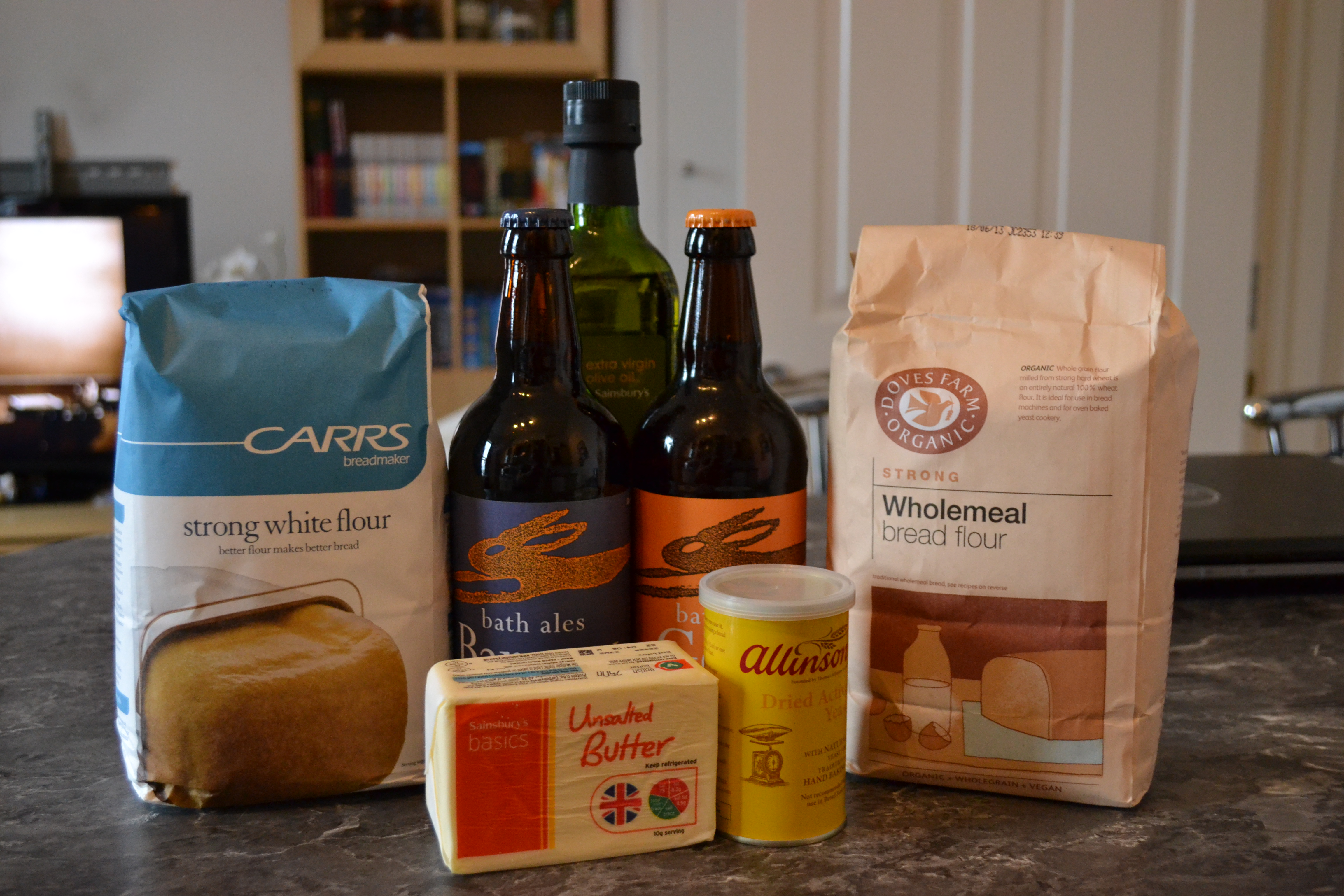
Beer and bread are natural bedfellows – they both need yeast to bring them to life. If you use a beer which still has dormant yeast in it, like many of the bottle-conditioned craft beers around today, you can make bread without additional baker’s yeast. But for our purposes, we went with a recipe which used a leavening agent. This freed us up to pick any beer we liked.

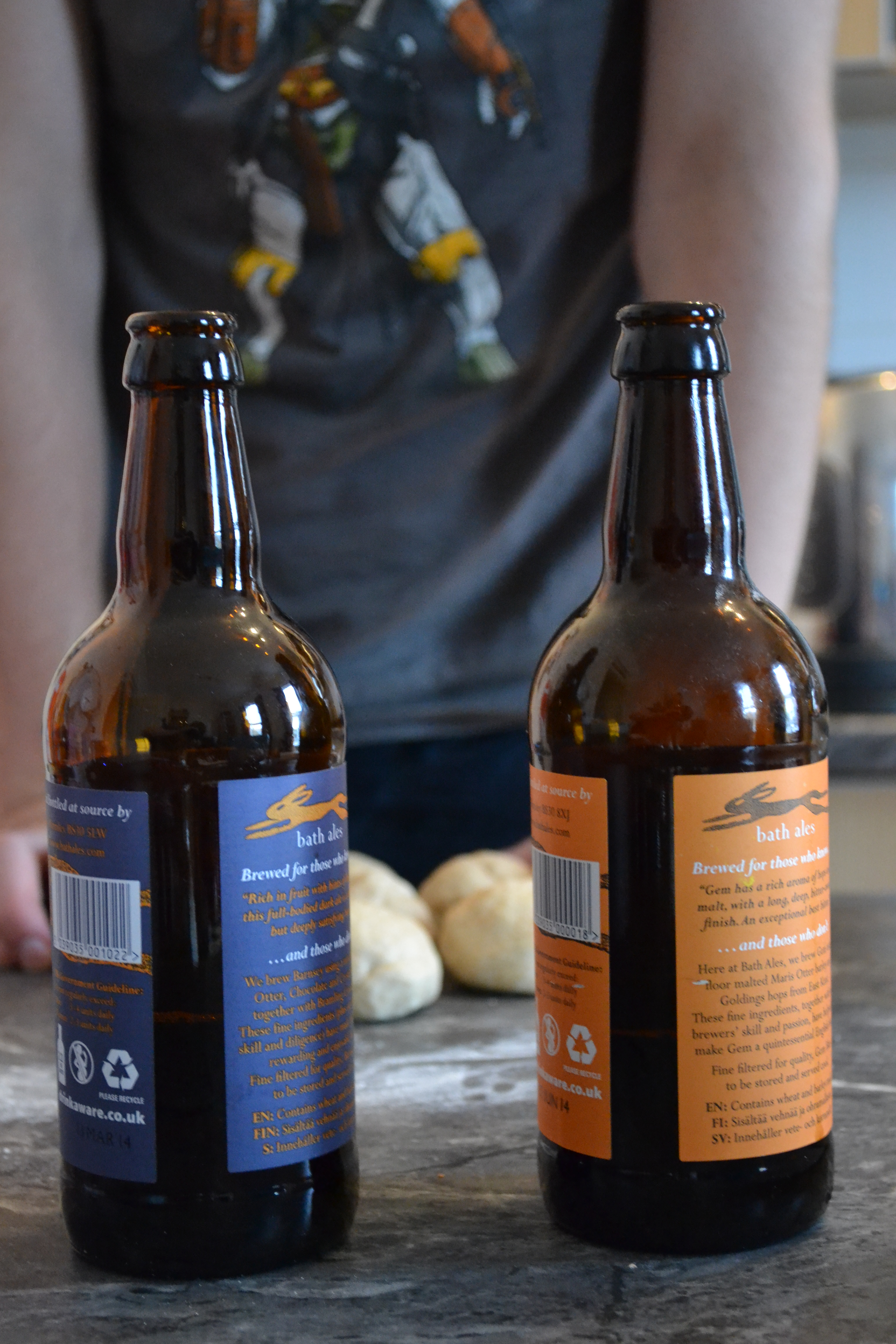
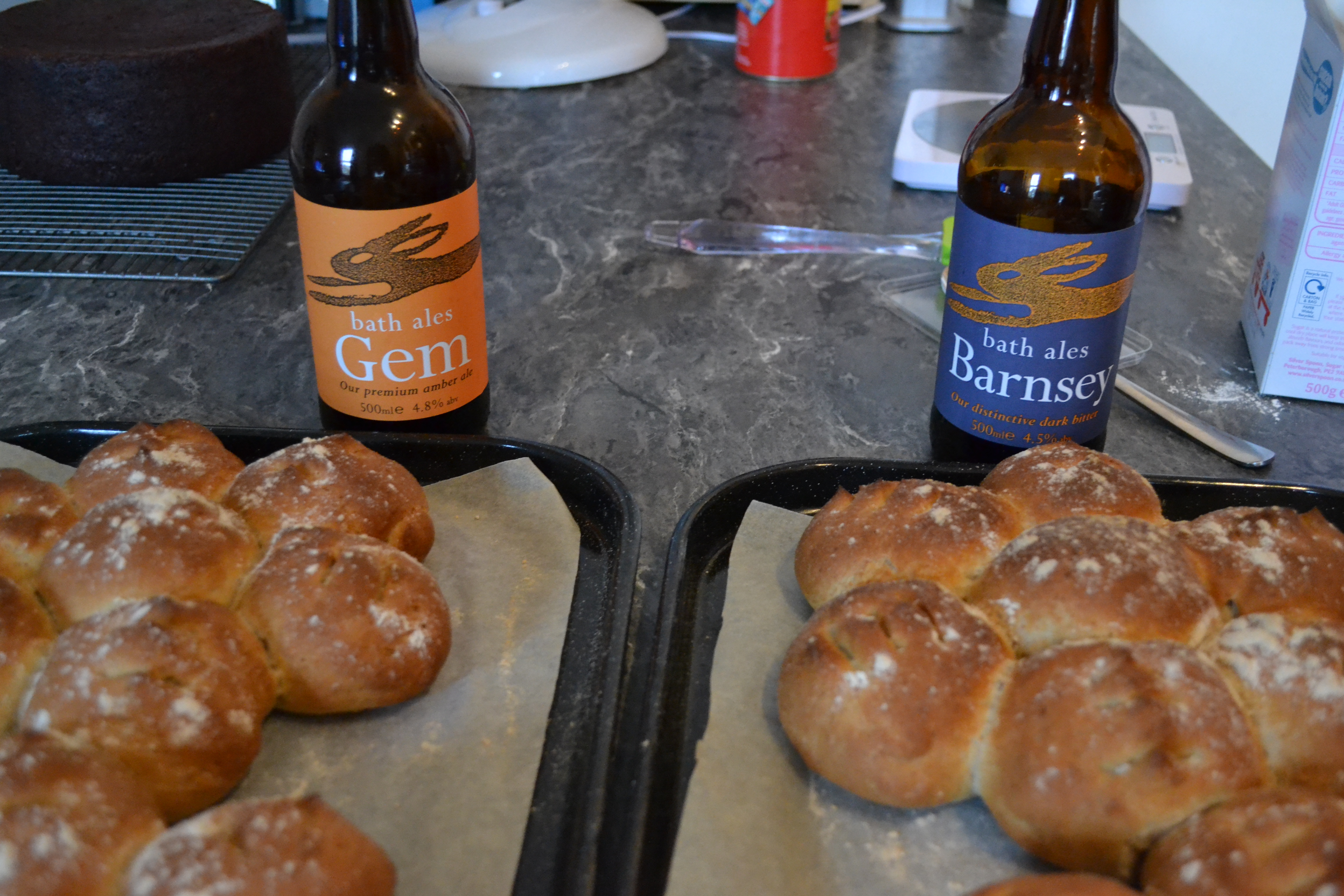
To mix things up a bit, we thought we would split the recipe and try two different beers to compare the flavours. After some deliberation we chose two ales by Bath Ales: Barnsey and Gem. Barnsey (4.5%) is a dark bitter with a distinctive toasted flavour, whereas Gem (4.8%) is an amber ale with more of a sweet/bitter balance. Both are made with English hops – Bramlings Cross and Goldings respectively. So how would these two different ales differ when baked into bread?

DSC_0045We used a Paul Hollywood basic bread recipe from his How To Bake book.

We started by weighing out a mixture of white and wholemeal bread flours.

DSC_0054

Add salt, yeast and butter, keeping the salt and yeast separate so the former doesn’t retard or kill the latter.

DSC_0096

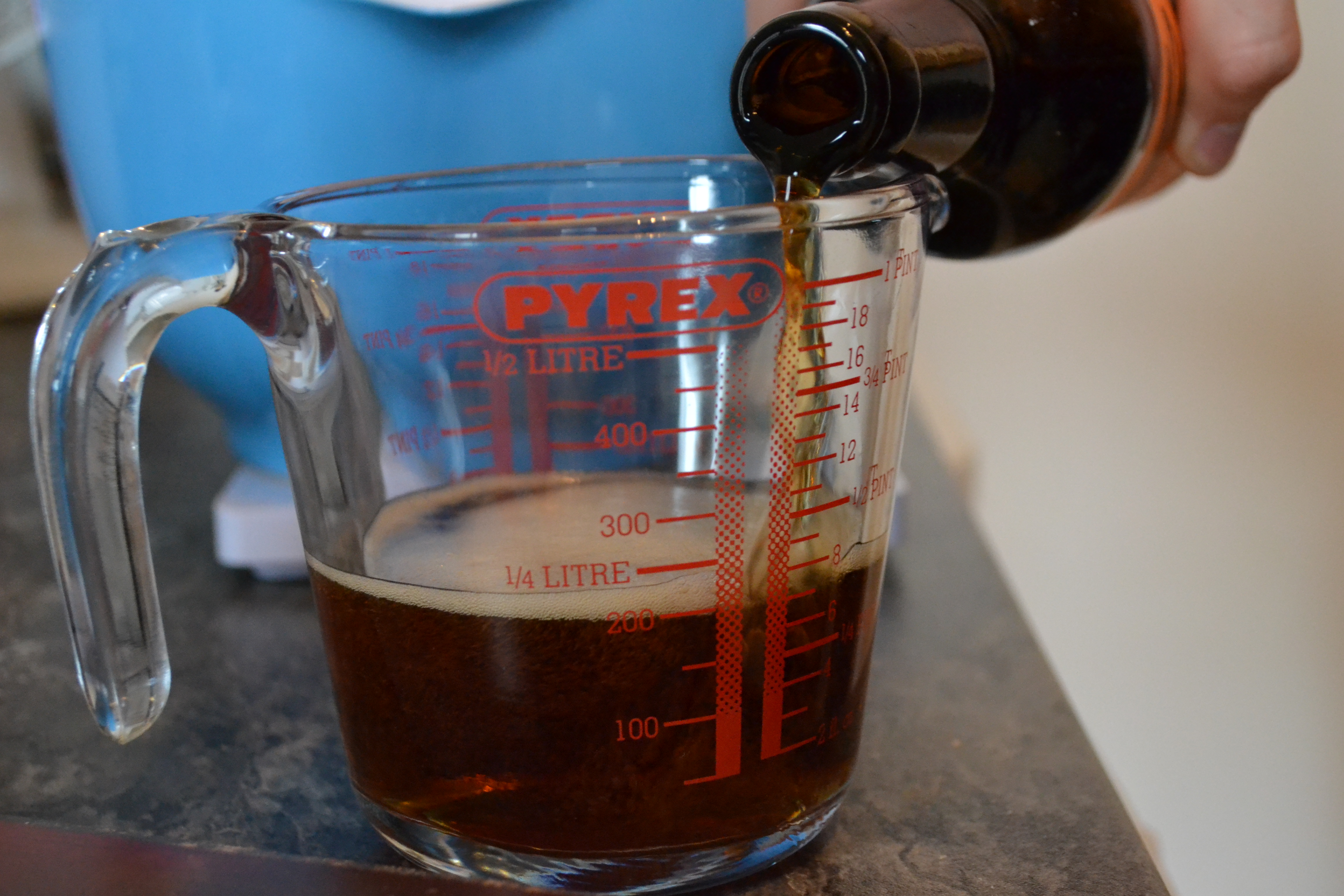
Next – time for the beer!

DSC_0084

DSC_0062

Add the beer to your mixture and work it into a dough.

DSC_0070

Time to take out some aggression and knead that sucker!

DSC_0076

Then prove for a couple of hours until it’s doubled in size.

DSC_0083

DSC_0116

Now you can knock it back and shape it. We made little tear-and-share rolls.

DSC_0102

DSC_0112

Those little rolls have to go through their second proving for about an hour. Then we’re ready for the oven!

DSC_0121

A little tray of water in the oven to steam and crisp up our crust, and there you have it!

DSC_0130

So which beer made the better bread? It has to be said, for us it was Barnsey all the way. The Barnsey dough got a noticeably better rise than the Gem on both proves and it had more flavour when it came out of the oven.

DSC_0132

So there you have it – ale bread! We’re definitely going to try some other beers in our bread – seeing how well the darker beer worked we might try going even darker next time… maybe a stout? Worth a shot!

Have you baked bread with beer? What did you use and how did it turn out? Get in touch and let us know!

DSC_0131

– PS

Down the hatch: beer goes underground

CAMRA’s Good Beer Guide 2014, published this week, revealed that the number of breweries in London has doubled in the past year. How local can beer get? And are micro-brew-pubs the latest way to get in on the craze? 

What’s bubbling away beneath the bar at your favourite boozer?

DSC_0011

If you’re lucky enough to live near one of England’s more ambitious pubs you could be waiting for your pint on top of the next beer phenomenon: pub-run microbreweries. This weekend It Comes In Pints went underground at The Queen’s Head pub in Kings Cross, central London, to discover the future of local drinking beneath an unassuming hatch behind the bar.

DSC_0006Pausing but briefly to put away Redchurch Brewery’s Shoreditch Blonde and Weird Beard Brew Co’s Black Perle, ICIP gamely scramble down the cellar ladder after pub owner and brewmaster, Nigel Owen. It’s jacket-discardingly hot in the small underground brew room, around which various enormous vats bubble and gurgle alluringly. We’ve timed our visit just right: with barely concealed excitement, Nigel opens the lid on an enormous plastic fermentation vessel. The yeast has dropped – a sign, he tells us, that the brew is almost ready.

DSC_0002“That’s really exciting,” he explains. “Because the temperature has been quite variable in here it’s taken a little bit longer. When you ferment beer, the fermentation is usually on top, and when it’s ready, it kind of drops down to the bottom. So that beer is now ready. We can take the yeast out and it will be ready to serve after it’s spent some time in the keg.”

The Queen’s Head hopes to launch this – the first of its range of single hop beers – this week, at £3.50 a pint. They have used three new world hops – known for their citrus-y kick – think frosty, Californian Pale Ales – Citra, Cascade and New Zealand’s Pacific Gem.

“They all have distinct flavours, they are full of flavour. Pacific Gem isn’t really used that much in brewing, you don’t get many single hop varieties of Pacific Gem pale ales. So we’re just trying it to see how it goes, to see what happens,” Nigel adds, as ICIP spends a bit too long inhaling the smell of delicious post-fermentation beer. Because our own experience of home brewing extends to blowing up a vat of stout in the kitchen at university by drunkenly having at it before it was finished, we ask Nigel to take us through the brewing process step-by-step.

DSC_0004The brewery’s main equipment takes the form of three metal vats, sat in a pyramid against one of the walls. At the top stands the kettle, where “London’s finest” water is heated up, sometimes with the addition of tablets to de- and re-mineralise. Then grain is added – a crystal malt for a lighter beer, with some dark roasted malts for a ruby red colour. Water – to which hops has been added – “sparges” – mixes – with the grain to make wort. The wort boils, and hops are added at different stages – sometimes after 45 minutes, sometimes after five, sometimes after the boil (“dry hopping”).

That’s a lot of hop, ICIP observes.

“We want to get that killer pale ale,” Nigel explains. “That’s what it’s all about really. One really nice pale ale and we’re there. We want to make a really good pale ale and then we’ll crack on and try something else.”

Once the wort has been cooled it’s transferred to the fermentation tank for that all-important yeast-dropping-moment we intruded on earlier. We leave the heady warmth of the brew room for the cool of The Queen’s Head’s cellar to ask Nigel why he’s decided to make the jump from beer fan to brewer.

“I think little neighbourhood breweries are the way forward as more brewpubs pop up in London,” he tells us. “You don’t really want to be selling it off off-sales, because it’s so labour-intensive you’re not going to make any money out of it. So having on-sales and doing interesting stuff with it makes sense. We’ve got the pub, we’ve got the space. You know, what’s the worst that could happen?”

Well, it could explode, ICIP reflects. But this professional kit is a million miles away from our grotty kitchen set-up. About £10,000 worth of kit away, it transpires. And Nigel is right – a handful of London pubs, including The Cock Tavern and The Botanist, are already brewing and selling their own, very popular, beer. Local produce is certainly on-trend and more environmentally friendly – and you can’t get fewer “drink miles” than the 20-odd feet from pub cellar to glass.

“If people can make good beer in their cellar and sell it so it’s at a more accessible price, I think that’s a positive,” Nigel agrees. Brewing currently takes up about a day-and-a-half of his week, but could become more of a passion when his enthusiasm for landlording’s antisocial hours diminishes. “I’m quite sure my girlfriend would like to see me sometime. Not actually 100% sure, but I just presume,” he adds.

What’s inspired him?

DSC_0013“The guys from The Southampton Arms [Highgate, north London], back in the day,” he answers immediately. “They were brave enough to do such a stripped-back offering and it’s worked so well. They were the ones, when we were looking at taking the pub on, we thought, d’know, if they can make this work, we can make this work. That they made it work means there are people who are willing to go somewhere that’s all about good beer, not about fish and chips. That was quite reassuring, really.” For the time being it’s IPA all the way – “It’s not about being left field. That stuff’s fine, and I’m sure that there are people out there who actually like all the random sour beers and chilli beers out there… but having a really good pale ale would be the goal”. A traditionalist, Nigel is philosophical when we ask if he’s thought of adding peaches, nectarines, digestive biscuits or essence of badger. “What’s the point in doing that if your base product isn’t great? Are you trying to mask something? What’s wrong with just trying to make a good pale ale? If that is not an honourable task then I don’t know what is.”

Up the ladder we scramble to catch a glimpse of the proposed branding. We can’t reveal much, because we promised we wouldn’t, but these bottles will nestle well – but stick out from – other well-known labels. They’re designed with the drinker in mind, with thought put into how identifiable they’ll be from the other side of the bar.

This is certainly the most local brewery tour ICIP has ever done. As we toast the IPA’s future success with a shot of their homemade (scrumptiously orange and juniper-y) gin, we ask Nigel one last, crucial question. Has he created a beer he wants to drink himself? A definitive, emphatic, yes.

We look forward to raising a glass of The Queen’s Head’s own IPA to that.

DSC_0015– ED

Hitting the Marque: half an hour with Beer Sommelier Annabel Smith

ImageWhat’s the number one beer-myth women have fallen for? Are slimming clubs to blame for our messed up relationship with beer? Could our cave women ancestors be responsible for our taste in hops?

Annabel Smith has been Training Manager at Cask Marque for nearly a decade, is a member of the British Guild of Beer Writers, and is one of just 40 Beer Academy-accredited Beer Sommeliers in the UK. She is a founding member of Dea Latis, a project encouraging women to drink more beer, and regularly hosts tutored tastings to men and women alike. It Comes In Pints? had a chat with Annabel about her relationship with beer, what was involved in becoming a sommelier and why she thinks beer is yet to be embraced by women en masse.

It Comes In Pints?: Have you always been a beer drinker?
Annabel Smith: Since I’ve legally been allowed to drink beer, yes! It’s something I’ve gravitated towards partly because of part time work I did after I left college – working in a pub, basically. I’m of the generation where most girls drank pints of beer.

ICIP: What kind of beer in particular were you drinking then? Has your palate evolved over time?
AS: Definitely lager. It wasn’t ale at that point, but it was all kind of interconnected with the work I started doing. I started working in a pub full-time and it was very anti-lager, it was a very traditional ale house. I learned a lot there about what to do with the beer in the cellar, how to look after it, how it was different from lager. I realised it had an awful lot more flavour than mass-produced lagers that I had been drinking, and part of the job was you never ever sold the beer to a customer without trying it first thing every morning to make sure it was absolutely perfect.

ICIP: What was the process of becoming qualified as a Beer Sommelier?
AS: I had to prove that I had hosted a number of tutored tastings, that I’d helped businesses to choose beers to go with menus, that I had changed people’s opinions about beer. That was actually the most time-consuming part, putting together the proof of evidence file. Then I had to take an advanced Beer Academy (BA) course. You tasted hundreds of different styles of beer and then you sat a one-to-one examination. A BA examiner brought out 21 samples of beer for me to try. I had to say where the beer came from, what style of beer it was, what hops and malt I thought had been used, even attempt to identify the brand, all from a blind tasting. For the food matching, the examiner hands you a menu and asks you to pick five beers to go with starters, mains and desserts. They don’t want you to reel out something you’ve read in a book, what they want to see is your opinion about a beer. For example, a lot of people say stout goes with oysters. And I don’t get it, I’ve never understood that match at all. I think that stout goes brilliantly with apple pie and custard. Every weekend I went out and bought three different styles of beer and just took them home, had a bit of cheese and a bit of pâté, and just filled out notebooks with my own tasting notes. They said don’t be afraid to challenge what previous experts have said about beer. So it is quite a fun accreditation to go for!

ICIP: There are 40 Beer Academy-accredited Beer Sommeliers in the UK and 8 of them are women – the press seems to make a point of calling you a female Beer Sommelier. Do you ever get fed up with being described this way?
AS: I think this is all contributing to interest in the category. If it means getting a piece in the paper, I don’t mind at all if it says “female beer sommelier”, because at least beer is being written about. For the last twenty years there’s been sod all written about beer, really, and all of a sudden it has started to become interesting again to the media.

ICIP: Obviously a lot of your work at Cask Marque is to do with cask ale, so where do you stand on the cask vs keg, real ale vs craft beer debate?
AS: At Cask Marque, what we’re doing is testing the quality of cask ale in the on-trade. But we do get a lot of brewers, especially big multinationals, coming to us and saying “we also want you to test our lager or our stout”. So in the trade we’re about all beer, not just cask ale. My opinion on the whole kind of craft movement is, if it’s a really well-produced beer, and it’s kept correctly and served correctly, I have no issue with how it’s being packaged.

ICIP: We spoke to some women at GBBF who said that they felt they need to back up their opinions on beer with knowledge so as not to be “caught out” whereas they felt men can bluff about beer. Do you agree?
AS: Ooh, that’s quite an interesting point! I think generally, when you think about food in general, if women have a brilliant dish in a restaurant, they have a natural curiosity as to how it was made, how the flavours were achieved. I think men would just go “that was a brilliant meal!” Women are more naturally curious about variety of flavours and trying to understand why they enjoy something, but equally why they don’t enjoy something.

ICIP: When you’re talking about beer or recommending beer, do you change what you say depending on whether your audience is women or men?
AS: If I’m talking to a group of women they usually come in with some very definite preconceptions about beer. It might be a general “I don’t drink it, so I don’t like it”, or “it’s a man’s drink”. So with women I give them a bit of history about why they don’t drink beer, and why it’s so embedded in male culture, then go on to bust some of the myths. With men, it’s much more about how important the beer industry is to the economy. I tailor it towards ages as well. I talked to a WI group a few weeks ago who were all sixty-plus so I did a lot of little stories, like in the 1930s how popular Guinness was, and they all remembered all the old Guinness adverts. If I’d given that talk to a group of 18 year olds it wouldn’t have been relevant.

ICIP: What’s the number one myth you’ve come across when you’re talking to women about beer?
AS: That beer’s fattening.

ICIP: So how do you dispel that?
AS: It’s less calories than any other drink you can order across a bar, other than water. Take half a pint of beer, a medium sized glass of wine, so 125ml, and a single spirit and mixer. The beer is right at the bottom of the scale, that’s 80 calories, then we go to 120 calories for your wine and 130 calories for the spirit. I know categorically who is promoting this myth, and it’s slimming clubs in this country. They say if you’re on a diet, you must drink vodka and slimline tonic – it’s a load of rubbish! It’s purely to do with lifestyle, for example if you go out and have five pints of beer, the last thing you fancy eating afterwards is a salad. You always go for your carb-laden things. It’s the hops in the beer that are causing you to crave those fatty foods. Hops themselves are a very distant cousin of the cannabis family. So you’ve got minimal amount of hops in beer, but it’s the hops that are causing you to crave certain types of food.

ICIP: Like the munchies?
AS: Basically, yeah!

ICIP: Do you find when women sit down and try beer, the problem is mostly the flavour and they need to find a taste they like, or that the problem is mostly image?
AS: The biggest problem we have is the fact that they’ve never been given an opportunity to try it in the first place. If you actually put a glass of beer in somebody’s hand and say “why don’t you try that”, the first barrier to it is colour. If you put a very black beer in a non-beer drinker’s hand, especially a woman, they’ll go “ooh, it looks really thick and heavy and I’m frightened of it!”. If you put a very pale, blonde beer in a woman’s hand they go “that looks quite nice and refreshing actually”, because they relate more to it in terms of lager or white wine.

I think the second thing is bitterness level, because women have a far heightened sense of bitterness than men do. The average number of tastebuds is 10,000, but women have a lot more than men. Basically when we were cave women, the blokes would go out and hunt for food and we would stay in the cave with our children. When the blokes came back with food, women would always chew it before they gave it to a child to make sure it was safe. If they tasted anything which was bitter it set off a receptor in the brain saying “don’t give this to a child; it’s poisonous”. We’ve retained that bitterness receptor in the brain; you can tell, when a lot of women drink bitter beers, they scrunch their face up, and it’s purely this reflex going off in the brain going “it’s not safe”. Whereas men have lost that reflex in the brain and they can take far higher levels of bitterness.

ICIP: So what’s a good entry beer for women in general? If you were trying to get women into beer for the first time?
AS: Okay, I’d certainly go for something a bit floral, a bit sweeter, and I’d always go for a light colour, but not necessarily a fruit beer. It’s almost like putting sugar coating on it. In my opinion, any beer that you’ve brewed specifically for women always fails in the marketplace. Because women just go “you know what, if it’s not good enough for men, I’m not bothered about drinking it, so don’t try to fuss it up as something feminine”. I’d always say, don’t go for one that’s very, very bitter, very heavily hopped, because you’ll put your first time beer-drinker off for good. Strangely enough a lot of women like mild. Mild is quite an old-fashioned beer but it’s low in strength and it’s a lot sweeter than other darker beers. But of course, mild is almost black in colour, so as soon as they see it, it’s like a dichotomy between the appearance and flavour, whereas if you could just put a blindfold on them and give them a glass of mild, I bet they wouldn’t believe it if you whipped the blindfold off and said you’ve just been drinking a very dark beer!

I think also we’ve got a bit of an issue in that most women I speak to absolutely hate the glassware that beer is served in. It just makes a change to our perception of beer if it’s served in a lovely glass.

ICIP: Do you think that’s something that the craft beer environment has that normal pubs maybe don’t?
AS: I think it’s a massive advantage they have. Most of the family-owned breweries in the UK are still run by men, and it’s sixth, seventh generation of brewing and they should have recognised long ago that there is room in the market for having nice, stemmed glassware. I actually did an experiment at one of the breweries in North Yorkshire, hosting a ladies’ beer and food evening. The last beer of the evening, I used the same beer but I put some of it into half-pint glasses and some of it into wine glasses.. 90% of the women said they liked the wine glass, and I said “you’ve actually tasted exactly the same beer”. Because of that glass, they thought it was a better quality product, it was nicer to drink, it was a better experience. It doesn’t cost much to do that, does it?

To find out more about Dea Latis and their events check out their blog or find them on Twitter.

Baking With Beer: Chocolate Stout Cake

DSC_0008Everyone knows the gag “I love cooking with wine; sometimes I even put it in the food” – and we are familiar with sloshing glugs of red and white into our pasta sauces, casseroles and risottos. Supermarkets even sell specially-designated “cooking wine” for the purpose. But how often do you cook with beer? In this series we want to explore recipes which use beer in cooking and baking to see what interesting new flavours we can discover.

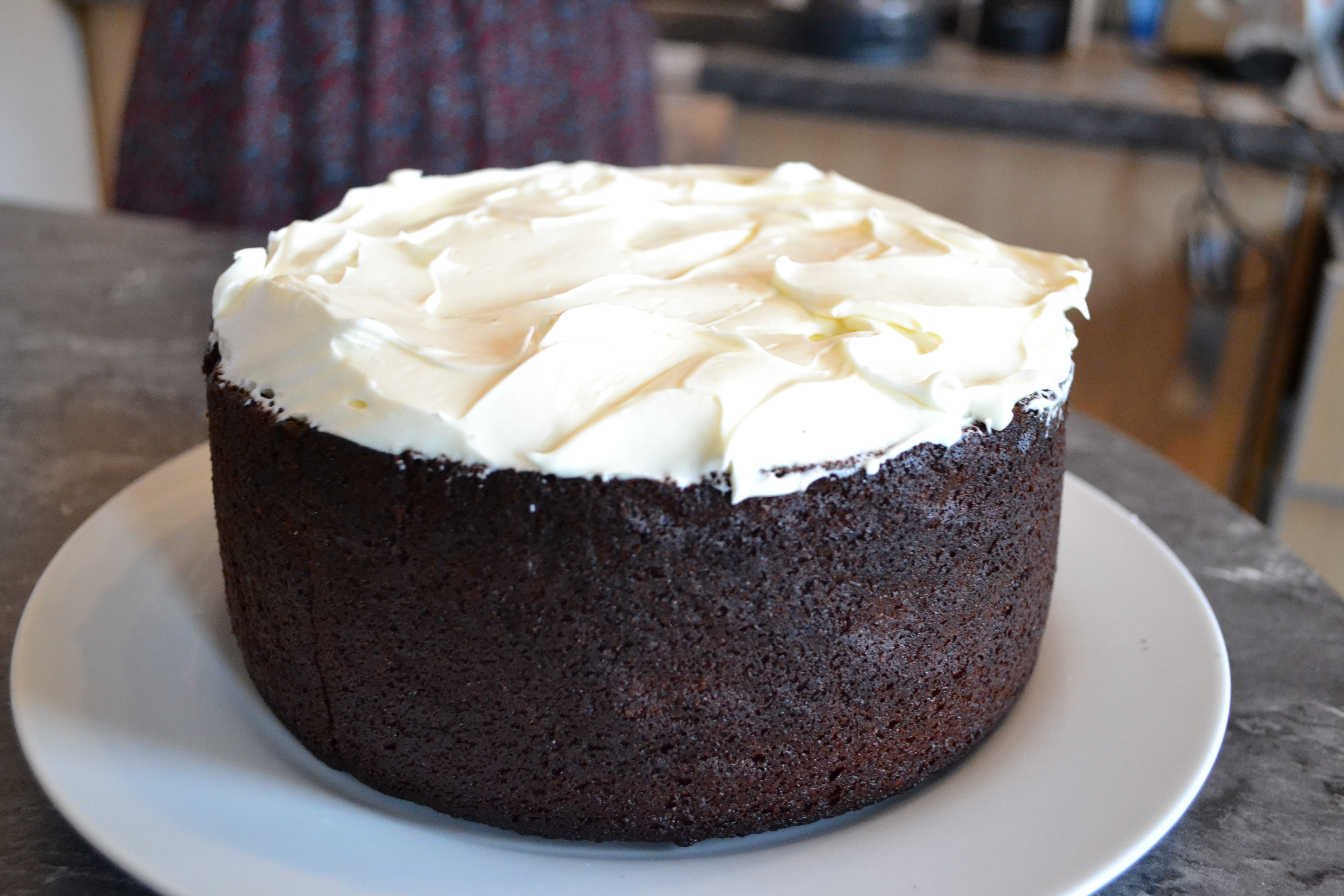
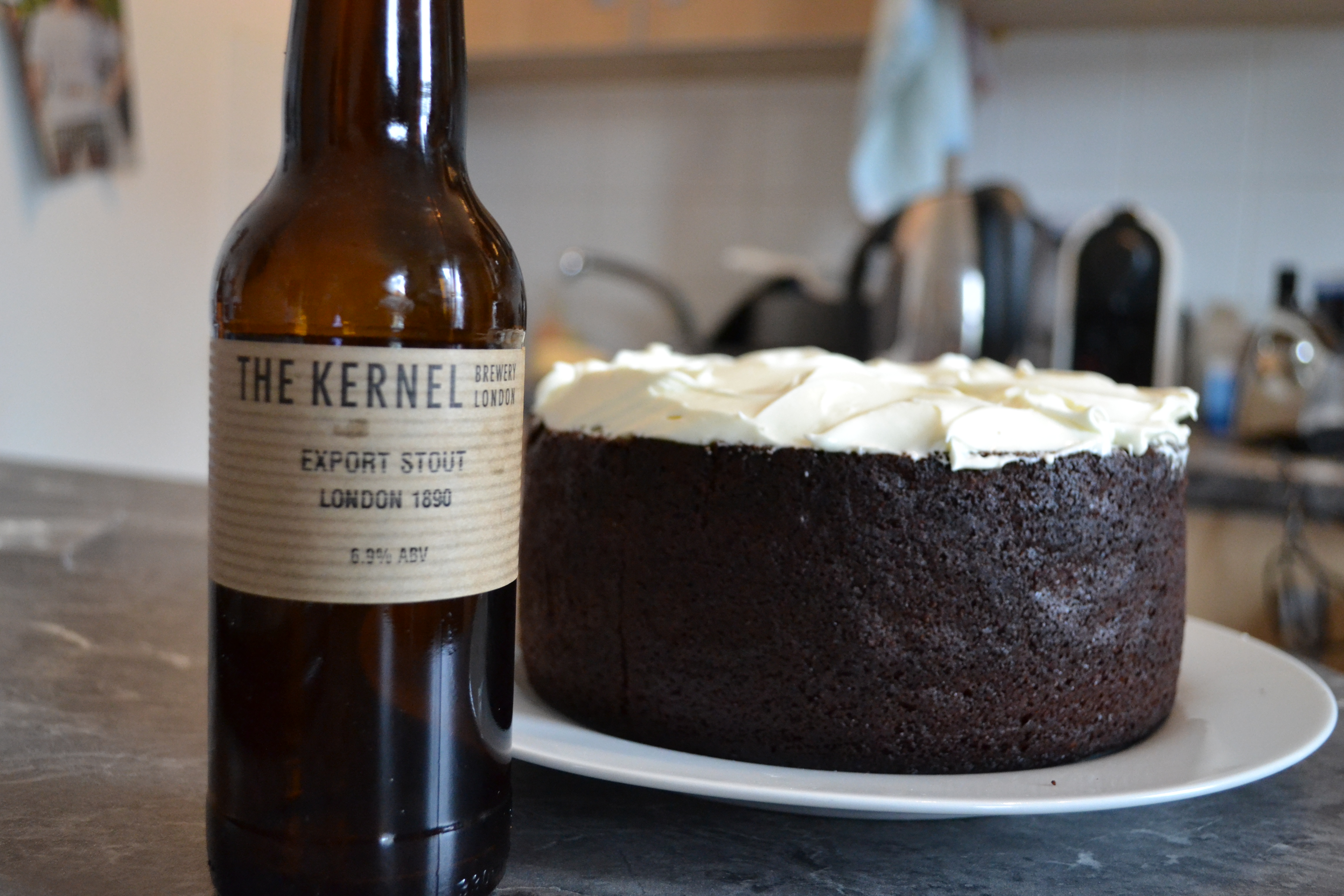
When we think of the flavours we typically associate with stouts and porters – chocolate, coffee, oatmeal, cream – it immediately becomes apparent why it makes a perfect ingredient in chocolate cake. I discovered this Gizzi Erskine Chocolate Guinness Cake recipe a couple of years ago after a tip off from a friend and it has been a firm favourite of my husband’s ever since. He requested it specially for his birthday over Bank Holiday weekend and I was only too happy to oblige. In the past I have made it with Bath Ales’ Dark Side stout (4%) which is very smooth and balances bitter and sweetness well without getting too heavy. But as it was a special occasion the hubby requested that I used one of his favourite beers – The Kernel Export Stout. This is much stronger at 7.8% and is richer as a result, carrying more dried fruit flavours. I figured this could only go down well in a chocolate cake.

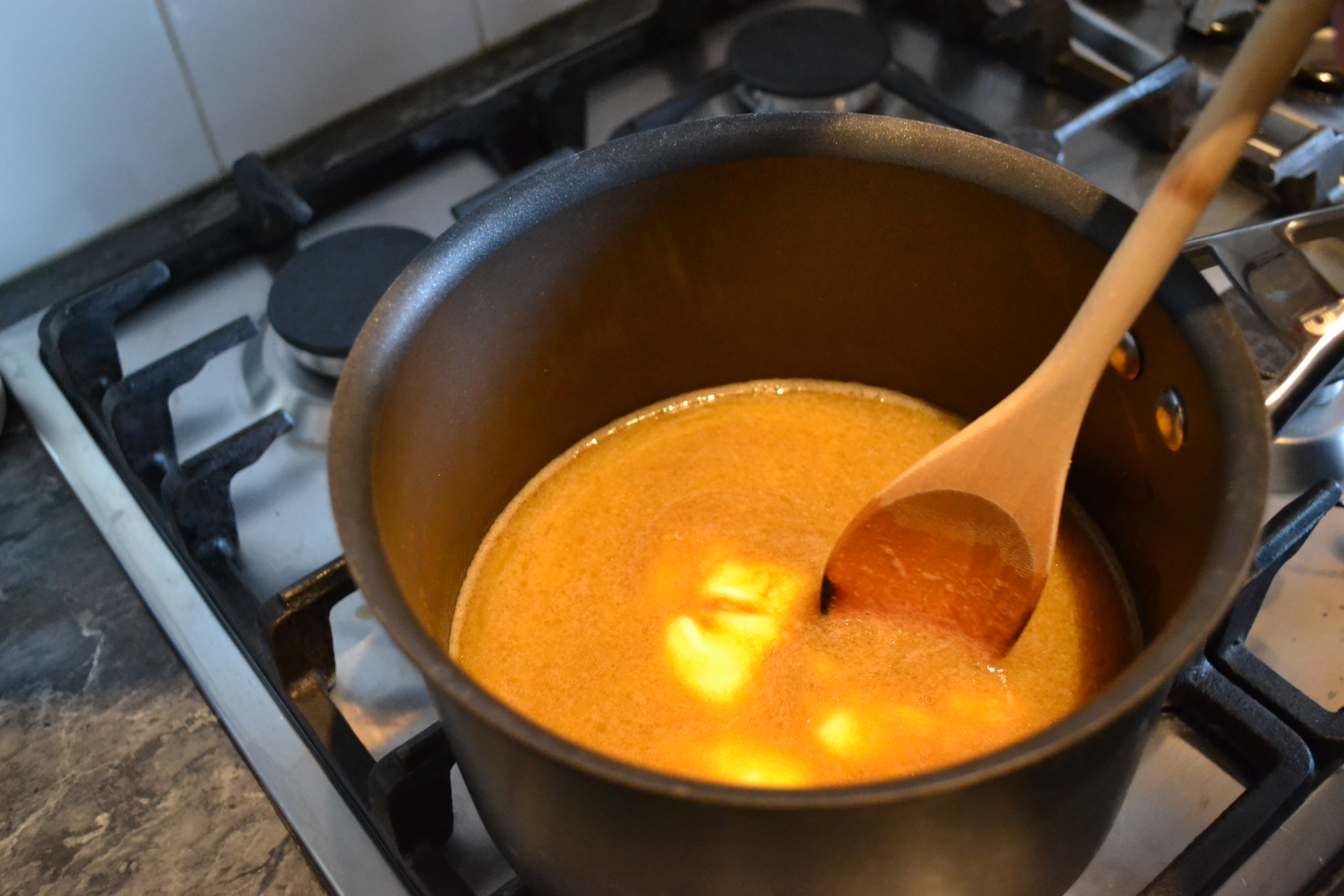
To get started, heat stout on the hob with butter until it melts.

DSC_0016

Next, add sugar, dark chocolate and cocoa powder.

DSC_0013

DSC_0022

Beat plain yoghurt with eggs and vanilla essence and add to to saucepan.

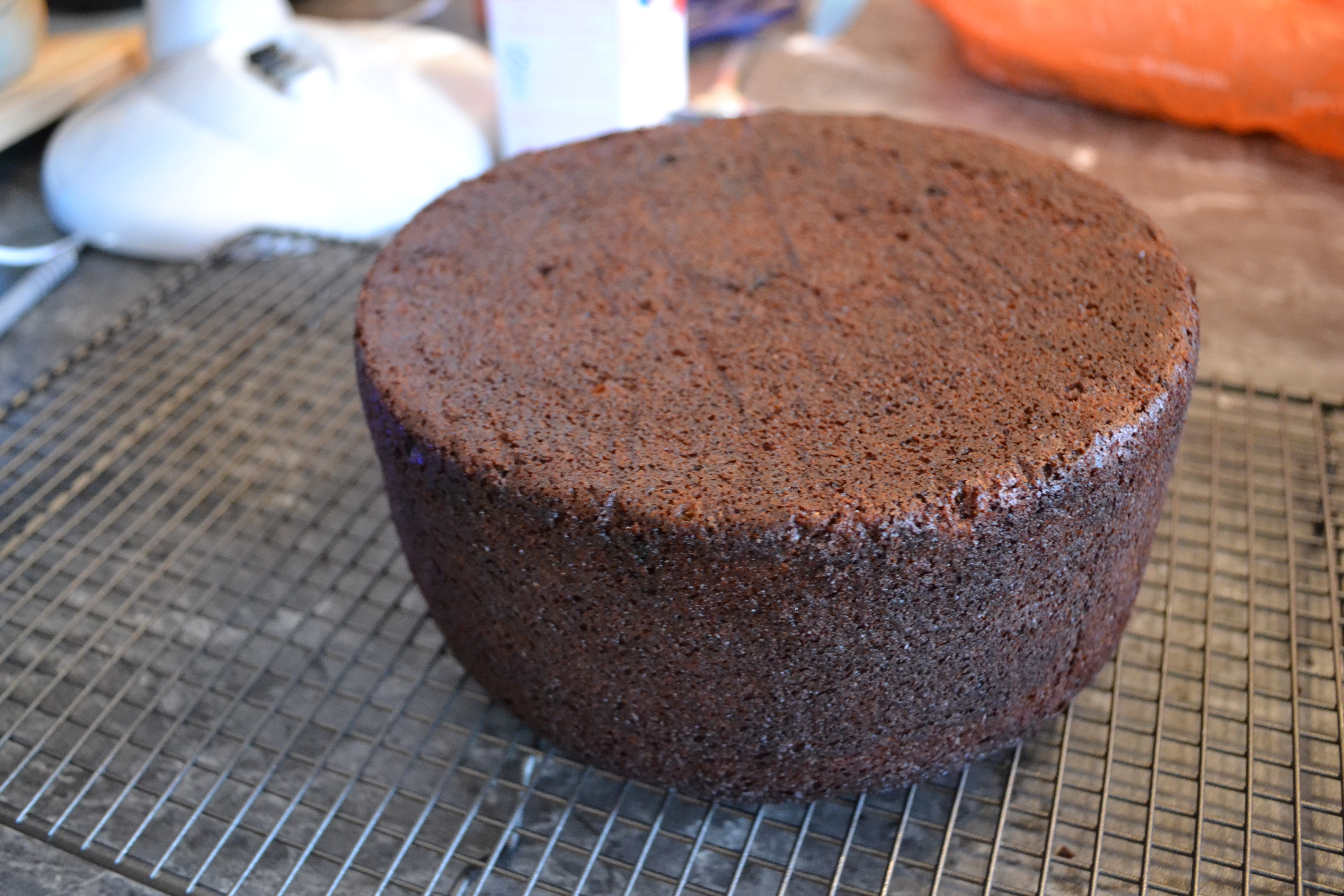
DSC_0023Finally add flour and bicarb and whisk in. DSC_0025DSC_0033DSC_0038The recipe says to cook the cake for 45mins to an hour – I went for the full hour as it’s a seriously wet mixture. After baking you need to cool it in the tin for a couple of hours before trying to turn it out so that it firms up a bit. It’s worth it to get such a moist and light texture.

DSC_0098 DSC_0118When the cake’s cool, you whisk cream, cream cheese and icing sugar to make the frosting. The idea is that it looks like a Guinness with a frothy top – not as relevant with Kernel Export Stout. But it tastes awesome.

DSC_0137 The great thing about this cake is that although it is chocolately, it isn’t too rich or too sweet. There’s about 100g of chocolate and 35g of cocoa in the whole cake, so it’s not too overpowering.

So there you have it! Chocolate stout cake. Have you tried baking with stout/porter and chocolate? What beers did you choose?

DSC_0142– PS

Camden Town Brewery tour – report

Camden Town

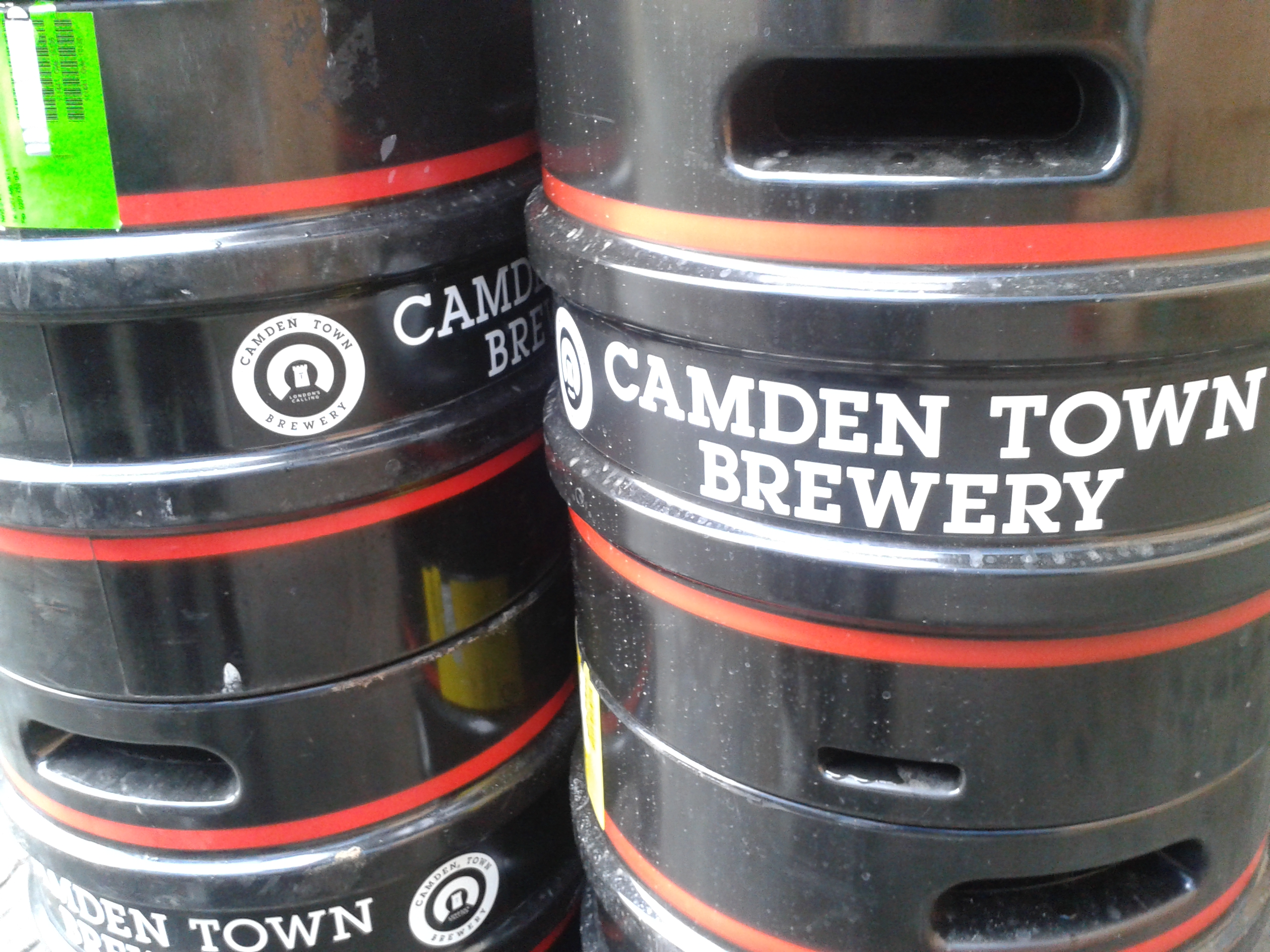
Like most of the breweries who are part of the recent beer boom in the capital, Camden Town is a relative newcomer. The brewery was established in 2010 after Jasper Cuppaidge grew tired of sourcing beers from all over the world for his pub, The Horseshoe in Hampstead. Why shouldn’t we be able to get great beer made right here in London? He began brewing in the cellar of the pub and in the same year Camden Town Brewery was born, moving into the railway arches by Kentish Town West station in north London.

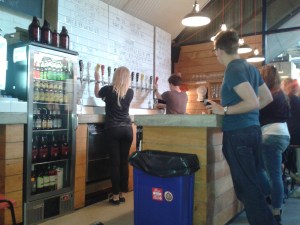
Camden Town Brewery TapThree years on, the brewery is thriving; its brand one of the most recognisable in the London craft beer scene, it can be found in bars across the capital and they have just scored a distribution deal with Waitrose supermarkets across the country. The brewery boasts a small but popular brewery tap which opens Thursday to Saturday and sells branded ceramic “growlers” – bottles – for beeraways.
Like many breweries, Camden Town has begun running tours of their facilities for interested beer fans. I was a little apprehensive about the tone, as at the last brewery tour we went to – Meantime Brewing Company, in March this year – I was referred to as “my little princess” the whole afternoon, and the tour guide dropped in casual date-rape jokes between beer tastings. I was pleasantly surprised by my experience at Camden Town. 

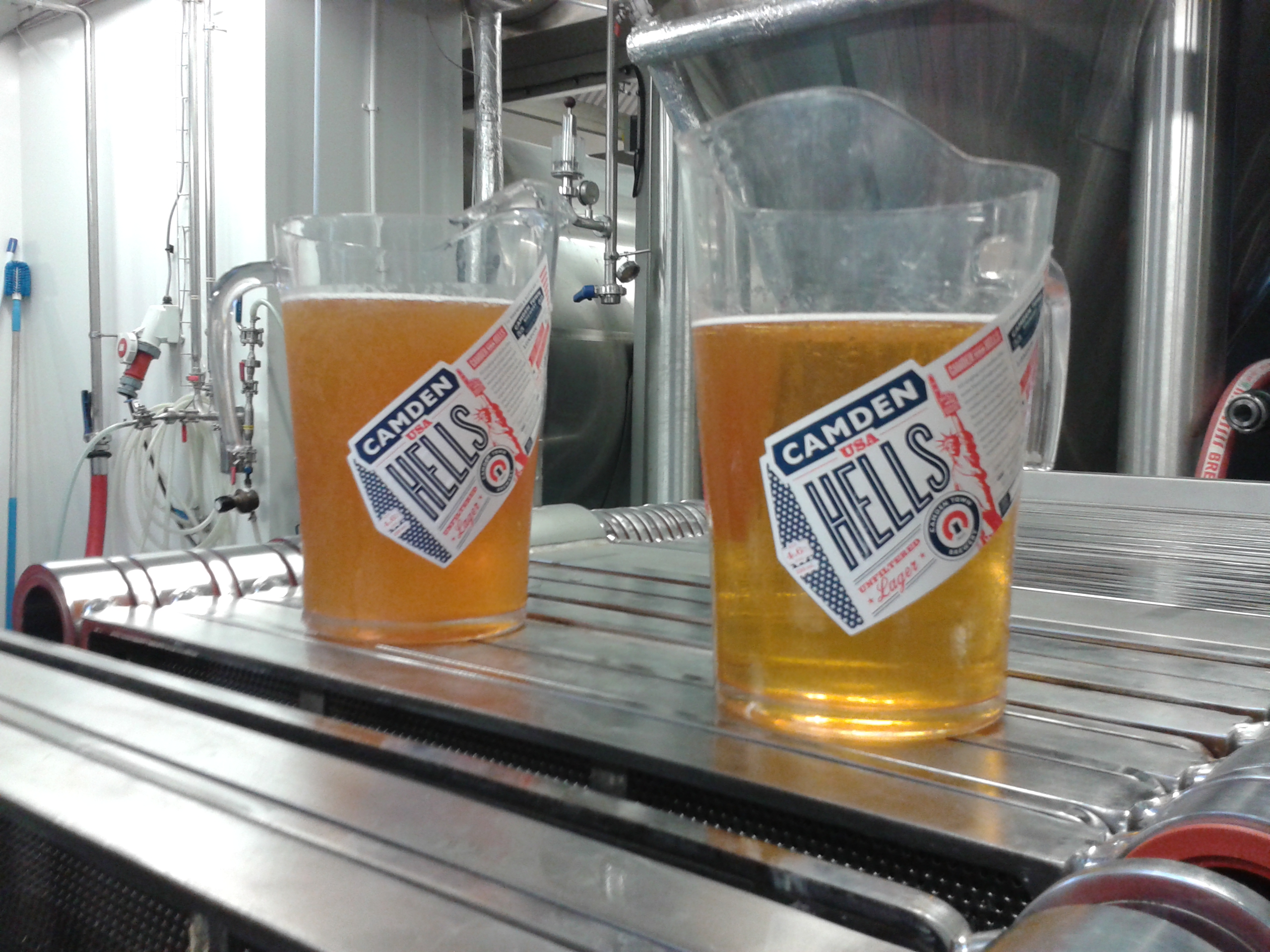
We were early for our 6pm tour, so we grabbed a drink in the bar first, giving us an opportunity to try their USA Hells – a variation on their flagship lager, Camden Hells, made with American hops (crisp with a citrus bite). Before long our guide, Mark, gathered the tour group together. There were ten of us on the tour – eight guys, two girls. I asked if this was a typical ratio but he said it was usually a fairer split and we just happened to have two guy-girl couples and then two groups of guys in our contingent.

Great beer

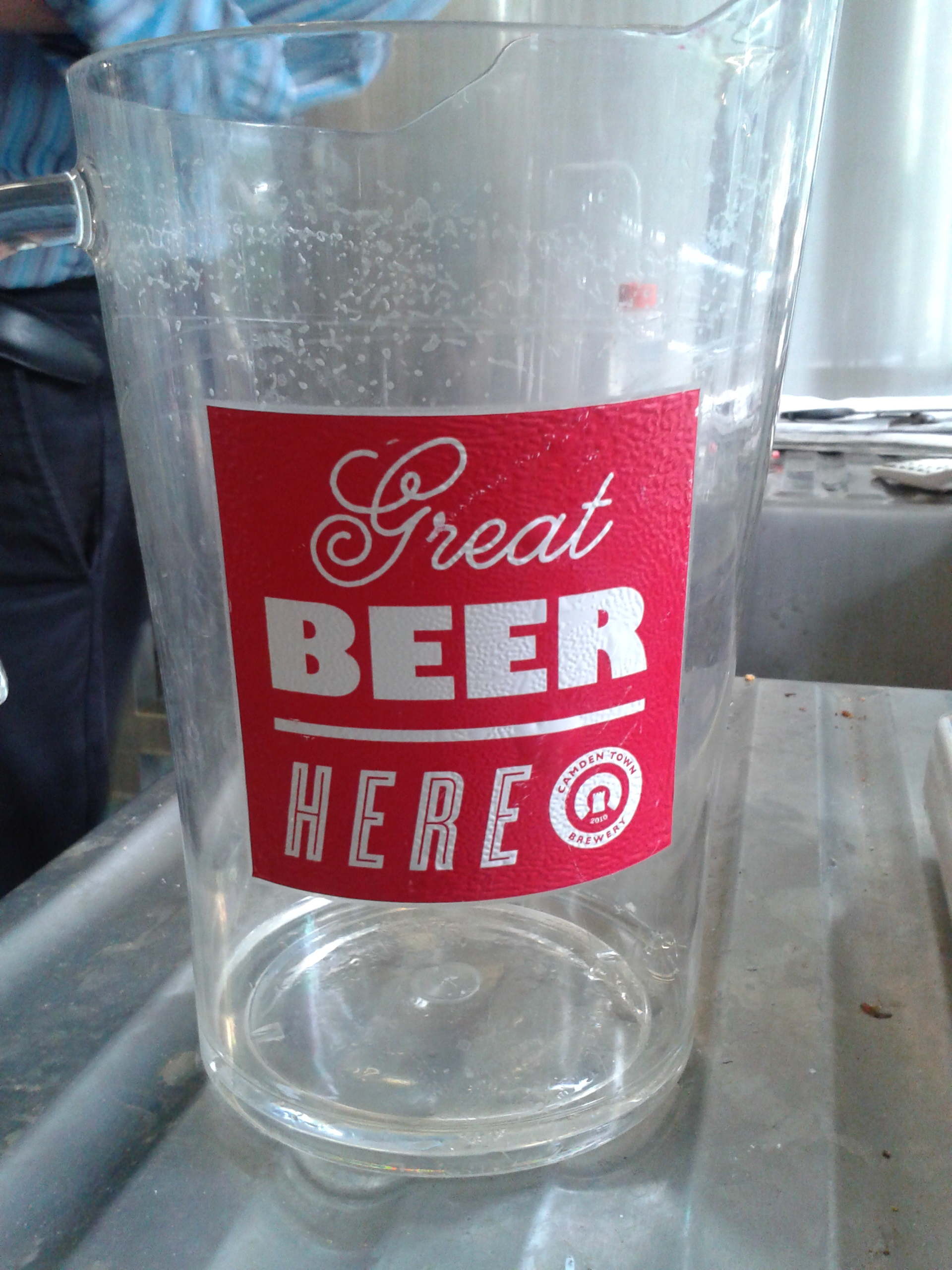
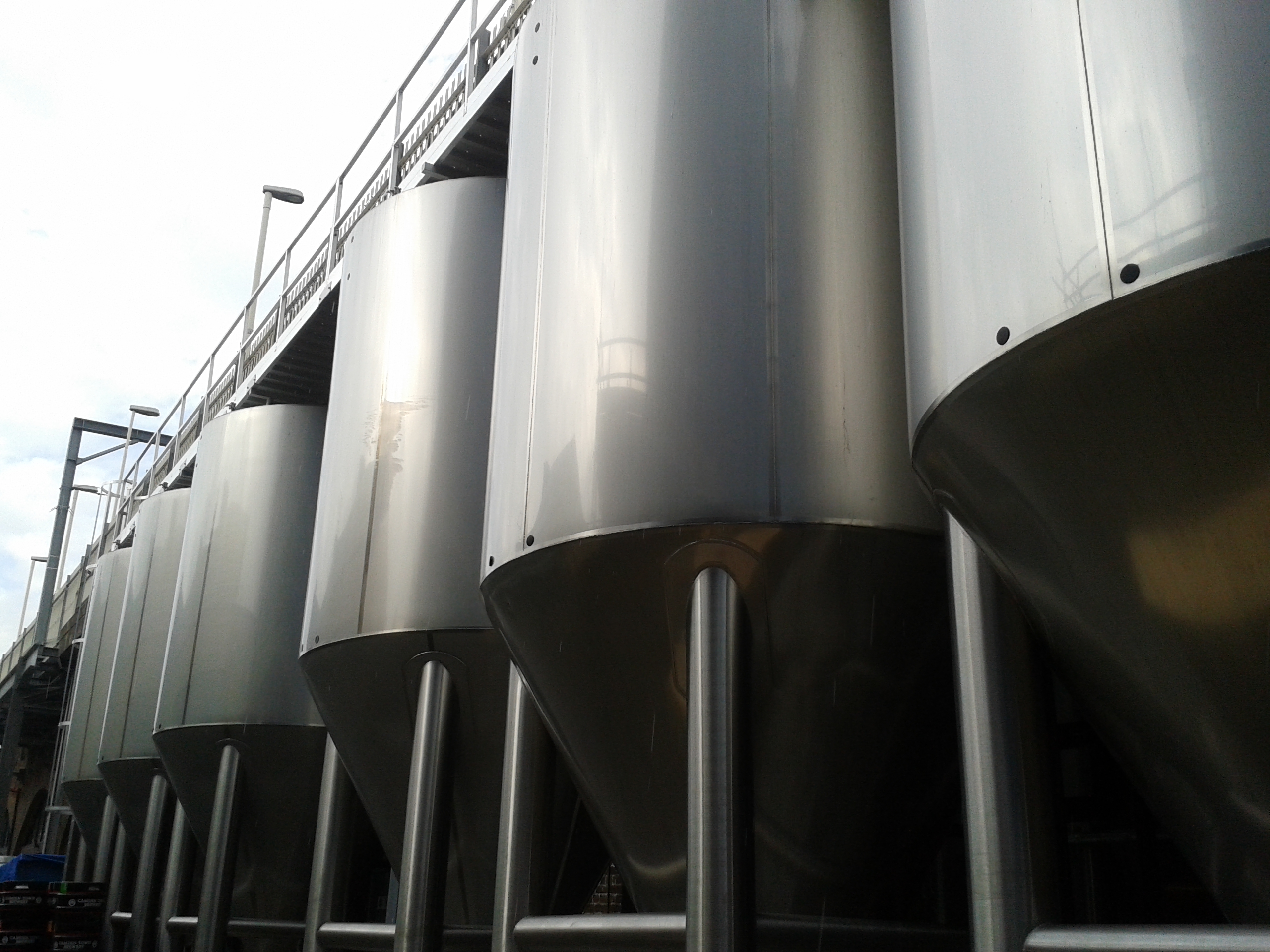
We started with a chat about the history of the brewery and a frosty jug of Camden Hells. Standing beneath one of the six huge fermentation tanks, we learned that each one can hold 12,000 litres. As it stands, Camden Town’s brewing capacity is currently 2,000 litres, so they have to brew the same beer six times to fill a tank. I asked if this made it difficult to invest time and resources in new beers or collaborations with other breweries. Mark told us this was very much the case, and that this was part of the reason why they have a relatively small core range of beers, but they are considering expansion in the next couple of years which could see them branch out.

Camden fermentation tanks

Tasting hops

Next we chatted malt and hops, trying the pilsner malt that is used in both Camden and USA Hells and some roast barley malt, used in Camden Ink. It was interesting to learn that even in dark beers like Ink (a stout), no more than 7-8% dark malts are used. We also passed around sacks of hop pellets, and it was incredible how much the hops from different continents vary in aroma and strength. The German hops used in Hells were mild in comparison to the distinct citrus tang of the American Citra and Cascade. This gave us a real taste of how different elements come together to create the range of flavours and aromas we are used to when tasting beer.

Moving through the brewery, we learned about the filtering process. Camden Town is one of few breweries who do not use isinglass – a collagen substance obtained from the dried swim bladders of fish – for filtration. They have a machine to do the filtration fishy-free, but they also experiment with leaving some of their beers unfiltered – such as Unfiltered and USA Hells. Mark told us that the filtered product is considered more aesthetically-pleasing, but actually the unfiltered version had an added depth of flavour.

Next we came around to the packaging area. Camden Town has recently invested in their own canning facilities to complement the bottling they already do on site. They were canning Camden Hells for sale in Byron hamburger restaurants during our visit but it will be interesting to see what else they bring out in cans in future.

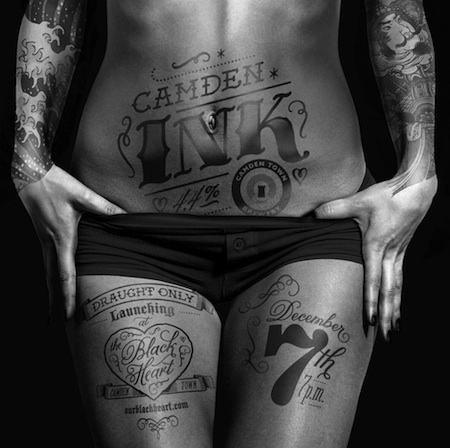
Our tour complete, we headed outside to perch on empty kegs and polish off what was left of the pitchers of beer that had accompanied our tour. We had the opportunity to chat to Mark and ask questions – first thing I wanted to discuss was this image from the marketing for Camden Ink.

Using a male ICIP spy (my husband), I only discovered this because he reported its existence in the mens’ toilets. What did Mark think of this campaign, and did he think it alienated female drinkers? Apparently an ad agency were given a brief which played with both the name of the beer and Camden’s anarchic reputation, and they delivered a different design originally (with no female body parts). The R-18 version was actually a last minute addition that was only used for the launch party at Our Black Heart in Camden in 2011, but it hasn’t been used for any other publicity. Even the Facebook event for the launch, still visible on Facebook, uses the original artwork – which suggests that Camden Town were aware that the crotch-shot approach could put off women drinkers. I appreciated Mark’s honesty, but raised an eyebrow at the presence of the picture in the Gents’ – there was certainly no cock-shot with a “Camden Hells” tat down the shaft in the Ladies’. I also spotted this ad on the wall in the bar showing a woman quite literally being treated like a piece of meat. Oh well, one step at a time…

20130822_174402

Leading on from our report on the number of women at the Great British Beer Festival earlier this week, I asked Mark what the gender split was like at the brewery tap. He reckoned it was pretty much 50-50, which was interesting to hear. There were certainly plenty of women in the bar that night and a friendly, relaxed atmosphere. After my experience of rape culture in action at Meantime earlier in the year I was pleased to see there was no such bullshit at Camden Town and I wasn’t made to feel like a pariah for asking questions or showing an interest.

After Mark had called it an evening, we ended up chatting into the night with two fellow tour-members. We talked about the beer revolution, we talked about women beer fans, we shared notes on favourite breweries. And when one of my new friends went up to the bar to get a round in, he got me a pint – no questions asked. Bloody brilliant.

USA Hells

The Camden Town Brewery tour runs on Thursday evenings at 6pm and costs £12 per head. You have to book in advance on the brewery’s website.

– PS

Beer festivals: it’s time to make space for women

Standing beside the man with the giant inflatable penis hat, beneath the poster that informed us that we – like computers – were useless unless turned on, It Comes In Pints decided to try and count how many other women we could see at the Great British Beer Festival, held between 13th and 17th August 2013 at London’s Kensington Olympia.

We didn’t get far before our conversation was swallowed up by a swollen roar that started spontaneously on one side of the cavernous hall and gathered voice as it rolled over the hundreds of taps serving Real Ale; the sound of hundreds and hundreds of men simultaneously – exuberantly – raising their branded glasses and roaring: “cheers!”

We can roar with the best of them – but it felt like our voices were lost in the cacophony.

Festival organisers Campaign for Real Ale (CAMRA) told us that men make up 80 per cent of their 150,000-strong membership. It looked to us like men made up more than 80 per cent of punters at the GBBF. But, as craft beer fledglings, we got to know beer in a world where a woman has been voted Beer Sommelier of the Year; where women brew beer, sell beer, talk beer, and drink beer.

What we found out about women and beer, over the course of that Saturday happily spent at the GBBF, blew us away. Scores of the young women we accosted admitted to crippling insecurities about beer drinking. They worried they didn’t know enough about it to be taken seriously. They worried what people (men) would think of them. So they stopped ordering beer. And as their stories about being snapped at by bar staff got lost beneath the background noise, we wondered – what can the beer industry do to attract more women?

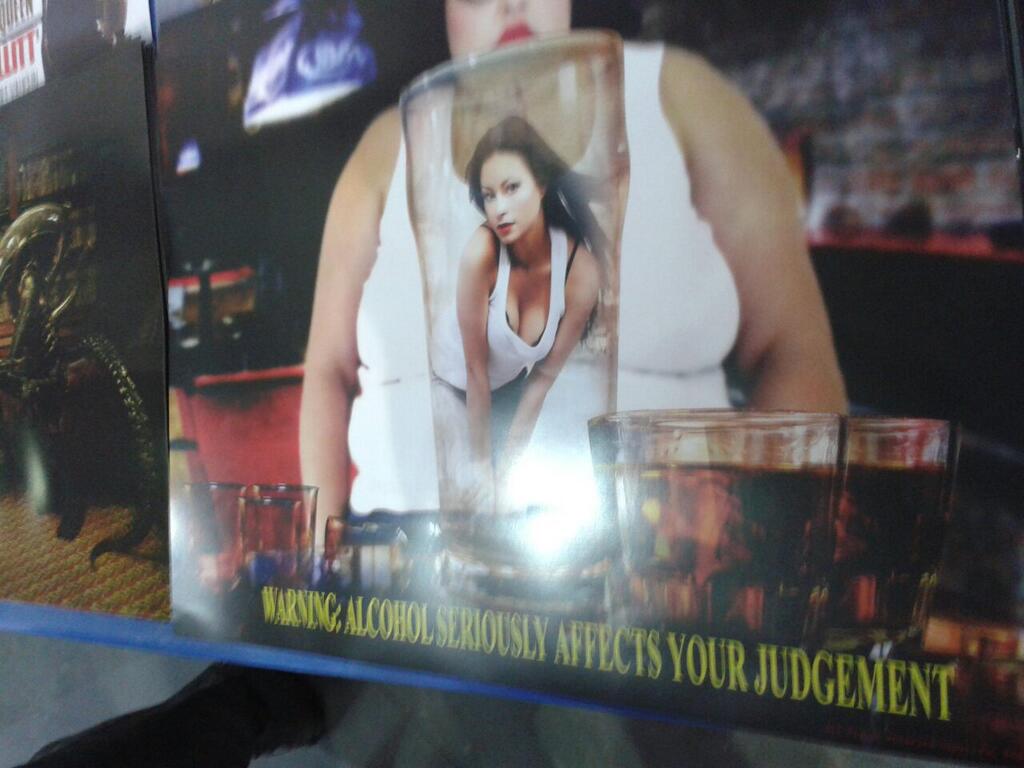
For a start, it can stop giving space to vendors who trade in sexist posters and images. It was fairly pointed out to us that CAMRA has no affiliation with, nor condones the content of, merchandise traded at its event. But we’re pretty sure no one would get away with the racist equivalent of some of the posters we saw on sale, showing:

  • an overweight woman rendered skinny and borderline pornographic by an empty pint glass. Tag? “Warning: Alcohol seriously affects your judgement”

  • “What do computers and women have in common? Both are useless until they’re turned on.”

  • “If a man talks dirty to a woman, it’s sexual harassment. If a woman talks dirty to a man, it’s £1.95 a minute.”

Charming.

Charming.

Women at the event were greeted by a wall smothered in slogans telling us that we’re fundamentally useless; scheming opportunists; objects. Desirable unless you’re fat, in which case, men need to be warned to STAY AWAY, because DEAR GOD. As well as being wearily sexist, this poster also won the hypocrisy prize, given the number of larger men (the stereotypical beer drinker) crowded around the stall. You know what? It was intimidating, and women feel alienated by that kind of macho beer culture. It’s an alienation that self-perpetuates, because it subsequently takes a mighty effort for us to insist that we have as much natural right to our pint as a man.

We were overwhelmed by the number of women at the GBBF who told us they would never order a pint on a date. Between sips Emma, 25, told us she would never drink pints on a date – or at a work do. “I think it’s just laddy… it’s really male,” she said. She and her two girl friends were hiding from their boyfriends so they could enjoy their turkey drumsticks shame-free. We wondered what their boyfriends made of their beer drinking. “They think it’s really laddy,” Sarah told us. The boyfriends made a reappearance. “Tell them we’ve been eating salad,” she pleaded. On the other side of the hall Jess, 26, worried that ale wasn’t seen as particularly feminine. She wouldn’t order a beer on a first date, she said – and her friend Andy, 28, agreed that women might do so only to make a point. “You’re quite guarded on a first date,” he said. “What you drink shows something of you as a person. As a guy, I wouldn’t order a sherry. Ordering a beer is a statement – like ordering jagerbombs.”

Acquiring taste – or being criticised for their lack of it – was another concern of the women we spoke to. Hayley, 31, was still reeling from being snapped at by a barman because, she thought, she “didn’t know the lingo”. She told us that she wanted to do a beer course – to help her keep up with male drinkers. “I don’t know what’s good,” she said. “I think we’re all bullshitting a bit… but guys get away with it because they lie to each other. But girls can’t fake it because they’ll be like… she doesn’t know what she’s talking about. So I’m just trying to learn as I go along!” But all the women we spoke to knew what they liked and didn’t like – Emma told us she hated dark beer, Lizzy said she couldn’t stand beers that were marketed as “raspberry flavour” but weren’t; Jess said she preferred the taste of ale to lager. For women drinkers, shouldn’t preference alone be enough?

“If I was a girl and my boyfriend propositioned me to come to a beer festival I’d be like, no, I’m washing my hair,” Alex, 28, told us. “But if I was propositioned to go to a nice bar on the Thames – I might be drinking the same beer but in a different environment.” Similarly, Jess gave us food for thought by suggesting improving women’s experiences could be as simple as providing an array of drinking glasses – she doesn’t like the standard pint glass, but wouldn’t mind a wine-glass-shaped half, or a tall “Peroni”-style glass. Emma said if she did commit to a beer when socialising with work it would only be out of a bottle. Does a pint glass feel like a commitment to drinking a certain amount or is this just an image thing?

We got the sense that both men and women felt that beer was a bit rough and ready for delicate women-folk; the advertising and image a bit heavy-handed. Would we really prefer a “nice bar on the Thames” or smaller glasses to fit in our soft little hands? If image is so important to women, it was surprising how hostile those we spoke to were about the less traditional craft movement, with its halves and thirds and trendy bars. “I think [GBBF] is a bit more authentic. Craft beer is a bit Hackney, a bit East London, trying to be cool,” said Hayley. “It’s all about being seen rather than the beer.”

It was notable that the older festival goers we chatted to seemed less aware of the gender disparity, whereas younger drinkers confided their lack of confidence around beer and their concerns about how it would affect their image in front of men. It is all too easy for some to laugh off the posters and cock balloon hats. We are sure that for many women, it doesn’t stop them enjoying their pints. But it can take many years to develop this kind of self assurance. To hear young women so afraid by what men will think of them for buying a particular drink in a particular volume was kind of crushing for us. We think this is at the crux of the issue with sexism in the beer drinking world – it’s all to do with confidence, and too many women are having their wings clipped at a young age, while older drinkers shrug off their concerns as trivial.

D - not scared of pints!

D – not scared of pints!

Of course, we weren’t put off. We love beer, and it would take more than dull stereotype and sarcastic comments to phase us. And we must remember that women are not invisible in the beer-verse, by any means. Dea Latis, an organisation dedicated to promoting beer to women, states in its mission statement that “what unites us is our passion for beer and a belief that it’s far too good to be enjoyed only by men”. Women run tastings, run breweries, run beer blogs (ahem). The message is getting out… slowly.

We will definitely return to GBBF next year. But we hope that, when we do, some things will have changed: we hope there will be more women. Beer festivals should be a starting point, a place to jump in and develop your love of beer, not the end of the line. It’s time to take down the posters – and let the women roar.

We’d love to hear your thoughts on this story, either in the comments below on on our Twitter or Facebook pages.

– ED

Great British Beer Festival 2013 – festival report

As we entered the yawning aircraft hangar-like space that is London’s Kensington Olympia, a Mexican-style cheer rushed towards us from the far end of the venue. Raising our snazzily-branded pint glasses, we roared with approval as the wave of noise hit us. We had arrived, and our Great British Beer Festival (GBBF) experience had begun.

The Great British Beer Festival 2013

The Great British Beer Festival 2013 at Olympia.

Despite our beery love affairs, we have only recently become CAMRA members, and this was our first GBBF. Our previous experiences of beer festivals were more on the craft side – smaller, more “trendy” affairs in London’s Shoreditch and Hoxton – and this was to be a very different animal. As feminists, we hate stereotypes, but CAMRA and real ale festivals certainly conjure up certain images for most people – beards, beer bellies and a whole lot of MEN. We wanted to find out if the festival – and its patrons – had been unfairly typecast. Also, most pressingly, we wanted to try some delicious beer.

“I go to real ale pubs with my boyfriend – it’s great to come here and try something new together” – Hayley, 31

The obvious downside to coming to the last date of a five-day festival is that many of the casks had predictably run dry. Additionally, the dizzying variety of ales available meant that we had to be selective even out of what was still on offer. While this was a bit of a disappointment after spotting some favourite breweries in the programme (Thornbridge! By The Horns! Bath Ales!) it meant that we tried a lot of beers that we otherwise wouldn’t have done, and we discovered some breweries we didn’t even know existed before.

Some of our favourites:

Pip:

  • Marble’s Ginger Marble (4.5%). I’m a fan of Bath Ales’ Ginger Hare and this was of a similar ilk – a light, fresh, summery ale with enough sharp hop to keep it tasty. Really like how they get the ginger bite in the mix without it taking over or tasting gimmicky. Big thumbs up. (@MarbleBrewers)
  • Bristol Beer Factory’s Sunrise (4.4%). I visited a beer festival run by BBF in 2011 down at the Old Tobacco Factory and it’s always nice to spot their stuff in up in the capital. This had a really sour, citrus tang on the nose but gave way to a light, refreshing flavour. (@BrisBeerFactory)
  • Three Tun’s 1642 (3.8%). Really biscuity on the nose but with a cracking spiced, bitter kick. Reminded me of tasting daddy’s beer on hot summer days when I was a kid. Surprised to see its middling reaction on Untappd as I was really keen on this one. Traditional British bitter at its finest. (@ThreeTunsBrewer)

 D:

  • Fyne Ales’ award-winning Jarl (3.8%) was chosen for me by a barman upon whom I’d heaped much pressure. “It’s my first beer of the day!” “I only like dark beer!” “But you must select me a beer that isn’t dark so I don’t overload my tastebuds”. Jarl, you answered my prayers. Light, floral, extremely refreshing; this would make an excellent lo-o-ong summer session drink and would pair well with food. (@FyneAles)
  • Kelburn Brewery’s Dark Moor (4.5%) So, right, everyone knows that boozy chocolates don’t work. Chocolate is chocolate, not some liquored-up chemical spill. So how come chocolate-y booze DOES WORK? Ask Kelburn. Dark Moor is what those dark, cherry rum-filled Christmas chocs should taste like – with incredible liquorice endnotes. Try it – even if you don’t usually like liquorice. (@kelburnbrewery)
  • Stocklinch Ales’ Black Smock (5%). If smoked meat tasted this good, I’d ditch Veganism. I kid! But really. Thick, dark beer that tastes like Autumn air, all hazy with woodsmoke and bonfires.

“We’ve been coming here for years. There’s always a really good mix of people, all demographics” – Heather and Andy, “mid forties”

So what of the atmosphere? Were the stereotypes justified? It has to be said that we immediately noticed that the demographic at GBBF was very different to the craft beer events we had been to. For example, last February’s Craft Beer Rising seemed to have around a 50-50 male female split, and everyone looked under 35 (to our eyes, at least). At GBBF, men outnumbered women at least three to one, possibly more (we corroborated this statistic when we went to the toilet and DIDN’T HAVE TO QUEUE. For the FIRST TIME EVER). There were many older men (and women) there, including Pip’s 71-year-old dad who had come along with us for the ride. Interestingly, though, there were still a lot of younger drinkers, and the twenty- and thirty-somethings seemed to be well represented. We spotted several stag parties and – brilliantly – a hen party. And, we won’t deny it… there were a lot of beards.

Classy headwear.

So GBBF hosted a real mix of drinkers of all ages (if with an overwhelmingly male bias). This was pleasing to see, and it was certainly fun for three twenty-somethings to hang out with a septuagenarian, enjoying a drink they are all passionate about, and for us all to feel at home in that environment. But it appeared that women and ale were still not a natural partnership. Maybe they’d been put off by the independent poster stall trading crap slogans like: “Why are women like computers? Because they’re both useless unless they’re turned on”; maybe they didn’t think the enormous balloon penis hats were very funny – whatever reason, women were remarkably under-represented. Unless they’d been installed to flash cleavage at punters from the other side of the tap (yes, we did notice that the women behind the bars were all pretty buxom and much younger than their male counterparts).

“It’s a shame there are so few women here. But at least there are lots of men with long hair!” – Alex, 27

We took some time out to chat to drinkers – male and female – about why they thought fewer women showed up. And it was revealing. Later this week we’ll have an in-depth report into this – find out why (almost all) the women we spoke to wouldn’t order a beer on a first date, and what women drinkers think the industry can do to help.

To soak up the booze there was a great range of grub available and we were really chuffed to see some more varied fare, for example the International Seafood and El Cantara stalls. Something we really want to champion on this blog is that beer can be enjoyed as part of a healthy lifestyle, and it was awesome to see the festival organisers providing drinkers with something other than pies and burgers to choose from (although admittedly we had wild boar burgers. They were delicious). We also enjoyed the Merry Berry Truffles chocolate stand – Pip could hardly believe her luck when she realised her day would combine beer and chocolate. Only D was brave enough to try their “Scorpion Death Chilli” flavour but this didn’t stop the rest of us trying all the other varieties on offer.

Something we missed from our craft experiences was the involvement of the brewers themselves at the event. Speaking to one of the guys from By The Horns at their brewery tap the previous weekend, he said they were planning to go down on trade day, and maybe other brewers made the same decision – but something we love about craft beer is how accessible the people behind the beer are: being able to get up close and personal with the brewers and chat to them about what they do is all part of the fun. Although the bar staff at GBBF were all friendly and helpful, and the format of having a range of ales grouped together in different bars was nice for variety, we did pine a little for the brewers having more of a presence than just their pump clips.

In summary, our first GBBF experience was overwhelmingly a good one. We tried some great beers, didn’t have to queue for a wee and we had some interesting – not to mention enlightening – chats with our fellow drinkers. A good time seemed to be had by all, sharing their love of real ale with friends – and there was chocolate. What could possibly be better on a summer Saturday afternoon?

The only downside was, of course, the dearth of women there that day. As we mentioned previously, we will be following up on this later this week with a full report, so stay tuned.

ICIP enjoying GBBF

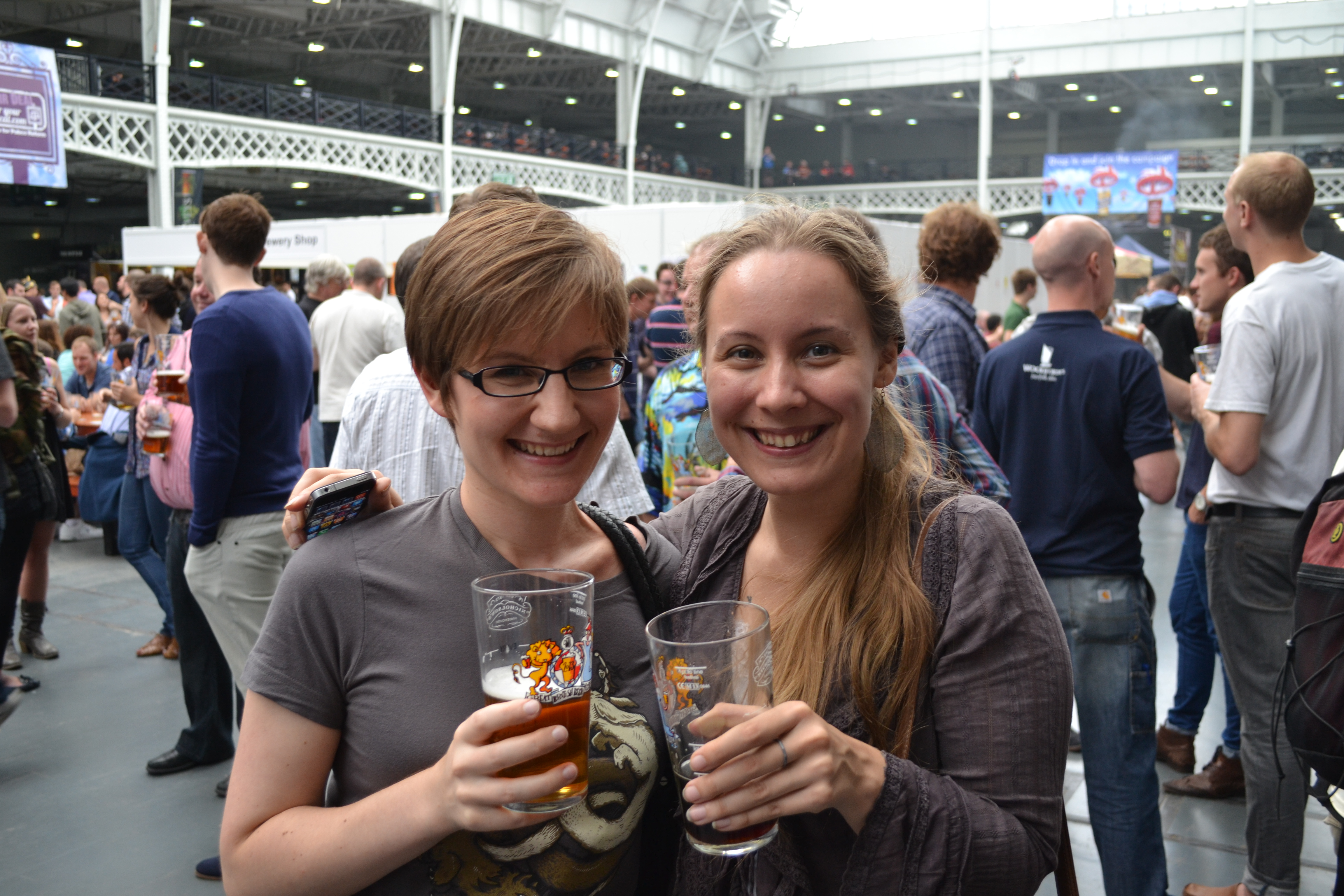
Pip (l) and D (r) enjoying their first GBBF. Cheers!

– PS

Two women, one blog, many beers.

One summer evening, over a pile of empty bottles, and the dregs of IPAs and porters and wheat beers, we decided: it was time us and beer got serious.

We were ready to commit.

But there were problems. Beer had to accept that we weren’t going to change.

Don’t get us wrong: beer and us have a great history. We remembered long Sunday drives with battered CAMRA guides in the glovebox; trying dad’s beer for the first time (and hating it); knocking back as many Kriek samples as we could on a school trip to Belgium. We put away pints of overpriced lager at festivals and crowdsurfed out of Placebo sets to pee; we got lime wedges stuck in Corona bottles in our university bars.

But then we graduated. We grew up, we moved to the Big Smoke, and we realised that we had to look after ourselves to get the most out of life. We embraced healthy living; we fell in love with sourcing unpronounceable ingredients for even more unpronounceable recipes, and with the buzz we got after a run or an isometric yoga session. But we didn’t want to say goodbye to beer. It was time beer worked for us. Beer had to fit into our new, grown up lives. Pint after pint of flavourless identi-lager – out of the question.

London’s craft beer renaissance could not have come at a better time.

We swapped hours quaffing weak ale for hours scrutinising beer menus. Beer became a world where drinking halves (or even thirds) was a smart strategy, not a killjoy. Supermarkets’ narrow slips of Wychwood ales gave way to shelves of own-brand single hop. You could grab a Punk IPA from Sainsbury’s Local. Beer became the focus of a whole new social scene – festivals and tap takeovers, pubs where the bar staff knew their stuff and wanted to share their passion, everyone trying each other’s drinks in the never-ending quest for something new, something exciting.

And we became beer evangelists. First to each other – trading labels in long wish lists – and then friends and family. The more evangelical we got, the more we noticed the harm done to lovely beer by decades of stereotype and assumption. Girls didn’t drink beer. The glasses were too masculine. It tasted weird. It made us fat.

We had a mission. We would wrestle the vodka-sodas; the white wine spritzers; the overpriced cocktails from the hands of our girl friends. We would tell them about beers so insanely hopped you felt like you were inhaling a field; so toasty you’d think you were drinking – well, toast; we would tell them about the caramel, the toffee, the cherries, the buttery biscuit, the spice and the smoke.

We’d tackle the sexism head on. Wanna fat-shame at your beer festival? Sure, but prepare to be shamed in return. Plan to use tired-old sexist cliché to sell your brew? Go for it – but we’ll expose you for selling out. We would cook with beer, analyse beer, run marathons with beer, do yoga with beer, and go on long walks for beer. We would prove that beer could be part of a balanced, healthy lifestyle.

And if, after all that, our girl friends were like: thanks, you raving alcoholic, but please restore to me my delicious piña colada, then that would be cool too, because feminism – and beer – is all about choice. But at least it would be a decision based on taste, not discrimination, or body anxiety, or worrying what a guy would think when you slammed down your empty pint glass and the dregs of your porter splattered on his trainers.

At least we would have tried. And we owed it to beer, and to all of the dynamic, creative, sistahs making it in an industry dominated by men. We owed to the notes of caramel and tobacco and biscuit that we’d discovered; we owed it to our mums and dads and those tiny sips of beer on childhood holidays. And, if all else failed, at least we would get to drink some cracking beers on our journey.

– ED/PS