Hitting the bottle – bottled beer tasting at the BBC Good Food Show

Ah, the BBC Good Food Show. This pageant of gluttony has become a bit of a family tradition for Pip of ICIP; the annual pilgrimage to the NEC in Birmingham a signal that Christmas is nearly upon us.

Typically, this joyous occasion is a day for lusting after kitchen appliances we can’t afford (we’re looking at you, Thermomix), trying to avoid people dragging around those old-lady wheeled shopping bags, and eating a lot of cheese samples. The fact that the night after the show Pip had a dream about her sister trimming Joaquin Phoenix’s toe hair is testament to this epic cheese consumption (really).

ICIPglassesThis year there was an extra little treat in store – CAMRA were sponsoring a series of events under the banner of the Great British Beer Experience, and ICIP was lucky enough to grab tickets for a tutored tasting by Jeff Evans, Inside Beer founder and author of CAMRA’s Good Bottled Beer Guide.

We took our seats, excited by the list of five upcoming brews we would be trying. The beers started light with a golden ale and worked up to an much heavier oak-aged speciality brew. A quick glance around the tables showed that there were around 17 women to 46 men taking part in the tasting, which was better than expected (if still a bit lame).

Jeff began by giving any novices a quick rundown of where beer comes from and how it is made while the CAMRA team filled our first glass. We were a bit taken aback when he began describing the different ways beer could be kept – and damned anything kept in a keg as lacking depth of flavour and quality. This was a bit of a disappointing generalisation, but given CAMRA’s general hostility to “craft beer” perhaps we shouldn’t have been too surprised.

bitterbullyUnperturbed, we got stuck into our first beer, Cheddar Ales’ Bitter Bully (4%). The tasting notes for this golden ale described grapefruit and floral aromas, although we were only able to detect the latter despite the treble whammy of Simcoe, Cascade and Amarillo hops. Despite not packing much on the nose, Bitter Bully was light and fresh with a satisfyingly bitter aftertaste. All in all, a good session beer.

wheatNext up was Little Valley’s Hebden’s Wheat (4.5%), a Belgian-style wheat beer with Hallertauer and Hersbrucker hops. This beer had a sweet clovey, bubblegum nose, and the sweetness really carried through into the taste. Mild whilst retaining that sour finish familiar to wheat beers, this one really divided opinion across the group – including Pip’s mum who poured all of her portion into Pip’s glass. OH WHAT A SHAME.
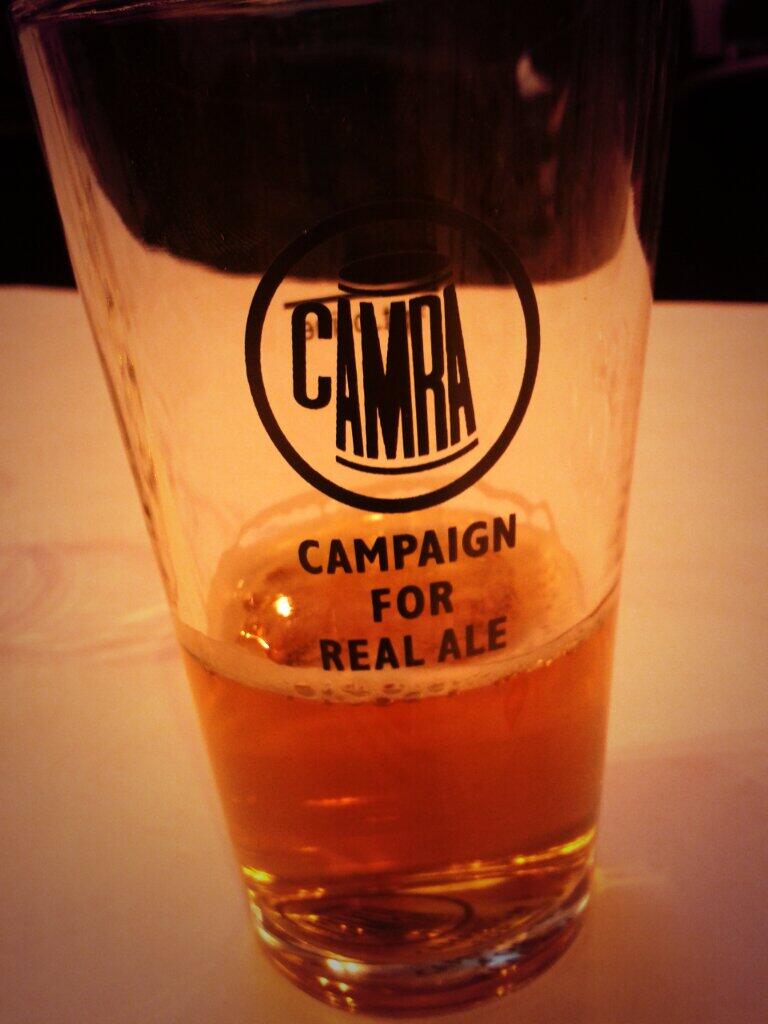
southvilleBristol Beer Factory have been an ICIP favourite since we first discovered them at a beer festival at the Old Tobacco Factory in Bristol a few years ago, so we were very excited to see their name next on the list with their Southville Hop IPA (6.5%). Packed with IPA favourites Cascade, Centennial and Simcoe, this beer reeked of that classic “craft beer smell” – citrus and pine; hops coming out of the wazoo. The aroma was really fantastic, and the beer had a sharp bite backed up with a decent malty body. This brew was dry-hopped, giving that lingering bitter finish. Tasty.
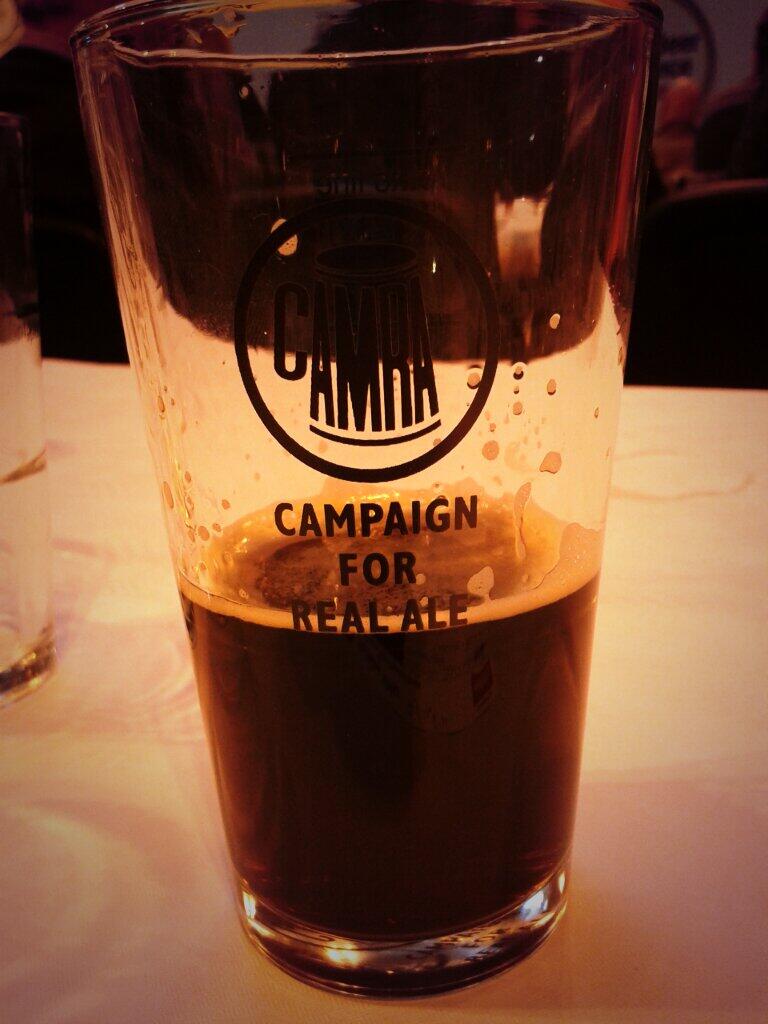
wholesome stoutBy this point Pip was gagging for a dark beer, so you can imagine her joy when our glasses were filled with Wye Valley Brewery’s Dorothy Goodbody’s Wholesome Stout (4.6%). This ruby stout had a rich, toasty, chocolatey nose, and backed it up with a rounded, smooth coffee flavour.  Liquid pudding and after dinner coffee rolled into one. Heaven. You simply cannot beat a good stout.
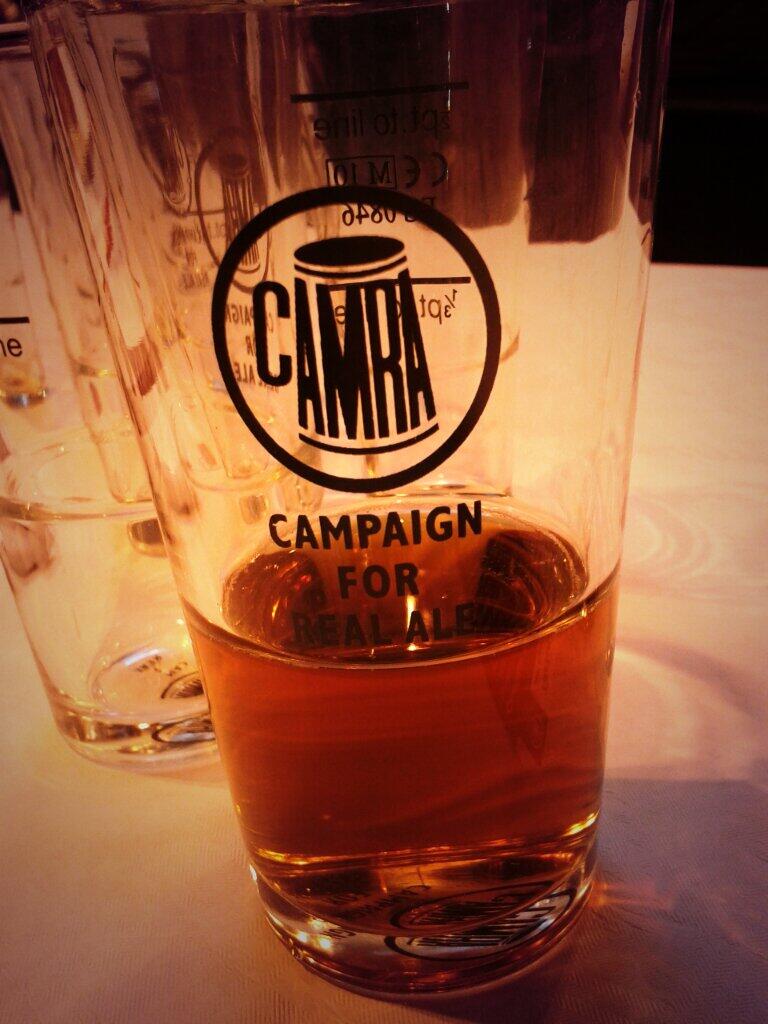
reserveWe ended with a bit of a treat – Fuller’s Brewer’s Reserve Number 4, a speciality oak-aged beer coming in at a hefty 8.5%. This beer was aged in armagnac brandy casks and had a serious spirity aroma that nearly stripped your nose hairs (in a good way). Despite the booziness there were tantalising notes of raisin and vanilla. My friends, this beer smelled like Christmas. The beer itself had that firey warmth you get from a brandy or whisky, with just a whispered memory of the plain old beer it once was. Pretty amazing – wouldn’t like to try drinking a whole bottle of it, mind, for fear of losing the entire holiday season in a drunken haze.

All in all, a good session with a really interesting mix of beers. Despite the keg hostility (has this man never tried Kernel Export Stout on keg?!), Jeff’s talk was really interesting and we enjoyed hearing his tips for tasting beers and what the different elements of the beer brought to both aroma and flavour.

There was plenty more beer to be had at the NEC that day, and amongst others we visited stalls run by Purity (we really love UBU!), Hop Back, Kingstone Brewery (Jingle Porter is a thing of beauty), and Thwaites. Pip was especially pleased to see Thwaites as she tried the sublime 13 Guns at Nicholson’s Autumn Beer festival last month and had since taken delivery of a bottle of both that and Big Ben in her latest Beer52 box. Sadly, on approaching the stall to procure samples for Mr Pip, the salesman on the stall would neither look at nor talk to her, and only made eye contact with the husband despite his repeated assertions that “my wife says this beer is really good”, “yes, my wife recommended this”, “MY WIFE FRICKIN’ LOVES BEER GODDAMMIT”.

Luckily the Thwaites man acknowledged Pip’s existence just in time to prevent her swiping all the bottles on his tasting table into her handbag and running away with them cackling manically.

Baby steps, guys. Baby steps.

– PS

Back to school – an interview with Jane Peyton

Jane-Peyton

Beer made out of Christmas trees? Booze and witchcraft? All in a day’s work for author, sommelier and School of Booze founder Jane Peyton. We caught up with Jane this week to hear all about her work spotlighting British hops; learnt how and why women went from prolific brewers to a beer minority; and were treated to an excerpt from her new book Beer O’Clock.

It Comes In Pints: Your first beer – we’ve been told – was a pint of Tetley Mild. Can you tell us what your top beers are today?

Jane Peyton: It depends on my mood, the weather and reasons for drinking (i.e. quaffing or sipping) but beers I go back to again and again are:

ICIP: Have you found your tastes have changed over time?

JP: Yes – I really like sour beers – gueuze and Red Flander ale such a Duchesse de Bourgogne. When I was younger I was not keen. I also like big fruity barley wines, whereas 10 years ago I was not a fan.

ICIP: You have worked on some collaboration brews, most notably with Brewsters, Fuller’s, Ilkley Brewery. How did you make the jump from drinking beer to brewing it?

JP: There has been a trend for the past few years of some breweries inviting beer writers/sommeliers to collaborate/co-create brews. It’s great fun for the non-pros and hopefully fun for the breweries too. It brings in new ideas to a brewery for brews or ingredients that the brewer might not otherwise have thought of. I’ve been lucky enough to have been invited to collaborate on brews with several breweries from giants such as Fuller’s, smaller operations such as Brewster’s and Ilkley Brewery, and brew pubs such as Brewhouse & Kitchen in Portsmouth. And it is so fascinating for a beer lover to have chance to experience up close the magic that goes into creating their favourite drink.

ICIP: Beer O’Clock, the beer brewed for the release of your new book of the same name, was a green-hopped beer, which is quite a rare style due to the short-time frame available to use the fresh hops. What made you decide to go for this type of beer for the launch of the book? Does it have special significance for you?

DSC_0026

JP: I brewed the beer with Sara Barton, owner of Brewster’s and current British Brewer of the Year. I wanted to create a delicious golden coloured session beer that showcased how amazing English hops are.  I wanted the beer to have a single varietal hop in it so drinkers could think: “wow – one single hop can do all this for aroma, flavour and bitterness.” (Most British beers have between 2 and 4 different varietals of hops in them).

This meant finding a really significant hop.

I had other requirements of the hop too – I wanted it to have been developed by Dr Peter Darby, the world’s leading hop breeder (he is an Englishman based in Kent), for it to be grown on Stocks Farm in Worcestershire – this farm is owned by Ali Capper and her husband. Ali’s farm grows enough hops each year to make 45 million pints of beer. Ali is the publicity manager for the British Hop Association and is a great ambassador for the beauty of British hops.

And finally, to make it even more tricky in finding the perfect hop, I wanted to use green hops. This means that the hop is harvested the day before brew day and shipped overnight from the farm to the brewery where the hops must be used within hours otherwise they start going mildewy, ie. the hops are fresh rather than dried as most hops are. Green hops can only be used at harvest time, and hops ripen at different rates and at different times so the logistics of getting the hops is not easy. The hop we used for Beer O’Clock was ‘First Gold’ and it ticked all the boxes of my criteria. First Gold is also the world’s first hedgerow hop so it is more sustainable to grow as it is more resistant to hop disease and needs less spraying. It is a spectacular hop in aroma and flavour and I was so pleased with how the beer turned out. That is all down the brilliance of Sara Barton.

ICIP: Are you planning any other collaborations in future? Are there any ideas or particular types of beer you want to experiment with?

JP: I will be doing a collaboration with Ilkley Brewery in January. We have not decided what style yet but I have a few ideas. The last brew I did with Ilkley Brewery is called The Norseman and contains Christmas trees. It was just awarded Champion Beer of Otley Brewery (Yorkshire) and is now part of the main range of Ilkley Brewery’s beers.

I will also be brewing again soon at Brewster’s but have not decided what to do yet. The season will influence what style we brew as mainstream drinkers’ tastes tend to move with the weather – i.e. darker heavier beers in winter and lighter hoppier brews in warmer weather.

ICIP: As an historic booze expert you cover the cultural history of a range of drinks other than beer (and discuss them at length in your book School of Booze) – is beer your top tipple? Does its history interest you in particular?

JP: Yes, beer is my passion. I really like sparkling wine too but if I only had one choice of booze it would be beer. Beer also has the most significance to early human development and history than any other alcoholic drink. Its history is very colourful. Throughout history beer was a drink for everyone – whereas until recently, wine was for high status people. Consequently there are much more interesting stories about beer history than there are about wine history, or the history of any other alcoholic drink. Beer and wine (and mead) are the alcoholic drinks that have been drunk for longer than any other booze.

ICIP: We’ve read numerous articles and interviews where you describe the connections between ale-wives and witchcraft. Why do you think women have gone from being so prominent (70 per cent of brewers!) in brewing to barely being associated with even drinking beer over just a few hundred years?

JP: In England this was to do with the fact that beer was originally made at home by women. Surplus ale would be sold to people who did not brew at home. After the Black Death the demand for beer increased because labourers could get higher wages. They wanted to spend their extra money on ale. Around the same time England started fighting wars overseas. Soldiers received eight pints a day as their ration. This meant that a regular and secure supply of ale/beer was essential. Women brewing at home could not brew enough beer. From then on beer was made in bulk in breweries. Women generally did not work outside the home, they could not get credit from moneylenders to build breweries, and they could not own their own property (it belonged to their husbands). This, and the fact that beer became a lucrative industry that men wanted to get in on sidelined women as the primary brewers.

See here for an article I wrote for Stylist online about the link between witchcraft and female brewers.

ICIP: As a beer sommelier you know a lot about beer and food matching – can you explain some of the basic principles of pairing food and beer for a novice?

JP: Here is an excerpt from Beer o’ Clock to explain some of the guidelines of beer & food matching.

DSC_0032“Why is beer so perfect for matching with food?  For flavour and texture but also for the practical fact that beer is up to 95% water so it refreshes the mouth and clears the palate – and that is the number one reason why we have liquid with our food. Beer contains carbon dioxide an efficient palate scrubber which prepares the mouth for the next morsel. Even real ale with no discernible bubbles contains dissolved CO2 which adds a note of invigorating acidity and lightens up the richness of food. Hops contain varying degrees of bitterness and they also act like knives cutting through flavour and texture and both of these properties are refreshing.

When pairing beer with food this is the mantra – Cut, Complement, or Contrast.

Cut: choose a beer that cuts through the flavour or body of the food.  For instance fish & chips with a crisp refreshing beer to cut through the fat, and citrus hops to complement the fish.

Complement: choose a beer that will complement the flavours of the food. For instance, spicy food with a beer containing spicy hops.

Contrast: choose a beer that is a complete contrast to the food. For instance big flavoured chocolatey porter or stout with delicate salty oysters.

But rules can be broken and it is fun to experiment to see which beers work with certain dishes.”

ICIP: What beers are on your Christmas list? Are there any beers you can recommend to match with Christmas fare like the turkey dinner, the Xmas pud…?

JP: Lots of beers for Christmas dinner!  I would go for a flute of Deus (a French beer made with Champagne yeast) as an aperitif before dinner, a hoppy pale ale for the main course, a big barley wine for mince pies, porter for Christmas pud, or Christmas cake and Stilton cheese, Belgian kriek or Frambozen for trifle. Fuller’s Vintage Ale in a brandy balloon or snifter glass on its own as a digestive.

Beer O’Clock: Craft, Cask and Culture and School of Booze: An Insider’s Guide to Libations, Tipples and Brews are available now.

Beauty and the Yeast: catching up with Beer Beauty’s Marverine Cole

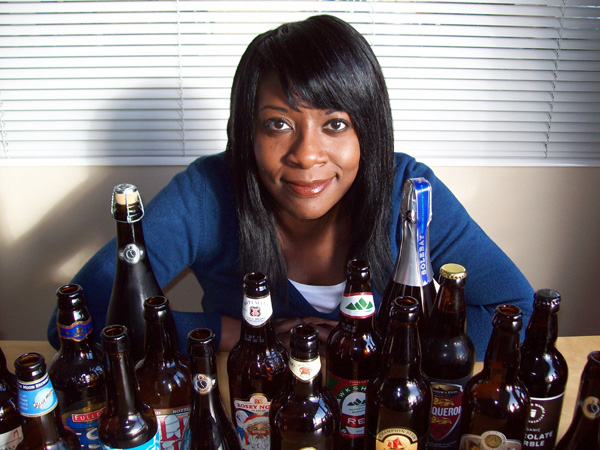
Marverine Cole - Beer Beauty - woman with bottles of real ale (2) This week ICIP has been lucky enough to chat to another of their beery heroes – Marverine Cole of Beer Beauty. Marverine is one of the eight female Beer Sommeliers in the UK as well as an award-winning beer writer, TV presenter and journalist, so we were very excited to ask her a few questions about her love of beer and her recommendations for our boozy Christmas lists.

It Comes In Pints: We read that you used to be a red wine drinker. Did you have one pint that caused an epiphany or was your love of beer a slow development?
Marverine Cole: It was one sip from a half pint of Beartown Brewery’s Peach Melbear which switched a light blub on in my head. I was hooked on finding other tasty beers with such impact ever since that day.

ICIP: You are a bit of a trailblazer for women who love beer – the first woman to win a gold award at British Guild of Beer Writers, one of only 8 female beer sommeliers in the UK – have you seen things open up for women beer fans since you’ve started being interested in beer?
MC: I think blogs like yours show there’s a real thirst for beer amongst women. We want to know more about it and where we can get hold of some good stuff! The fact that I’ve appeared on female-focussed shows like The Alan Titchmarsh Show and This Morning with Holly Willoughby openly exclaiming her love of beer shows the tide is turning. I’m hugely excited by the fact that more and more women are getting interested. The Cask Ale Report also shows there’s an army of women who regularly enjoy cask ale too.

ICIP: You write a lot on your website, Beer Beauty, about how you love to convert women to beer. How do you go about introducing a die-hard wine and spirit drinker to beer? Is there a style or brand you tend to start them with?
MC: I’ve never been one to say forsake all other drinks and drink beer. I still enjoy red wine and I love gin and vodka. I drink what I fancy when I fancy, although the social situations you’re in and the people you’re with might change the playing field.
I would start anyone on Fuller’s Honeydew – the sweetness of the organic honey coupled with the light bitterness and the punch of it being a 5% beer ticks many boxes for women who are beer-curious. The rich golden colour, the aroma, the taste and the alcoholic kick all nod towards a female palette – we like strong drinks with something about them. We don’t all want a pale, weak tasteless ales – of which there are many on the market, sadly. I think it’s more about making suggestions to women of beers I’ve loved and like the taste of in the hope that they will experiment and try some. I have a Top Ten Beers for Brew-bies on my website which is my Starter For Ten for anyone – male or female – who wants an idea of where to start.

ICIP: What are the most common misconceptions you hear from women about beer?
MC: That it’s fattening, is full of calories and fat and cholesterol and that all beers are bitter.

ICIP: You must taste hundreds of beers, but do you have a personal favourite style or type of beer that you hanker after?
MC: I often can’t say no to an Imperial Russian Stout!

ICIP: What breweries do you think are making the most exciting and delicious beer at the moment? Do you have any beers that you would recommend?
MC: I love Beavertown Brewery in Hackney – terrific beers, superb hook up with Dukes Brew & Que and, of course, the West Midlands connection tugs at my heartstrings too because Logan is a Midlander, like me. I love Sadler’s Ales from the Black Country – their Mud City Stout is extraordinary. I think Crate, another Hackney brewery is pretty happening at the moment too.

ICIP: As a beer sommelier you know a lot about beer and food matching – can you explain some of the basic principles of pairing food and beer for a novice?
MC: I always aim for a beer to compliment food and not contrast or fight it. But it obviously depends on the flavour explosion you want in your mouth. I think the less pronounced the spice or bitterness in a beer, the more versatile it will be. I love a good clean Pilsner-style beer with herby pork loin, whereas a really hard-hitting bitter IPA will nestle perfectly next to a spicy Thai curry. A fruity beer might work well with a dessert – I always like to pair something like a Belgian cherry wheat beer with a sour, sharp cherry tart, maybe with swirls of chocolate on the top or served with chocolate ice-cream!

ICIP: What beers are on your Christmas list? Are there any beers you can recommend to match with Christmas fare?
MC: The best and most versatile recommendation for a Xmas table beer is Bosteel’s Deus at 11.5%, which I took on This Morning last year. Produced in the way Champagne is, it’s pineapple-like on the nose, with champagne like bubbles in the glass. Serve it in a flute; it’s so special that it works with both the spiciest of meals and the most delicate of flavours. Get it from a specialist beer store. Ask them to order it in NOW! As for others – I’m waiting for a few more Christmas beers to arrive but I’ve been wowed by both the limited edition Thornbridge Imperial Raspberry Stout (10%) and the BoxSteam Brewery’s Evening Star (7.5%) – a new strong dark porter from them.

Check out Marverine’s website, Beer Beauty, and follow her on Twitter @BeerBeauty and @TVMarv

Nicholson’s Autumn Beer Festival

Ah, the autumn beer festival season. Pavements run with beer, plastic pint glasses crunch underfoot, air thick with the smell of barbecuing street food. You’re more likely to be rained on than you are at a summer festival, but you’re also less likely to keel over from dehydration after the 11th pint.

Two of Britain’s biggest beer chains have run “beer festivals” within weeks of each other this autumn: Wetherspoons (ran October 16-31) and Nicholson’s (running 21 October – 17 November).

DSC_0023

“Beer festivals”, we say: by nature, they’re short, packed, ticketed, temporary affairs. Pilgrimage-spots for the beer-lover. Part of the fun is sampling a one-off brew and, for the London-based boozer, luxuriating in the week when some of the best ales in the country come to you (travel outside the north circular? Me? What?). Can big chains recreate the magic of the summer beer festival? Can you have as much fun sprawled on the floor of your local ‘spoons as you can in the long, lush charred remains of grass, cigarette ends and syringes in London Fields?

ICIP went to the White Horse in Soho, a Nicholson’s pub, to find out.

White Horse-13This year’s autumn festival marks the chain’s 140th birthday and showcases 50 cask ales (and ciders) on rotation. Your local will change the beers it has on offer every week or so – and will do so in consultation with nearby pubs to make sure one area isn’t flooded with the same IPA. Nicholson’s Cask Masters, the company’s trained beer experts who select the beers on sale in pubs, are on hand in each pub to talk punters through the range and offer recommendations.

The brand does a great line in nostalgia, buying up old British pubs in prime locations for (at least in London) the ultimate Dickensian drinking experience. It’s given them some fantastic locations in London – Soho, the West End, the City – but, as Nicholson’s Assistant brand manager Ben Lockwood tells us when we meet him for a glug-through the beers on offer, it doesn’t always make it easy to accommodate events us excitement-hungry Londoners require, like a real ale festival. And it is these excitement-hungry young drinkers that Nicholson’s hopes to attract with its IPA-heavy festival. Sales of cask ale are on the rise, Ben tells us, and the chain has seen a shift in the age of its punters to a younger, 25-34 audience.

DSC_0024Set around an old-style public bar, which dominates the centre of the pub, the White Horse creates what Ben describes as a traditionally British experience, particularly when coupled with the expertise and local knowledge of the landlord – Nicholson’s well-trained staff, who Ben says are encouraged to talk to customers and offer them samples. But – in the White Horse, at least – you run the risk of entering through the wrong door, having your view of the festival obscured by the bar, and leaving none-the-wiser. This is one potential pitfall of holding a festival in this kind of environment. This is the tradeoff, we guess, for holding a modern beer festival in central London in an environment built for 18th century gin-sippers.

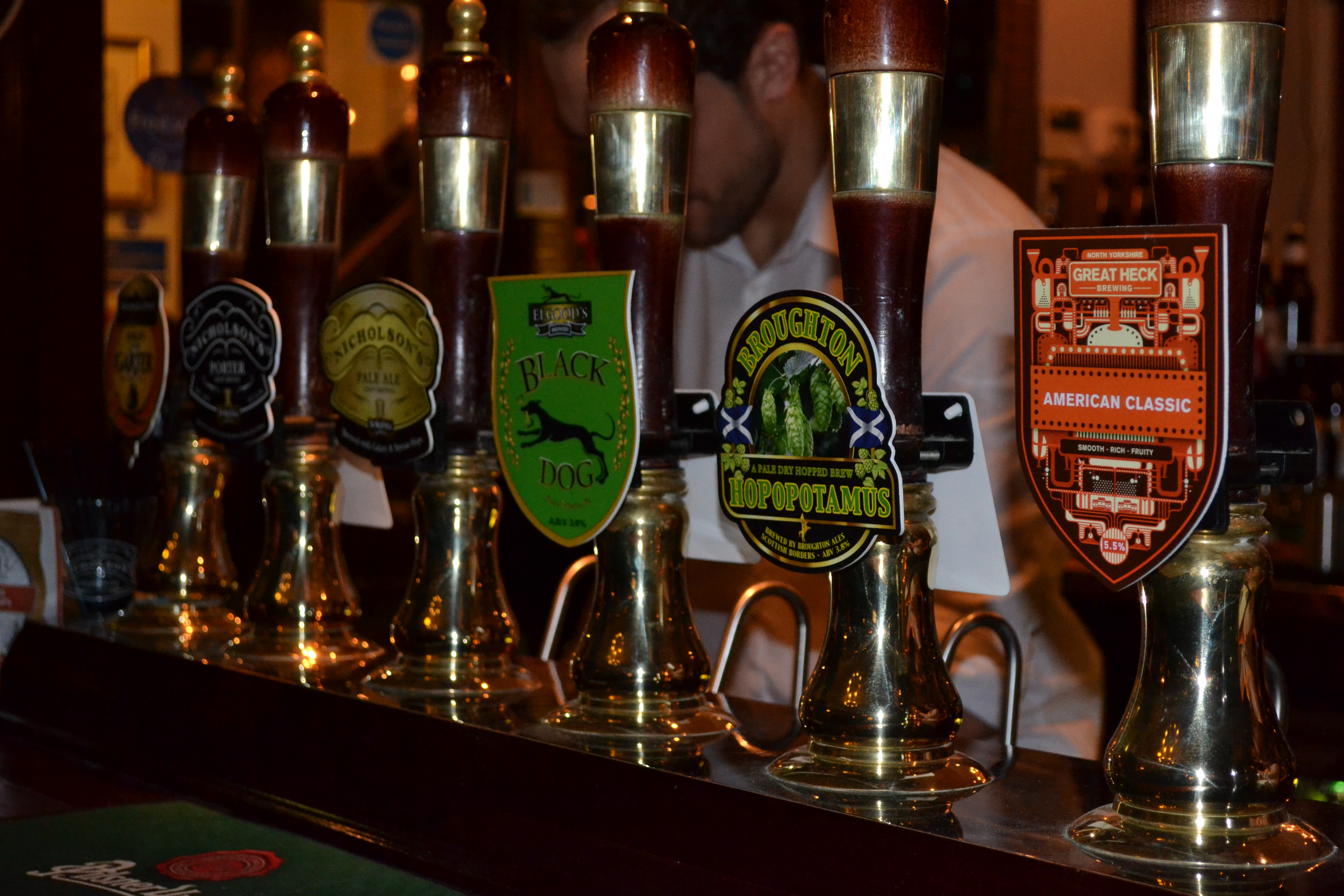
However, this certainly doesn’t affect the quality of the brews. We kick off our tasting with a half of the stunningly delicious Great Heck, an American IPA (5.5%). You can taste America in its breadth of the “c” hops – Cascade, Chinook and Columbus among others – but it’s well-balanced and warm enough to earn a place in an Autumnal line-up. Next up is Thwaite’s 13 Guns, another 5.5% stuffed with New World hops but brewed in Blackburn. It’s lighter than Great Heck – despite being the same abv – but as there’s a lot of halves ahead, this is no bad thing.

DSC_0021We wondered if Nicholson’s beer choices reflect the average punter’s beer taste – and particularly if they are mindful of the ever increasing number of women beer drinkers. “Times have changed,” Ben tells us. “Women drink what they want.” He isn’t surprised to hear we like dark beer – and remembers when a half of Guinness was the quintessential lady’s tipple – but says he would probably recommend something blonde and lemon-y, around 3.8%, to a first-time festivaller.

We move on to Nicholson’s own Porter, brewed by St Austell to a recipe from 1910, which makes an interesting change. Hopped with Fuggles and Styrian Goldings, it’s a rich, dark toasty beer. We were interested in the brewer’s choice of British hops, but Ben told us that a popular taste for zingy, new world hops is endangering home-grown varieties.

Feeling slightly guilty, ICIP tucked into his next suggestion – Broughton’s Hopopotamus (3.8%). Following the Porter it feels a bit lighter – this would make a tasty session beer. Although now the Amarillo, Cascade and Chinook taste less like grapefruit and more like GUILT. We finish off with a half that isn’t part of the festival – Cameron’s Gold Bullion (4.3%) – but makes for a light beer with a citrus-y finish.

Avowed cider newbies, we weren’t sure what to do when Ben offered us a parting half of Orchard Pig’s Explorer Bib (4.5%). ICIP wondered what we were missing when we walked straight past the wall of ciders at the GBBF – and, turns out, we were missing quite a lot. This cider is fragrant and smooth, packing more punch than you’d expect from it’s 4.5%.

We staggered out of the White Horse pub-based beer fest converts. It’s all too easy to sniff at big-brand endeavours like Wetherspoon’s festival – but corporate dollar, at least in Nicholson’s case, has devolved to local expertise (in the form of its Cask Masters), a great spread of beer. You’ve got almost a month to enjoy them – meaning there’s less of an excuse for panic-downing eight halves of whatever you can reach – and, crucially, you can have your fill without fear of being swept into the Thames by a passing seasonal hurricane.

Nicholson’s Autumn Beer Festival runs until 17th November.

– ED

Abstinence makes the heart grow fonder

Inspired by Macmillan Cancer Support’s “Sober October” campaign, ICIP has decided to use this opportunity to investigate the world of low- and non-alcoholic beers. In part one, we learned how low-alcohol beers are produced and who is making them, and in part two we discussed why they are not more widely available and how they could be better promoted.

In the final part of the Sober October series we bite the bullet and test fourteen low-alcohol beers…

DSC_0090There was a disastrous point at the beginning of this year when one half of ICIP decided to give up alcohol for Dry January, and then again for Lent, without realising there were just 13 days between the two.

What happened during those 13 days (and, if we’re honest, the last two weeks of Lent) is lost to the mists of alcohol-clouded time, but the whole experience swore one of your correspondents off abstemious months – and Becks Blue – for life.

But sometimes you’ve got to tackle your worst fears head on. Inspired by our Sober October features on low alcohol brews, ICIP decided to do one, definitive, world-encompassing taste test. We decided (bravely) to venture beyond Becks and low-alch Cobra. Apparently non-alcoholic beer is a big thing in the rest of Europe. We dreamt we might discover the beer-guzzling, hangover-suffering journalist’s Holy Grail: a non-alcoholic beer that smelt and tasted delicious; that we could chill and swig with pride at home or in the pub when we felt a bit fragile, a bit virtuous, or both.  

DSC_0141

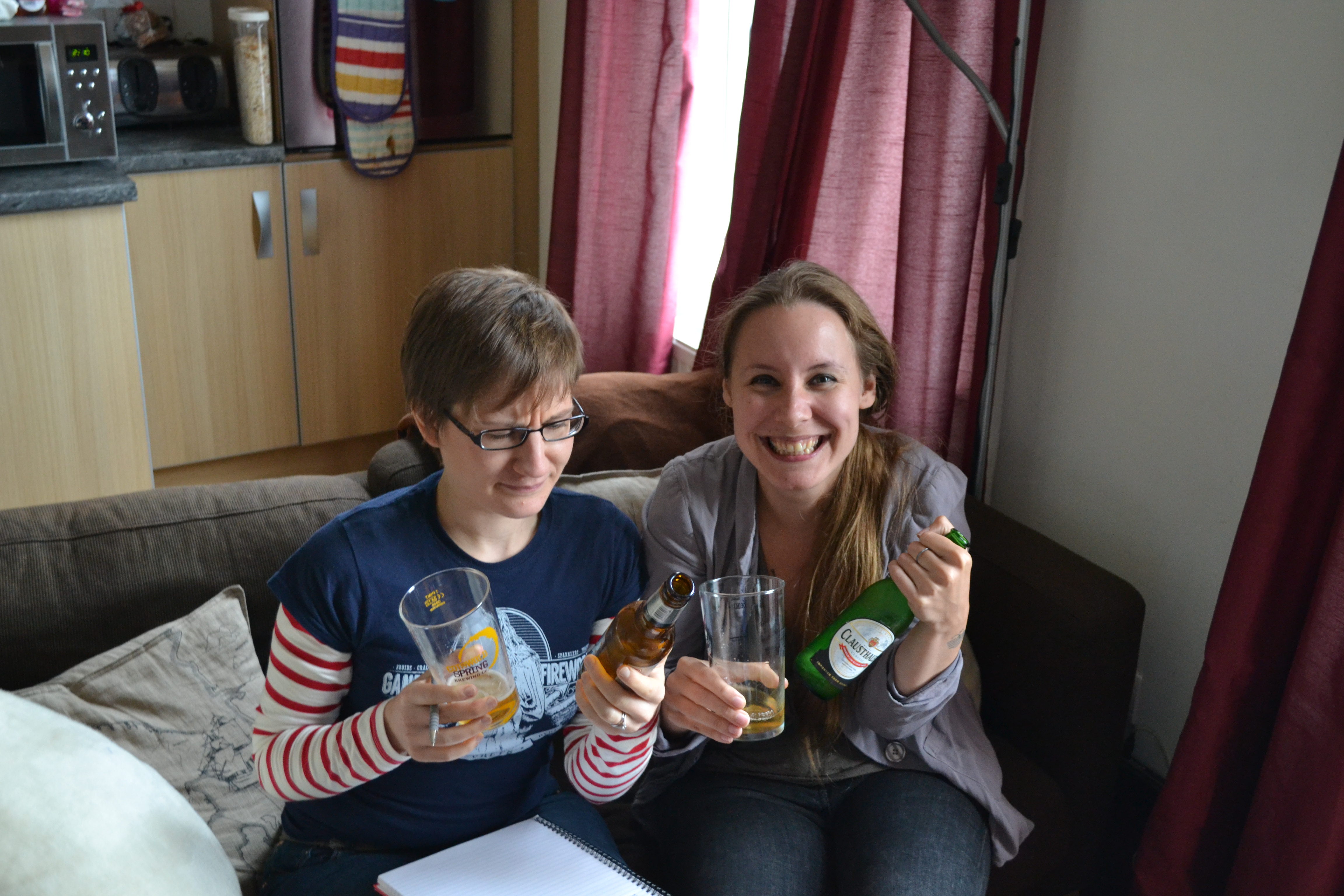
Last weekend, windows shut tight against an October flash flood; our best chill-out playlist on; GTA V turned off so that we could concentrate; ICIP took the final step in our Sober October trilogy. We set out fourteen (FOURTEEN) of the most hotly-tipped low-alcohol and alcohol free beers money could buy, and we drank our way through all fourteen (FOURTEEN!!!!) of them.

Well, drank. Some we drank. Some were so ghastly we had to upend them into a nearby bucket. At low points during the tasting (of which there were many) we tried to contrive ways to make one another drink the contents of the bucket. Sometimes it was better than what was in the bottles.

Below is a full catalogue of our disappointment, but to sum up some of our major gripes:

  1. It is not OK to compensate for the lack of taste in your non-alch beer by making it undrinkably sweet. If we wanted something that tasted of melted chemicals and candy we’d get a Coke and have done with it.
  2. Beers that delivered on smell fell down peculiarly on taste. Perhaps because there’s no way to deliver the hoppy-taste-payload without alcohol?
  3. WHY DOES IT ALL SMELL LIKE SHREDDIES?

An honest look at our extensive research revealed that our estimation of the drink went up as the ABV went up. While not a surprise to anyone who knows us well, we were a little disappointed. It made us existential – and not in the cool, drunk way, because we were stone cold sober and extremely over-hydrated. Is our proclaimed love of hops, malt and toast really all a vehicle for sneaking alcohol into our drinks? Most of these drinks would collapse in front of a robust glass of Sprite, and at £2-4 a bottle, are non- and low-alch beers really worth splashing out? Let us know what you think.

Without further ado, and in ascending order:

DSC_0129Cheers Cerveja Preta
Portuguese
0.5%

Oh, Cheers Preta. You delivered so much with your sweet toffee colouring. One look at the label and BAM! Disqualified for using artificial colouring. This Preta was undrinkable-y sweet, which made the peculiarly bitter aftertaste even worse.

1/10

DSC_0115Veltins Alkohelfrei
German lager
0.5%

“A German lager! Germans make great lager! What could possibly go wrong?” we chortled confidently before cracking open a bottle filled of fizzy, tasteless water that still managed to smell like off-milk. NEXT.

1/10

DSC_0119Cheers Cerveja
Portuguese
0.5 %

After all that fizzy water you’d think we’d be grateful for another dose of Cheers’ appallingly sweet, scentless offering. In a different bottle. And a different colour. You’d be wrong.

1/10

DSC_0128Bavaria
Netherlands lager
0.0%

I suspect Bavaria – which is actually one of the more widely available non-alch beers – was responsible for impregnating my nose with the overpowering Shreddies-smell that pervaded the rest of the tasting. As this was better than sour milk, we were almost motivated to forgive Bavaria its overpowering, honeyed sweetness. Then we remembered we had about six litres of fizzy water left to go and got pissed off.

1/10

DSC_0134Holsten
German
0.0%

I suppose one benefit of tasting fourteen (FOURTEEN!!!) non-alcoholic beers in one afternoon is that your notes maintain the acidic, witty clarity they tend to lose after, say, fourteen halves of milk stout. Thus I can confidently say that this beer, which tasted of fizzy water and mineral, “looks like piss.”

1/10

DSC_0135Krombacher
German
0.5%

We fondly observed that this sour-nosed German offering tasted “like Coke”, which lack of sarcasm goes to show how early on it came in the onslaught of artificial sweetening.

1/10

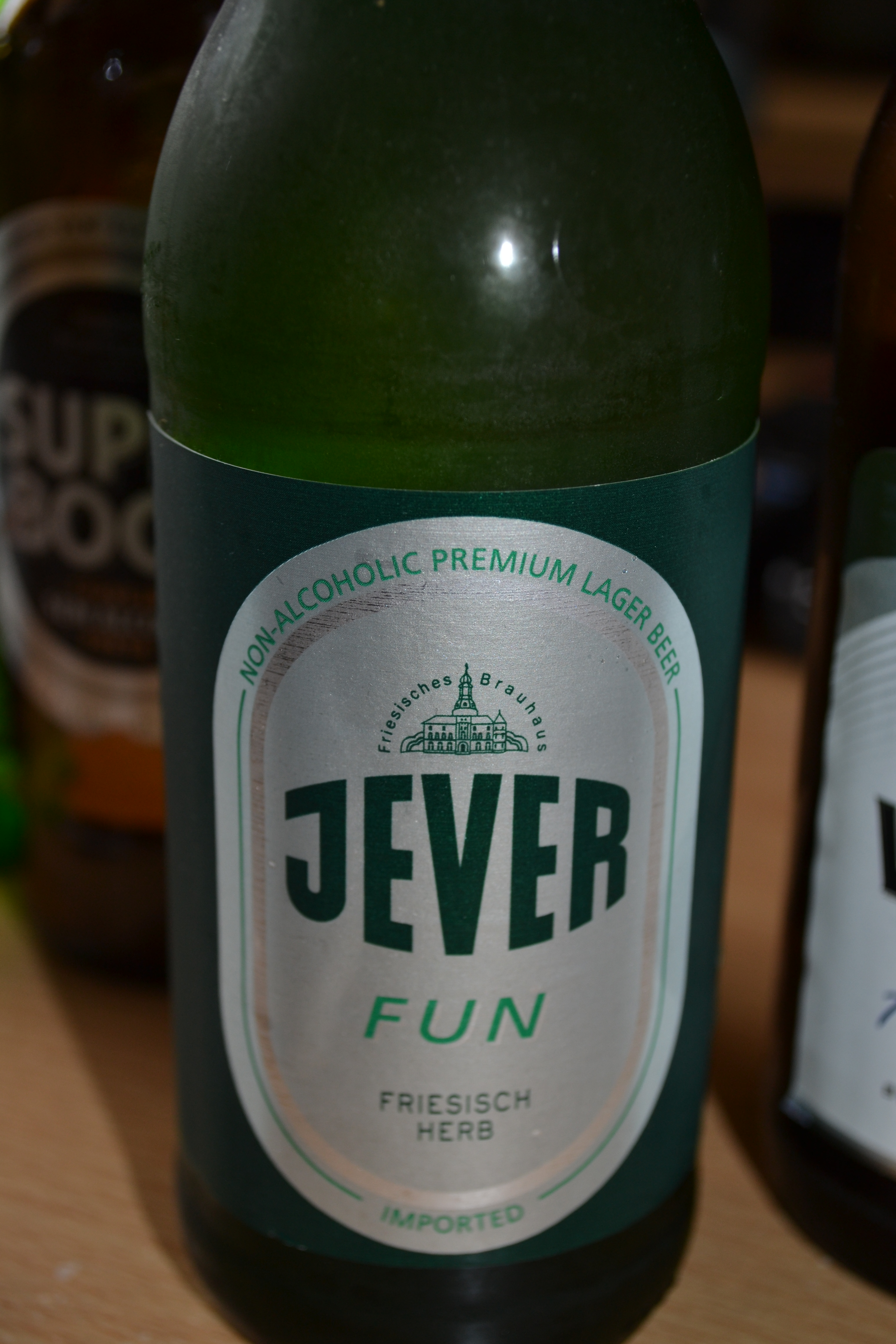
DSC_0113Jever Fun
German lager
0.5%

“Fun?” we screamed. “Whose idea of fun is this?” Actually, to be fair, this reasonably robust lager – despite being astringent-ly bitter and ending in a big chalky, minerally collapse – did enough to lift the tasting from the 1/10 mark.

2/10

DSC_0121Sagres Zero
Spanish
0.3%

Like the ghost of beers you once loved, Sagres caramel-ed its way in sneakily with no discernable nose and no bitterness to pay-off the extreme sweetness.

2/10

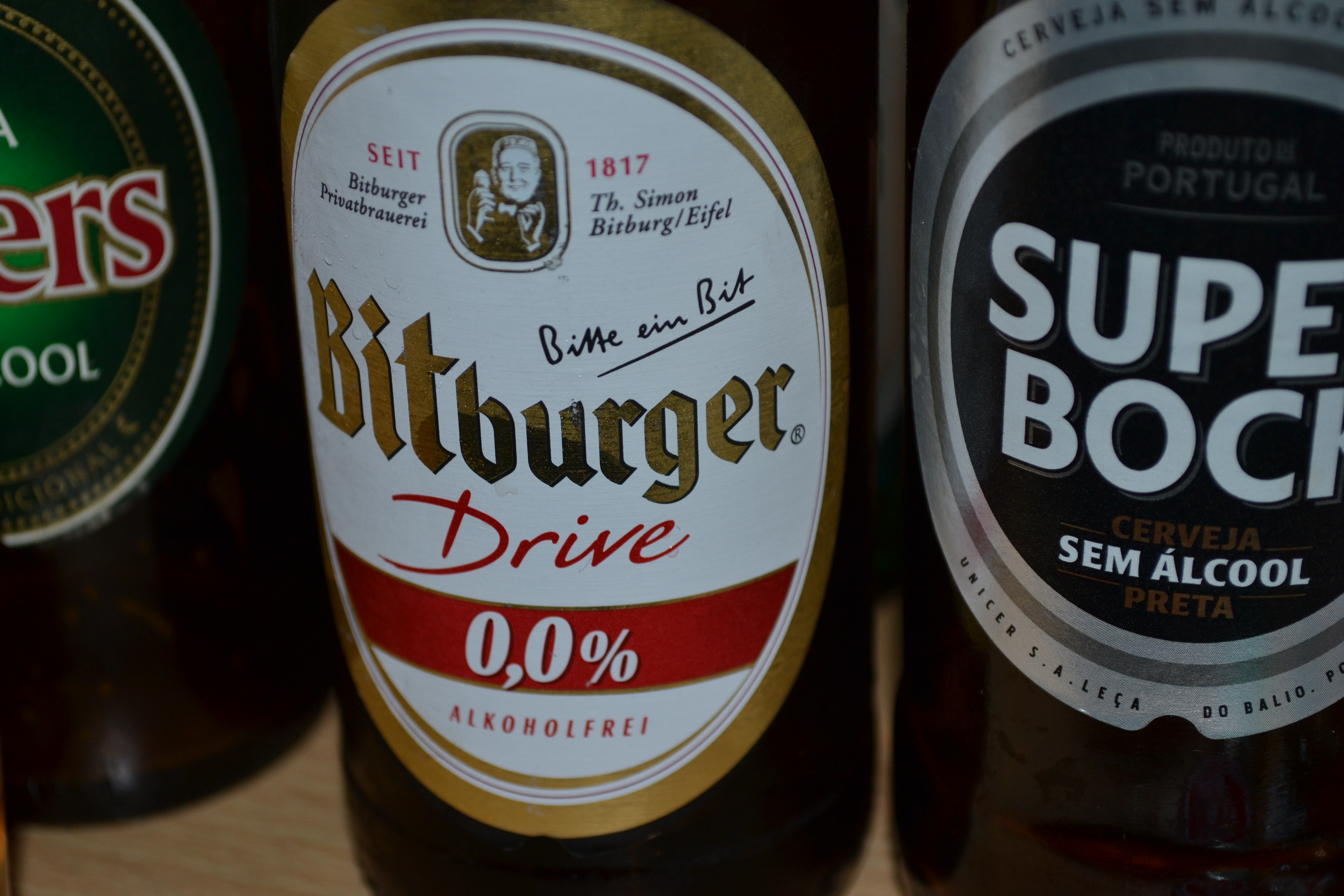
DSC_0094Superbock “Preta”
Portuguese
0.5%

Once we’d overcome the violent flashbacks this Superbock brought on by calling itself “Preta” (see the first beer reviewed) and smelling like goddamn Shreddies, we almost enjoyed the malty sweetness of this Portuguese beer. “Almost like Becks Blue,” a phrase we used to use as an insult, is actually the kindest thing we’d written about a beer so far.

5/10

DSC_0122Bitburger Drive
German lager
0.05%

Bitburger nailing it down here by naming their beer after one of the few reasons you’d put yourself through drinking it. That said, a sour nose here gave way to some cake and vanilla notes, and an almost toasted flavour with a bitter aftertaste, which was the most exciting thing to have happened to our tastebuds in nearly an hour.

5/10

DSC_0116Superbock
Portuguese Pilsner
0.5%

Another reasonable offer from Superbock, which poured with a promisingly generous head and smelt of beer and NOT SHREDDIES. Pleasantly fizzy, with some citrus and floral notes, this beer let itself down by allegedly tasting of washing up liquid.

6/10

DSC_0137Brewdog “Nanny State”
Imperial Mild
0.5%

Hops! How we wept when we uncorked this beer. In fact, I got so excited writing this I initially typed “Hopes!”, which sort of sums up how we felt after a good, long whiff of the classic Brewdog smell.

But the danger of delivering so much on the nose is that you have to bring the party to the mouth, which this beer – much as we wanted it to – just didn’t.

 6/10

DSC_0096Clausthaler Classic
German lager pilsner
0.5%

Our favourite of the genuinely non-alcoholic beers, this beer promised little (no nose) but delivered much. The observation that it tasted of rosewater should probably be put down to the after-effects of one of ICIP’s recent trip to Morocco and her steady consumption, while there, of all the sweets.

7/10

DSC_0136Brewdog “How to Disappear Completely
“Fake fix double IPA”
2.8%

At 2.8%, How to Disappear Completely just scraped into what we considered to be low-alch beer. Brewdog’s very delicious Dead Pony Club, a lovely session ale, clocks in at just one per cent higher. And while we loved the hops – Centennial and Columbus – that bounded out of this beer, all citrus-y and toast-y, it – like Nanny State – didn’t really deliver on flavour. Which left us wondering where it really fits between Dead Pony Club (delicious) and water (free at a pub near you). Although, taste-wise, it did disappear completely. Chuckle.

8/10

DSC_0139Mikkeller “Drink’in the sun”
American style wheat
1.4%

Our favourite low-alch beer was also the last one we tried, which on this occasion you can’t put down to drunken exuberance (sadly). Fruity hops on the note and an authentic sweetness that wasn’t as artificial as some of the other beers we’d tried – this beer nudged it over H2D because it was an unexpected contender, and it managed to keep the ABV down.

And we were so thankful it was all over.

8/10

DSC_0102

DSC_0101

DSC_0106– ED

Swotting up at the School of Booze

To celebrate the release of her two new books, Beer Sommelier Jane Peyton has collaborated with Brewsters Brewery to produce a special green-hopped beer. ICIP got their hands on the books and went along to the launch party to find out more.

DSC_0032Jane Peyton is a bit of an hero of ICIP’s. She’s one of just eight female Beer Sommeliers in the UK and has founded two alcohol-related events companies – School of Booze and Operalicious. She is also an author, after-dinner speaker, tasting tutor and occasional Fuller’s brewery tour guide. Summed up – she is our kind of lady. So we were very excited to find out she had not one but two books coming out this October.

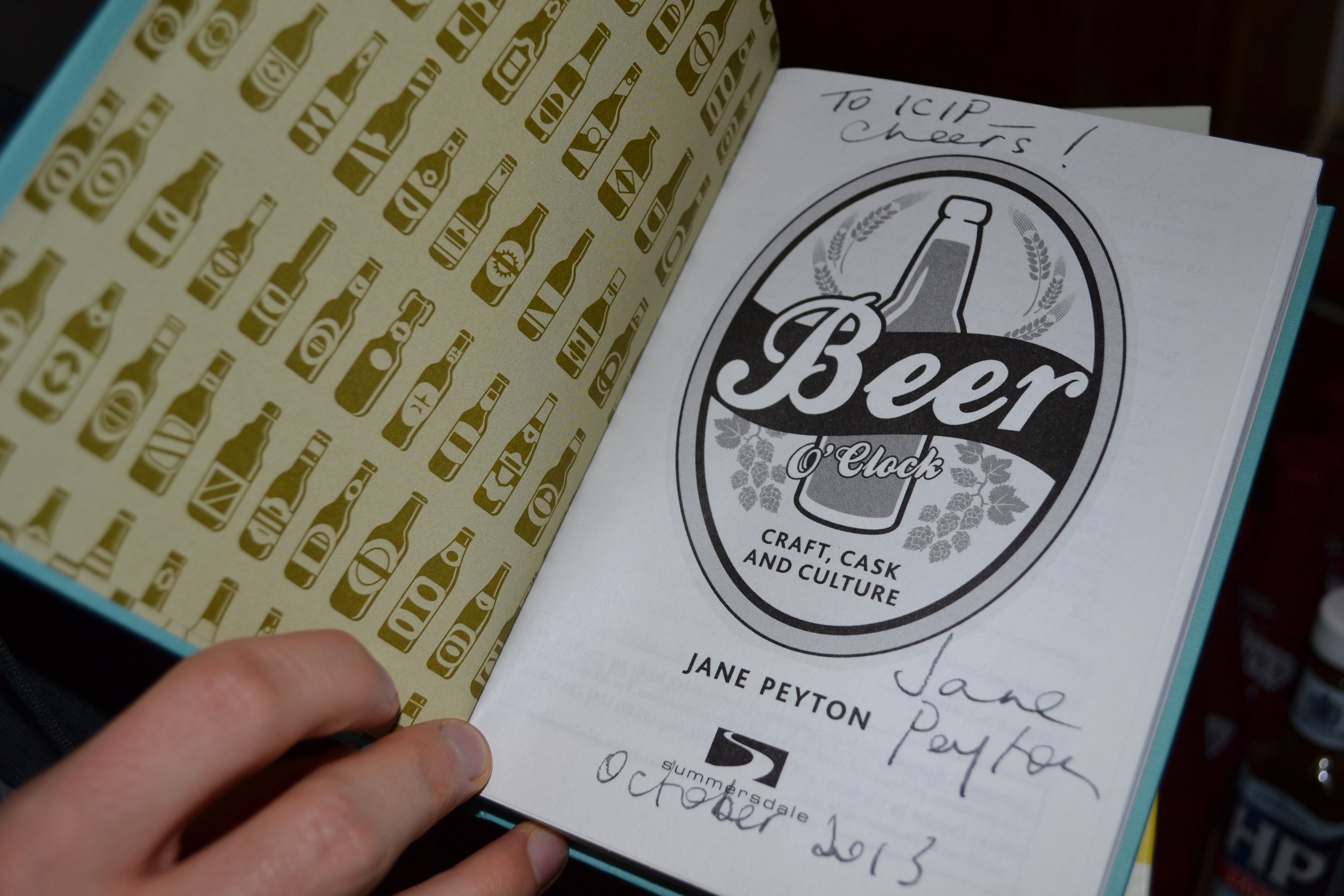
DSC_0029Beer O’Clock: Craft, Cask and Culture (Summersdale, 2013) is a true celebration of beer, and an excellent addition to any beer drinker’s bookshelf. Jane’s passion is evident from the outset, describing beer as a “priceless gift to humanity, begetter of happiness, sociability and companionship”. She believes that beer, more than any other drink, brings people together, acting as an international language.

Her historical section on “beer’s early years” is fascinating, reporting that beer may have been produced as early as 7000BC. This section pays particular attention to the role of women throughout beer’s history, from early brewers to the female gods of beer such as Ninkasi (Sumerian), Ceres (Roman) and Mamasara (Peruvian).

Jane breaks down the brewing process into a summary easily understood by newcomers to beer. She takes time to explain the importance of each of the key ingredients – water, malt, hops and yeast – and also discusses the best way to taste beer to get the full benefit of aroma and flavour. One of our favourite chapters focuses on the health benefits of beer. High in antioxidants, B-vitamins, potassium and silicon, and offering protection from breast cancer, heart disease, gallstones and Parkinson’s, beer now seems an even more alluring option (in moderation!).

But the crowning glory of the book, as far as ICIP is concerned, is the whopping sixty pages dedicated to beer styles. This explains the characteristics of nearly seventy different beers, from Abbey to Witbier, and everything in between, also giving you examples of brands to try, recommended serving temperature, glassware and ideas for food matching. This section is so comprehensive that we wish we could carry it around with us everywhere (and given the neat design of the book, at a weeny 18x14cm, we probably could). It really is a beer-lover’s bible.

Jane’s second new book, School of Booze: An Insider’s Guide to Libations, Tipples and Brews (Summersdale, 2013) expands on some of the areas touched on in Beer O’Clock, but extends the scope to cover all alcoholic beverages. She traces the history of alcohol through Mesopotamia, Egypt, Ancient Greece and Ancient Rome, tells us why we get hangovers, where we get cork from, and explains the process behind everything you’d find behind a bar, from absinthe to wine. It is a dizzying trip, packed with enough trivia to make you popular down your local for a long time to come.

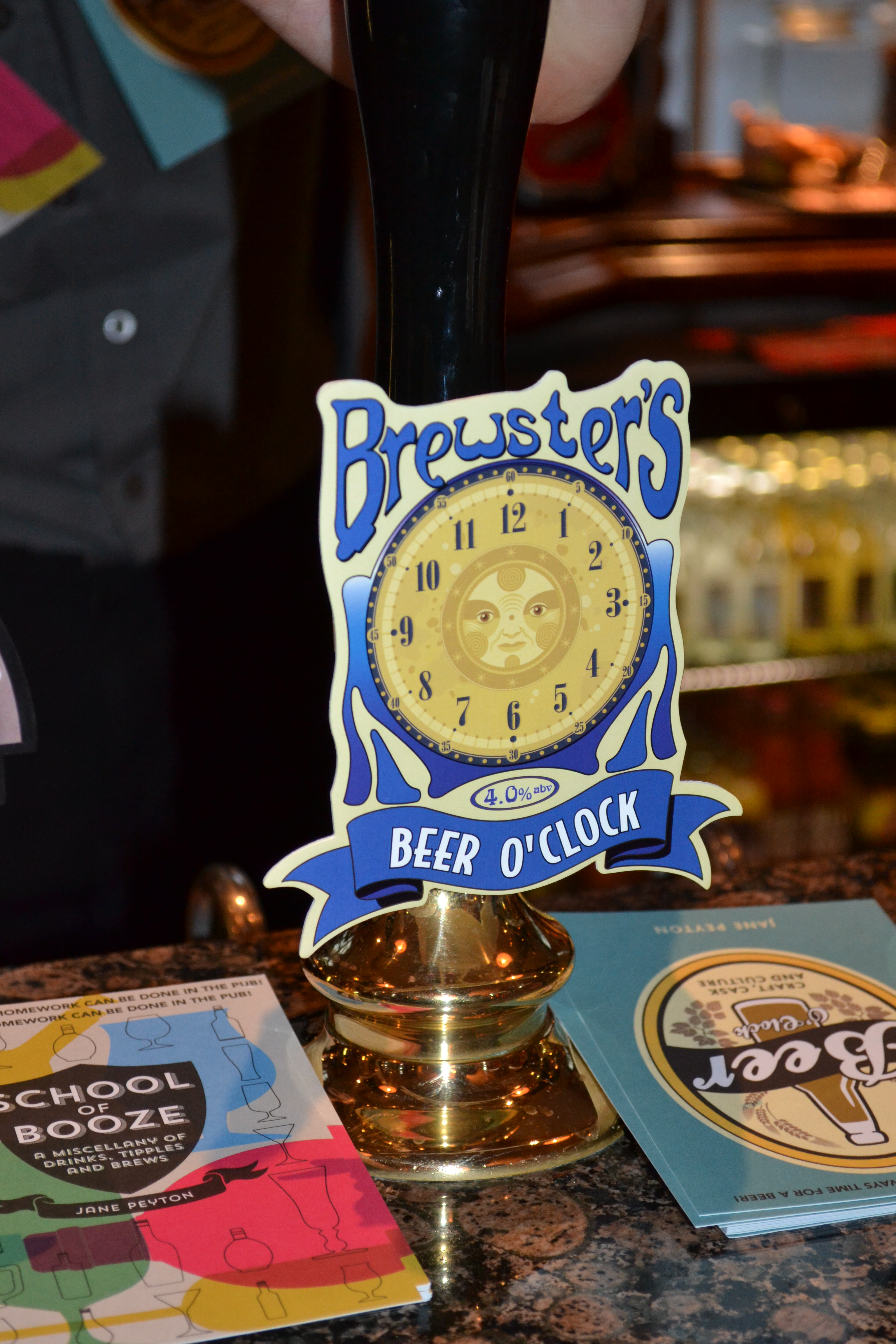
DSC_0026Beer O’Clock is dedicated to Sara Barton, founder of Brewster’s Brewery in Lincolnshire, and Jane and Sara collaborated to make an eponymous green-hopped beer for the launch party. For the uninitiated, when a beer is green-hopped fresh hops are used instead of the traditional dried ones (or pellets). This means that there is more oil left in the hops and more of their flavour is evident in the final product.

The beer obviously went down a storm in The Mad Bear and Bishop, the Fuller’s pub in Paddington station where the launch party was held. A whole firkin was sunk during the lunchtime session and ICIP was lucky to grab two halves before the pumps ran dry once again in the evening. The pub was heaving with beer fans – interestingly, predominantly female – snapping up signed copies of Jane’s new books while supping pints.

Beer O’Clock (4% ABV) is a golden ale, single-hopped with First Gold and made with three different malts. It has a sharp, citrus aroma, a hoppy hit balanced with a good level of bitterness. The result was a light, session ale with a pleasing astringent mouthfeel and decent body. ICIP overheard other drinkers getting marmalade on the nose – very appropriate for Paddington station!

For anyone wishing to try Beer O’Clock, The Rake in Borough Market will have some in on October 23rd – be quick, it is very exclusive and this will be your last chance.

– PS

Low alcohol beers – high and dry? (part two)

Inspired by Macmillan Cancer Support’s “Sober October” campaign, ICIP has decided to use this opportunity to investigate the world of low- and non-alcoholic beers. If you missed part one, catch it here

In part two we look at the demand for these products and ask why they are not being better promoted in today’s health-conscious society.

afshopDuring ICIP’s research, we stumble across The Alcohol-Free Shop, a company based in Manchester selling non-alcoholic beers and wines. Their range is impressive… and international. There are beers from Germany, Spain, Belgium, Portugal and the Czech Republic. They’ve obviously found a bit of a niche market that isn’t being adequately supplied by the likes of Sainsbury’s and Tesco. We asked co-founder Christine Risby where the idea sprang from. “My husband [co-founder John Risby] is a recovering alcoholic. He had stopped drinking for about two years when he was fed up with being offered nothing but cola, lemonade or orange juice. He wanted to enjoy wine with his meals and enjoy a beer without returning to his old ways. We discovered that there were many alcohol-free wines and beers available across Europe but little available in the UK.”

Christine says that interest in alcohol-free options has definitely increased in recent years – and business is obviously doing well, as they were able to open a showroom to accompany the online shop last year. “People are more aware of the dangers of alcohol and more health conscious. A lot of people choose alcohol-free beers based on brand awareness but once they realise there are so many brands that they don’t know, they start experimenting more. Also, people come back from holidays abroad having enjoyed alcohol-free beers that are available in many bars in Germany, France, Holland and Spain and seek them out when they get home.”

ICIP is stunned by the range available at The Alcohol-Free Shop. We hadn’t even considered the possibility that you could make an alcohol-free stout or dark ale like Super Bock or Bernard Free. Does Christine think that supermarkets should be trying harder to offer consumers a bigger range? “People who go to supermarkets aren’t looking for alcohol-free beer,” she points out. ”On occasion they may buy a six pack for a guest who is driving. But every product has to earn its shelf space. If a product doesn’t move quickly, they are likely to drop it. Some supermarkets have tried selling a wider range of alcohol-free beers but have gone back to just one or two brand names. The difference about us is that the people who come to us are looking for alcohol-free drinks whereas most people who visit supermarkets are not.”

We tried to get some information from supermarkets about the demand for alcohol-free options, but had no response from Tesco or Asda. Sainsburys told us they couldn’t give us any figures but offered a statement: “Our 2020 commitment is to double the sales of lighter alcohol wines and reduce the average alcohol content in our own brand beers and wines.  We are certainly seeing a demand from our customers for lighter styles of wine and lower alcohol drinks so we will continue to use our buying and winemaking expertise to ensure we have beers and wines available that do not compromise on taste or quality.”

aconcern

It could be that we have a bit of a chicken and egg situation whereby demand is not going to increase substantially until a wider range of better quality products are available, but brewers are unlikely to experiment with quality low-alcohol beers if they don’t think they’ll sell. “Anyone who’s tried to buy low-alcohol beer in a pub in Britain will find that often there is only one brand available, it’s not necessarily the one you want,” says Alcohol Concern’s Andrew Misell. “I’ve occasionally wondered what an alcohol-free ale or stout tastes like, because if I want to drink alcohol-free beers I can only find alcohol-free lagers in my local pubs and supermarket. It’s a lot more normal on the continent to buy alcohol-free beer in a pub.”

“In Norway it’s mandatory for all places who sell alcohol to also offer a non-alcoholic beer/wine,” says Terje, 30, when we hit Reddit for some international input. “There’s a zero-tolerance for driving under the influence so it’s expected both by the state and fellow citizens that you stick to non-alcoholic beverages.” Hugh, 37, tells us there is a similar attitude in New Zealand: “The culture of peer pressure around alcohol is slowly changing. There’s a legal requirement for any on-premise licensed venue to carry something under 1%”. Surely this would be an strong first step – requiring all pubs to stock a low-alcohol option?

“Most pubs would say they do offer alcohol-free alternatives because they sell soft drinks such as orange juice and cola but that doesn’t really satisfy people who want a nice beer or glass of wine,” laments Christine. “Also most of their customers want alcohol and they don’t want to take up shelf space with a range of alcohol-free beers. I think pubs need to change their attitude. There’s not enough choice in pubs and staff too often make customers asking for alcohol-free beer feel embarrassed and unwelcome.”

“It’s not something we would say should be mandatory,” Andrew adds. “But for a number of years it has been compulsory under Home Office rules for pubs to provide water and I think that has made a difference. It always used to be a bit embarrassing to go to the bar and say “can I have a pint of water please, but now it is a lot easier.” It’s a start, at least. Now that the craft beer scene has really taken hold of the UK, higher-ABV beers are becoming more popular, and sometimes you need to take a break as a drinker to prevent your evening spiraling into oblivion. ICIP knows it has been grateful for being offered an Erdinger Alkoholfrei somewhere in the murky depths between a 7%+ offering from The Kernel and something evil by Flying Dog before now.

We have also considered the labelling of alcohol. A lot of fuss has been made in the past about including the number of units on alcohol packaging, and in June 2013 it was announced that the government is to roll out a standardised labeling system for food products. But nutritional information on booze is hard to find. “The legal position is that there is an exemption for beers, wines and spirits across the European Union. That is the result of lobbying by the big wine-producing countries who for whatever reason didn’t want that kind of labeling,” says Andrew.

It seems strange, at a time when we’re constantly being reminded that two thirds of the population in the UK is overweight or obese, that we’re not being given the information we need to make informed choices about the liquid calories we consume. “We’ve suggested in the past it should be considered. Consumers don’t understand a great deal about the number of calories in alcohol,” Andrew tells us. “Some drinkers graduate towards white spirits like vodka – they have a lower calorie count because they don’t have the sugars and carbohydrate you get in beer, but you get a much higher alcohol content.” He warns of the potential dangers of this: “People keen to lose weight might be drawn towards spirits, and obviously drinking spirits means you take on a number of units of alcohol quite quickly.” So there’s a risk that if labeling is not supported by the education of drinkers, it could actually lead people to be less responsible about their alcohol consumption – knocking back a few measures of 40% spirits instead of taking their time over a 4% pint.

deptofhealthWe tried to ask the Ministry of Health about their views, but the reply was predictably standard: “the Department agrees that alcohol is a major public health issue, and that a comprehensive strategy that covers information, prevention and treatment is essential in tackling it.” They had copy-pasted a swathe of blurb about all the money they have ring-fenced to fund “alcohol services” and “misuse prevention and treatment” but they were very vague about what any of this would entail.

So what’s the future of low-alcohol beer? Brewdog seem keen to continue experimenting: “We’re all about breaking boundaries and trying new things, so I wouldn’t be surprised if you saw us experimenting with some interesting takes on low ABVs for other styles in the future,” says brewer Charlotte Cook. Nøgne Ø seem determined to continue working on their low-alcohol stout, and lower percentage session ales are becoming more popular. Ultimately Christine believes that the best way to make progress is to continue to strive for quality: “It’s much better to show pubs that if they served decent alcohol-free beer then people would drink it.”

In the final installment of our Sober October series we will be taste-testing a selection of low- and non-alcoholic beers. 

– PS

Scoops to conquer: beer sorbets at La Gelatiera

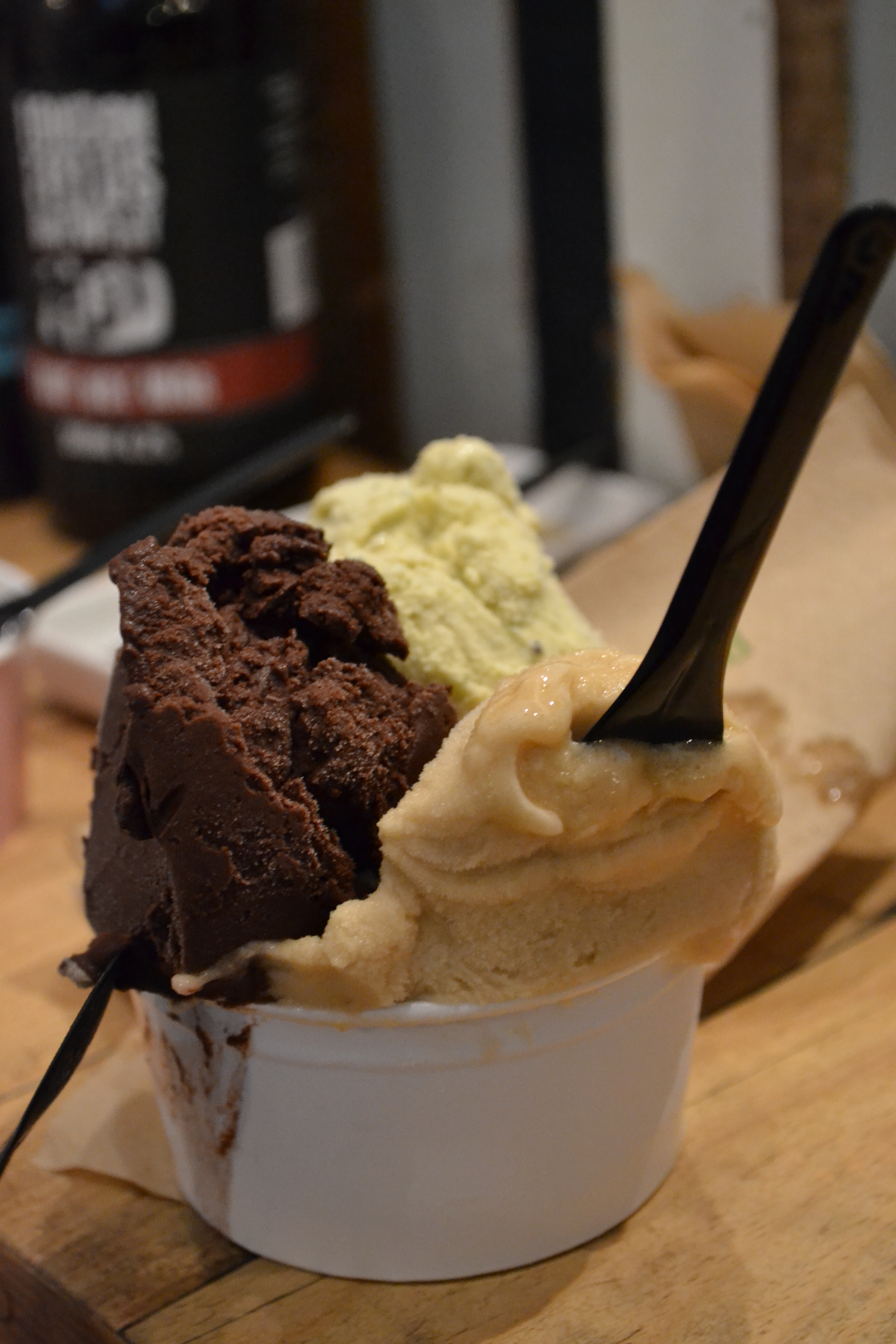
Tucked away in the West End of London, La Gelatiera is a hidden (iced) gem for ice cream enthusiasts. The tiny shop is decked out with reclaimed wood and funkily-angled mirrors, a quirky, individual look which complements the owners’ commitment to natural, organic produce and experimental flavours. ICIP has been a fan of their gelato for some time, popping in regularly to sample flavours such as salted caramel, candied chestnut and basil and chilli. However, when news reached us that they’d teamed up with London Fields Brewery to produce a range of beer sorbets, we knew we had to find out more.

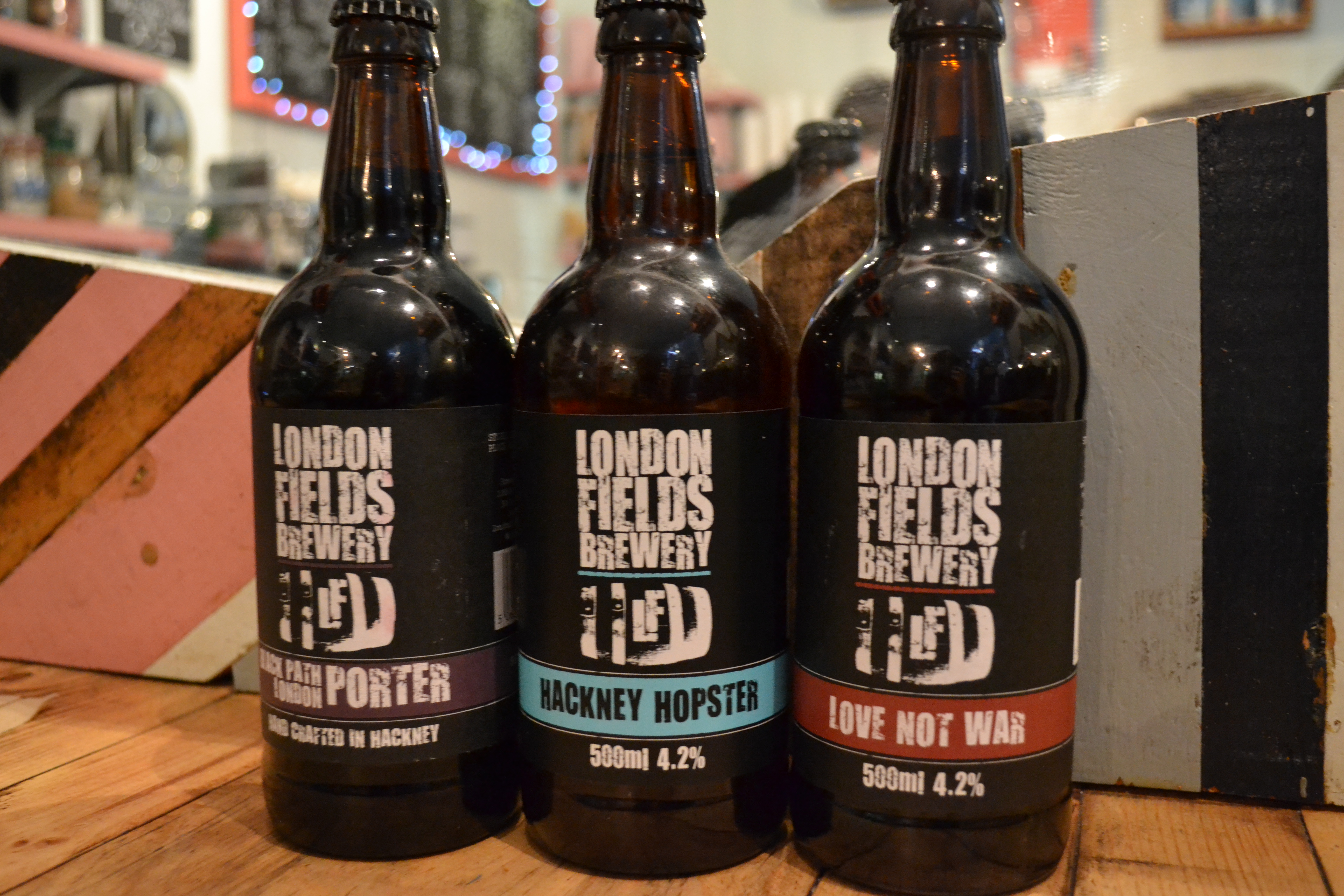
DSC_0021We are welcomed by owners Stephane Leyvraz and Antonio Parisi, who serve us up a scoop of their Love Not War sorbet. London Fields originally made this beer whilst holed up in the brewery during the 2011 London riots, a 4.2% red ale with a mixed blast of German, NZ and American hops, finished off with a dry hopping of Amarillo for added bite.

It was interesting to taste these flavours translated into the sorbet. It had a very rich, smooth quality with a punch of aniseed and pear which was less detectable when drinking the beer straight.

DSC_0003“There’s a caramel taste as well, so it’s very flavoursome,” says Stephane. “You almost feel it on your tongue. Not too fizzy, but a little.” Beer seems like quite a left-field choice for a sorbet, even by La Gelatiera’s experimental standards. Were they always confident it would work? “English beer makes good sorbets, because it’s bitter.” Antonio explains. “It works with the sugar. If you used another kind, a lager for instance, it would be too sweet.”

This is the third beer sorbet La Gelatiera have made with London Fields, the others being made from Hackney Hopster and Black Path Porter (both 4.2%), and they have been shipped out to be sold at the brewery tap where they’ve been a big success over the summer. “It’s still kind of a novelty,” says Stephane. “Which is good, we like it. When people try it, they are surprised, like you were.”

DSC_0009

La Gelatiera is planning to maintain its relationship with the brewery, and maybe try playing around with yet more flavours and methods: “they said they would send us some malt after it has been used for the first fermentation,” says Stephane. “It’s quite interesting. Not taking the finished product but taking some of the ingredients and half of the process and seeing what we can do with it.”

The gelato makers have a history of producing boozy sorbets: “We have made sake, champagne, rum…” offers Antonio. “The vodka and melon was quite popular, we did Tequila Mockingbird with gooseberry… there’s a bar called The Cellar Door and they used our Campari sorbet in a cocktail which won an award!” adds Stephane.

We’ve all tried to make vodka jelly as students. The damn stuff won’t set and won’t freeze. So how do the gelato virtuosos make it work? “It depends on the alcohol content; the percentage of alcohol you are working with,” says Antonio. “There is a formula for that. At first we test it before it is frozen, with the sugars and the other ingredients, and then you freeze it and taste it and try it. We have a draft recipe which sets the sugar content, water content, fibres, making sure it has some air in it, but not too much… from there we can change the ingredients.”

La Gelatiera are advocates of the Slow Food movement, which encourages people to choose nutritious food, from sustainable, local sources. They have struck up relationships with suppliers all around London, and prepare as much of their ice cream ingredients on-site as possible. The only exception are 100% pure pastes, such as the one used for their Sicilian pistachio gelato. They even bake a wide range of cakes and pastries in their underground kitchen.

DSC_0007

You’d think that as summer becomes a distant memory, ice cream would be off the menu for most people, but La Gelatiera has a full seasonal line-up planned for autumn and winter. Stephane mentions pumpkin, sweet potato and celeriac as a few of the flavours we can expect to see coming up soon. Last Christmas they did both mulled wine and merlot sorbets, and they are keen to try more stouts and porters going into the colder months.

DSC_0017

When ICIP quizzes Antonio and Stephane on their previous experiments, they mention flavours as weird and wonderful as cucumber, balsamic vinegar, onion and porcini mushroom. But even they have to draw a line somewhere. “There was one which was really foul… houmous and carrot,” admits Stephane. “Vile. You could feel the fat of the houmous on your tongue; it left a film on the palate everywhere… I never tasted something as bad. Honestly. I swear on my life.”

But that hasn’t stopped them pushing the envelope. “In three week’s time we’re going to have black garlic,” Stephane says with glee. “Apparently it’s very toffee-like, almost like a caramel. It’s slowly fermented and it’s still in the shell… it’s very dark.”

ICIP will definitely be back to give it a try.

DSC_0016

La Gelatiera can be found at 27 New Row, London, WC2N 4LA

– PS

Low alcohol beers – high and dry? (part one)

Assonance-loving charity Macmillan Cancer Support has proclaimed the tenth month of the year as “Sober October”, with fundraisers asking for sponsorship for a full 31 days of abstinence. ICIP has decided to use this opportunity to investigate the world of low- and non-alcoholic beers.

In part one we look at the lack of choice available at present and ask why these beers have such a bad reputation.

What first comes to mind when you think of an alcohol-free or low-alcohol beer? For ICIP it’s a sad, battered 4-pack of Cobra Zero on the supermarket shelf, those horrid little glass bottles of weak French lager our mum let us have when we were 14, or a disappointingly unrefreshing can of Bass Shandy. We’ll probably just have a coke, thanks.

“The biggest problem I have with alcohol-free beers is that they are so infrequently bought that even when you find a pack at the store it tends to be old, dusty and sometimes skunky.” – Dan, 30, USA

In an era where we are constantly being bombarded with healthy-living messages by the government, health professionals and the media, you’d think that guilt-free booze would be a hot little potato right now. Yet a quick peruse of the shelves in your local Sainsbury’s or Tesco will probably bring up the same few brands – Becks Blue, the aforementioned Cobra Zero, maybe Bavaria. There don’t seem to be many options readily available, and what there is seems pretty substandard. These products have a pretty poor reputation, and given the choice, most people would probably pick a soft drink.

Perhaps the most obvious reason for this is that low-alcohol beers just don’t pack a punch in the taste department. Let’s face it – most of them taste like fizzy water and bear little resemblance to their boozy cousins. So why is this? What is it about alcohol that makes beer taste so good?

“When you drink a beer that has alcohol in it, as soon as it hits your mouth it starts warming up,” explains Annabel Smith, Beer Sommelier and friend of ICIP. “Alcohol is volatile, and when it’s in your mouth some of it comes out of the beer solution. This will give rise to ester and fruity flavours, and maybe a bit of diacetyl, which smells and tastes a bit like butterscotch. When no alcohol (or very little alcohol) is present, you just don’t get these flavour sensations that we associate with ‘proper beer’. This may lead to some opinions that these beers are bland and tasteless.”

“I’d rather have just one or two normal strength beers than non-alcoholic, as they’re rarely good.  They’re pretty much like Christian rock music – I’ve nothing against it as a concept, but the end product is usually horrifyingly bad” – Jouni, 32, Finland

So maybe we can retrain our palates to appreciate lower-alcohol beers over time. After all, low-alcohol beers start off in exactly the same way as “real” beer.  “The beer is brewed in the normal way, and then the alcohol is removed by either distillation, freezing, or osmosis,” says Annabel. “Each method will affect the flavour in a different way. Osmosis is perhaps the best method of preserving the flavour of the original beer – but it’s also the most expensive method.”

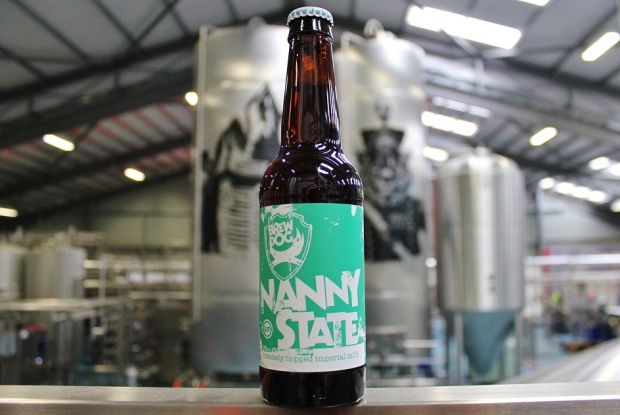
The only craft brewery we can find making a well-publicised non-alcoholic beer is Scotland’s Brewdog. At 0.5% their Nanny State, an imperial mild, has been designed to shake up the trend for tasteless alcohol-free booze. “We use Pale Ale malt in Nanny State for the majority of the sugars, and then we bump up the malt bill with specialty malts like Rye, Crystal and Caramalt,” says Brewdog brewer Charlotte Cook. “These add flavour, colour and mouthfeel without increasing the Original Gravity of our wort too much. We also hop it to hell and back, which is pretty uncommon with low ABV beers!”

Image

It’s interesting that of all the big-name breweries it is Brewdog who are making a low-alcohol beer. The Scottish brewer has repeatedly hit the headlines for their uber-strong brews, including Tokyo* (18.2%), Tactical Nuclear Penguin (32%) and Sink the Bismark (41%). Although most of these are intended to be drunk in spirit measures and are seen as a new way to enjoy beer, the brewery certainly attracted a lot of negative press for these concoctions (a motion was even brought in the Scottish Parliament in an attempt to ban Tokyo*). So is this the only reason that Brewdog felt the need to make Nanny State – as yet another middle finger to the man?

“Initially, this was something that influenced brewing Nanny State, which is an extreme of low alcoholic beers,” admits Sarah Warman, Brewdog’s  Digital Marketing Manager. “We were proving a point and standing our ground, showing that flavour and complexity don’t have to be compromised by ABV, and that even a low ABV beer would be consumed in an appropriate fashion.” Charlotte defends the decision, pointing out the brewery is not just about high-percentage headline-stealers: “BrewDog really excels at brewing comparatively low ABV beers. Dead Pony Club (3.8%) and How to Disappear Completely (2.8%) are both great examples of this.”

Image

Nanny State has been phenomenally popular for a low-alcohol beer, both at home and abroad. “It has a massive audience considering its low ABV! It flies out of our online shop and bars when we have it in stock, and our international markets, particularly those in Scandinavia, really dig it,” says Sarah .”Because it offers a low ABV without scrimping on flavour and bitterness, it’s ideal if you want to stick with something relatively sober whilst enjoying a proper, flavoursome beer.”

“I think most non alcoholic beers taste so awful, so that I am reminded for every sip, that I am not drinking proper beer!” – Kjetil Jikiun, Nøgne Ø co-founder

Given Brewdog’s enthusiasm, ICIP is surprised that more breweries are not jumping on the bandwagon. Isn’t it a bit of an untapped market? “It’s not the easiest process to make a low ABV beer,” says Charlotte. “With such little alcohol flavour, you really have to work to balance the beer out well. There is still a negative image around it – to a lot of people, you’re not seen as fun if you’re not drinking, which is an unhealthy and unproductive attitude which needs to change. If people knew they could still have a great beer, and not get drunk, or take a break from higher ABV beers, then their popularity might increase.”

ImageA bit of speedy Googling reveals that low-alcohol beers are much more common in Europe. In Germany especially, most of the main breweries, such as Erdinger and Bitburger, offer an alcohol-free version. There also seems to be plenty of experimentation – for example, Danish brewer Mikkeller has produced a 1.9% hefeweizen, Drink’in the Sun, and Norwegian brewery Nøgne Ø has been working on a non alcoholic ‘Inferial Stout’: “Inferial Stout is one of few unfiltered non-alcoholic beers (if not the only one) to go through a normal primary and secondary fermentation,” says co-founder of Nøgne Ø, Kjetil Jikiun. “We have made it once, as a prototype, but need to wait until we have a pasteurizer before we can regularly make and sell this product with an acceptable shelf life.”

So if the likes of Brewdog, Mikkeller and Nøgne Ø – all well-respected brewers – believe that it is possible to deliver on flavour despite the lack of alcohol, maybe it’s attitudes that need changing. What can we do to remove the stigma of drinking low-alcohol brews and stimulate demand? We’ll be looking into this in part two.

– PS

Down by the river – an afternoon at Sambrook’s Brewery (part two)

DSC_0007(If you missed part one, read it here!)

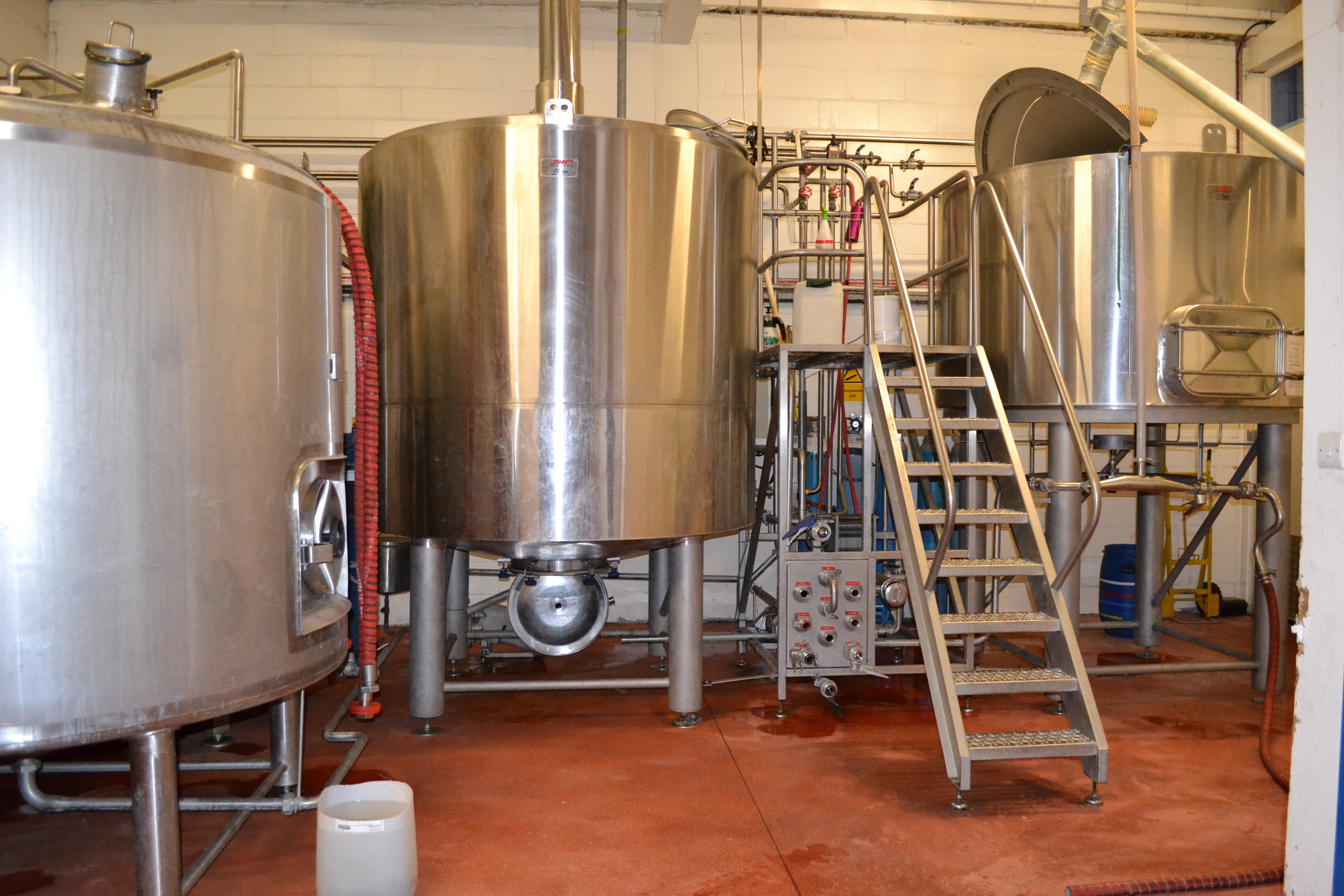
Having exhausted all the options at the bar, we follow Duncan down into the brewery itself, situated in two large units a stone’s throw from the River Thames. Sambrooks currently produces around 50,000 pints of beer a week, making them the fourth largest brewery in London after Fullers, Meantime and Camden Town. It is astonishing what they have achieved when you compare their original investment to other brewers, and talking to Duncan, it is easy to see why this is. Every step in Sambrooks’ development seems to have been planned and thought through meticulously, and Duncan obviously keeps a close eye on the competition. Of another London brewer who invested substantially more for the same output, he laments: “What they did was just ludicrous. I dream of what we could have done with £2.5m”. Of a certain anarchic brewer who have recently gone on a share sale drive, he notes: “they raised £2m only two years ago, and they’ve spent it all, with no return. They’re not making any money. They’ve invested all this capital expenditure but it’s not generating. They’re practically giving their beer away. That’s the accountant in me. I was really shocked.” By comparison, his ambitions have been more realistic: “The first year was a tricky year for us. It was all about cash-flow management. We had plans to market the brewery and employ more people earlier, but we couldn’t. The first year was very much about damage limitation.” This cautious approach seems to have paid off. Their next investment, Duncan says, will be to install silos so that the malt can be delivered straight from the truck, saving time unloading nearly a ton at a time in individual sacks.

Sambrooks is obviously proud to stand a little apart from the trendy east London beer boom, with its traditional pump clips and sensibly sub-5% ales. Its only arguably ‘bridge’ product between real ale and craft is the kegged unfiltered and unpasteurised Pale Ale, launched last year. “When we first started, the marketplace was entirely different to where it is now,” he says. “East London is a real hotbed of interest, with so much happening over there, but London is massive. Do we put resource into trying to get our products into that hip, happening crowd? I said to my head of sales – to be honest, let’s just focus on the entire tranche of all the way down the river Wandle,” says Duncan. “Our target market is your local juicer where they have two or three hand pumps, where you have a pint of Wandle with a roast. We still want to produce the likes of Battersea Rye so that we’ve got something to sell into the craft pubs, but for us that’s not where we do most of our business.”

DSC_0013

So where does this leave women, ICIP wonders, given that the craft scene is usually seen as being more women-friendly? Don’t breweries, especially those which seem to be as business-savvy as Sambrooks, see women as an untapped market?

“A lot of breweries are looking at whether there is a golden bullet to try and attract women,” Duncan admits, “but my opinion is that there is not. The only way that we as an industry are going to attract more women is to make trying beer easier.” We ask about his experiences of female visitors to the brewery. He thinks that if you exclude the not-particularly-representative stag parties, women make up 30-40% of the tour members – but often because they are dragged along by their boyfriends and husbands. “If we run a brewery tour, all the women stand around on their iPhones at the back, thinking ‘why am I here?!’. But if we can get them engaged and sampling, you end up with a circle of women at the front going “I never realised that tasted like that, and I looked at the pump clip and I wouldn’t have drunk it.”. The example is Junction – they see a dark red pump clip, a dark beer, and it’s ‘no’. And they see the Pumphouse Pale Ale – yellow and lighter – and they go ‘yes’, whereas I would say it is much more bitter and most women are not drinking this sort of beer.”

Does he think the traditional image Sambrooks has strived for alienates women drinkers put off by the CAMRA old-boys’ club image? “I don’t actively target women, but I don’t discourage women. I hope the branding is relatively general and neutral. It’s about the beer, trying to make it approachable for people so they say it looks nice, care has been taken with the pump clips, you recognise the brand.” ICIP asks what he thinks of the suggestion that the good old-fashioned pint glass puts women off. “There’s a lot of evidence that shows it changes how you drink. A glass with a big open end will be good for a beer majoring on aroma whereas a flute will be better for flavour. So actually it does change your perception of the beer. “ But Duncan demonstrates an in-depth understanding of the relationship between brewer, consumer and publican, and the issues this raises: “The challenge you’ve got with glassware is pubs. There’s a perception of a full pint. And the problem with that is it limits your glassware.” It seems that there is only so much a brewer can do to attract women to its product.

As we wrap up our afternoon at Sambrooks so that Duncan can get home after what was no doubt a typically-busy week at the brewery, he reflects on what inspired him, and ultimately what makes Sambrooks tick. “I have definitely come at brewing from a consumer perspective. I’ve never done any home brewing. I’ve never even had any aspirations to do that. I’m purely a drinker,” he says, matter-of-factly. “I love trying different beers. But ultimately my favourite beer will always be Wandle. What I love most is going to the rugby at Rosslyn Park, I’ll drink circa ten pints… and I walk home, and I have a fantastic day, and I drink a beer which I love.”

It’s this honest simplicity which we loved about Sambrooks, and we have a great deal of respect for what they have achieved in just five years. A traditional brewer with a modern twist, very aware of the market in which it resides and committed to producing excellent products. And who knows – if things don’t go too well in Tesco, (which seems unlikely), it sounds like they could have a pretty good following in Denmark already.

DSC_0003– PS