Monthly Archives: November 2013

Back to school – an interview with Jane Peyton

Jane-Peyton

Beer made out of Christmas trees? Booze and witchcraft? All in a day’s work for author, sommelier and School of Booze founder Jane Peyton. We caught up with Jane this week to hear all about her work spotlighting British hops; learnt how and why women went from prolific brewers to a beer minority; and were treated to an excerpt from her new book Beer O’Clock.

It Comes In Pints: Your first beer – we’ve been told – was a pint of Tetley Mild. Can you tell us what your top beers are today?

Jane Peyton: It depends on my mood, the weather and reasons for drinking (i.e. quaffing or sipping) but beers I go back to again and again are:

ICIP: Have you found your tastes have changed over time?

JP: Yes – I really like sour beers – gueuze and Red Flander ale such a Duchesse de Bourgogne. When I was younger I was not keen. I also like big fruity barley wines, whereas 10 years ago I was not a fan.

ICIP: You have worked on some collaboration brews, most notably with Brewsters, Fuller’s, Ilkley Brewery. How did you make the jump from drinking beer to brewing it?

JP: There has been a trend for the past few years of some breweries inviting beer writers/sommeliers to collaborate/co-create brews. It’s great fun for the non-pros and hopefully fun for the breweries too. It brings in new ideas to a brewery for brews or ingredients that the brewer might not otherwise have thought of. I’ve been lucky enough to have been invited to collaborate on brews with several breweries from giants such as Fuller’s, smaller operations such as Brewster’s and Ilkley Brewery, and brew pubs such as Brewhouse & Kitchen in Portsmouth. And it is so fascinating for a beer lover to have chance to experience up close the magic that goes into creating their favourite drink.

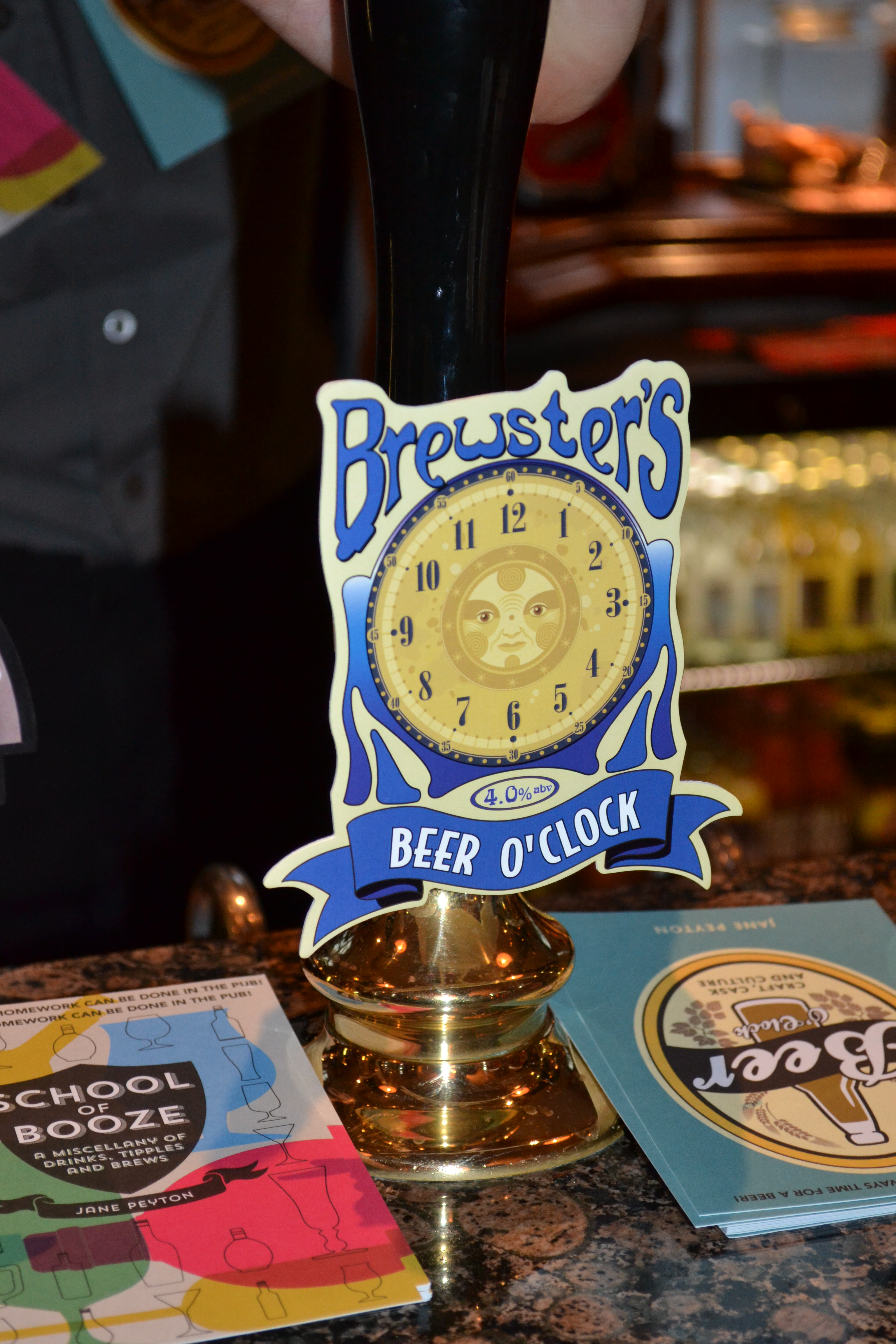
ICIP: Beer O’Clock, the beer brewed for the release of your new book of the same name, was a green-hopped beer, which is quite a rare style due to the short-time frame available to use the fresh hops. What made you decide to go for this type of beer for the launch of the book? Does it have special significance for you?
DSC_0026

JP: I brewed the beer with Sara Barton, owner of Brewster’s and current British Brewer of the Year. I wanted to create a delicious golden coloured session beer that showcased how amazing English hops are.  I wanted the beer to have a single varietal hop in it so drinkers could think: “wow – one single hop can do all this for aroma, flavour and bitterness.” (Most British beers have between 2 and 4 different varietals of hops in them).

This meant finding a really significant hop.

I had other requirements of the hop too – I wanted it to have been developed by Dr Peter Darby, the world’s leading hop breeder (he is an Englishman based in Kent), for it to be grown on Stocks Farm in Worcestershire – this farm is owned by Ali Capper and her husband. Ali’s farm grows enough hops each year to make 45 million pints of beer. Ali is the publicity manager for the British Hop Association and is a great ambassador for the beauty of British hops.

And finally, to make it even more tricky in finding the perfect hop, I wanted to use green hops. This means that the hop is harvested the day before brew day and shipped overnight from the farm to the brewery where the hops must be used within hours otherwise they start going mildewy, ie. the hops are fresh rather than dried as most hops are. Green hops can only be used at harvest time, and hops ripen at different rates and at different times so the logistics of getting the hops is not easy. The hop we used for Beer O’Clock was ‘First Gold’ and it ticked all the boxes of my criteria. First Gold is also the world’s first hedgerow hop so it is more sustainable to grow as it is more resistant to hop disease and needs less spraying. It is a spectacular hop in aroma and flavour and I was so pleased with how the beer turned out. That is all down the brilliance of Sara Barton.

ICIP: Are you planning any other collaborations in future? Are there any ideas or particular types of beer you want to experiment with?

JP: I will be doing a collaboration with Ilkley Brewery in January. We have not decided what style yet but I have a few ideas. The last brew I did with Ilkley Brewery is called The Norseman and contains Christmas trees. It was just awarded Champion Beer of Otley Brewery (Yorkshire) and is now part of the main range of Ilkley Brewery’s beers.

I will also be brewing again soon at Brewster’s but have not decided what to do yet. The season will influence what style we brew as mainstream drinkers’ tastes tend to move with the weather – i.e. darker heavier beers in winter and lighter hoppier brews in warmer weather.

ICIP: As an historic booze expert you cover the cultural history of a range of drinks other than beer (and discuss them at length in your book School of Booze) – is beer your top tipple? Does its history interest you in particular?

JP: Yes, beer is my passion. I really like sparkling wine too but if I only had one choice of booze it would be beer. Beer also has the most significance to early human development and history than any other alcoholic drink. Its history is very colourful. Throughout history beer was a drink for everyone – whereas until recently, wine was for high status people. Consequently there are much more interesting stories about beer history than there are about wine history, or the history of any other alcoholic drink. Beer and wine (and mead) are the alcoholic drinks that have been drunk for longer than any other booze.

ICIP: We’ve read numerous articles and interviews where you describe the connections between ale-wives and witchcraft. Why do you think women have gone from being so prominent (70 per cent of brewers!) in brewing to barely being associated with even drinking beer over just a few hundred years?

JP: In England this was to do with the fact that beer was originally made at home by women. Surplus ale would be sold to people who did not brew at home. After the Black Death the demand for beer increased because labourers could get higher wages. They wanted to spend their extra money on ale. Around the same time England started fighting wars overseas. Soldiers received eight pints a day as their ration. This meant that a regular and secure supply of ale/beer was essential. Women brewing at home could not brew enough beer. From then on beer was made in bulk in breweries. Women generally did not work outside the home, they could not get credit from moneylenders to build breweries, and they could not own their own property (it belonged to their husbands). This, and the fact that beer became a lucrative industry that men wanted to get in on sidelined women as the primary brewers.

See here for an article I wrote for Stylist online about the link between witchcraft and female brewers.

ICIP: As a beer sommelier you know a lot about beer and food matching – can you explain some of the basic principles of pairing food and beer for a novice?

JP: Here is an excerpt from Beer o’ Clock to explain some of the guidelines of beer & food matching.
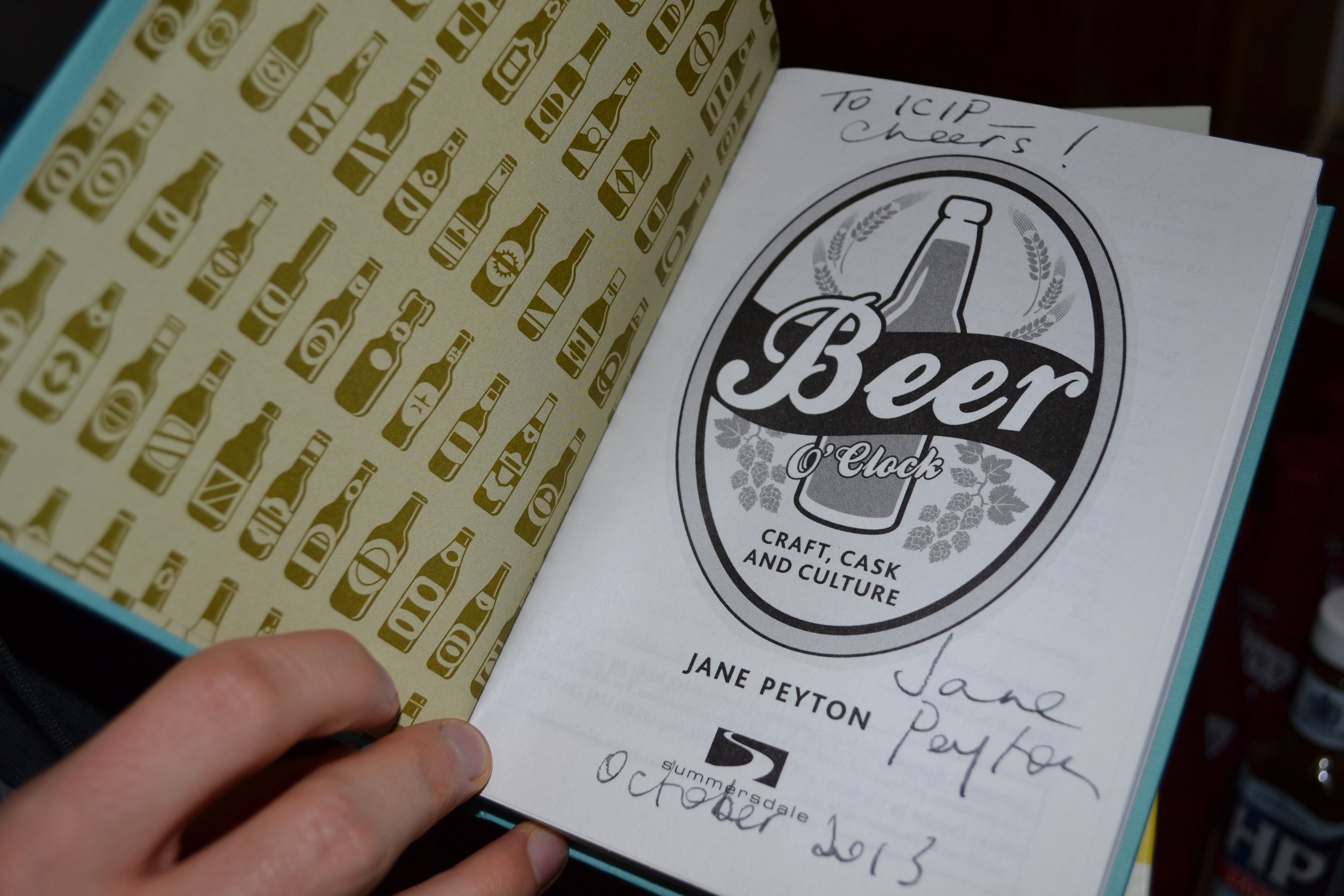
DSC_0032“Why is beer so perfect for matching with food?  For flavour and texture but also for the practical fact that beer is up to 95% water so it refreshes the mouth and clears the palate – and that is the number one reason why we have liquid with our food. Beer contains carbon dioxide an efficient palate scrubber which prepares the mouth for the next morsel. Even real ale with no discernible bubbles contains dissolved CO2 which adds a note of invigorating acidity and lightens up the richness of food. Hops contain varying degrees of bitterness and they also act like knives cutting through flavour and texture and both of these properties are refreshing.

When pairing beer with food this is the mantra – Cut, Complement, or Contrast.

Cut: choose a beer that cuts through the flavour or body of the food.  For instance fish & chips with a crisp refreshing beer to cut through the fat, and citrus hops to complement the fish.

Complement: choose a beer that will complement the flavours of the food. For instance, spicy food with a beer containing spicy hops.

Contrast: choose a beer that is a complete contrast to the food. For instance big flavoured chocolatey porter or stout with delicate salty oysters.

But rules can be broken and it is fun to experiment to see which beers work with certain dishes.”

ICIP: What beers are on your Christmas list? Are there any beers you can recommend to match with Christmas fare like the turkey dinner, the Xmas pud…?

JP: Lots of beers for Christmas dinner!  I would go for a flute of Deus (a French beer made with Champagne yeast) as an aperitif before dinner, a hoppy pale ale for the main course, a big barley wine for mince pies, porter for Christmas pud, or Christmas cake and Stilton cheese, Belgian kriek or Frambozen for trifle. Fuller’s Vintage Ale in a brandy balloon or snifter glass on its own as a digestive.

Beer O’Clock: Craft, Cask and Culture and School of Booze: An Insider’s Guide to Libations, Tipples and Brews are available now.
Beauty and the Yeast: catching up with Beer Beauty’s Marverine Cole

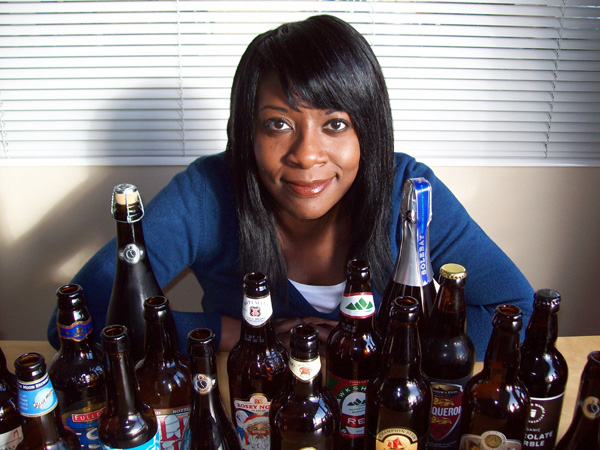
Marverine Cole - Beer Beauty - woman with bottles of real ale (2) This week ICIP has been lucky enough to chat to another of their beery heroes – Marverine Cole of Beer Beauty. Marverine is one of the eight female Beer Sommeliers in the UK as well as an award-winning beer writer, TV presenter and journalist, so we were very excited to ask her a few questions about her love of beer and her recommendations for our boozy Christmas lists.

It Comes In Pints: We read that you used to be a red wine drinker. Did you have one pint that caused an epiphany or was your love of beer a slow development?
Marverine Cole: It was one sip from a half pint of Beartown Brewery’s Peach Melbear which switched a light blub on in my head. I was hooked on finding other tasty beers with such impact ever since that day.

ICIP: You are a bit of a trailblazer for women who love beer – the first woman to win a gold award at British Guild of Beer Writers, one of only 8 female beer sommeliers in the UK – have you seen things open up for women beer fans since you’ve started being interested in beer?
MC: I think blogs like yours show there’s a real thirst for beer amongst women. We want to know more about it and where we can get hold of some good stuff! The fact that I’ve appeared on female-focussed shows like The Alan Titchmarsh Show and This Morning with Holly Willoughby openly exclaiming her love of beer shows the tide is turning. I’m hugely excited by the fact that more and more women are getting interested. The Cask Ale Report also shows there’s an army of women who regularly enjoy cask ale too.

ICIP: You write a lot on your website, Beer Beauty, about how you love to convert women to beer. How do you go about introducing a die-hard wine and spirit drinker to beer? Is there a style or brand you tend to start them with?
MC: I’ve never been one to say forsake all other drinks and drink beer. I still enjoy red wine and I love gin and vodka. I drink what I fancy when I fancy, although the social situations you’re in and the people you’re with might change the playing field.
I would start anyone on Fuller’s Honeydew – the sweetness of the organic honey coupled with the light bitterness and the punch of it being a 5% beer ticks many boxes for women who are beer-curious. The rich golden colour, the aroma, the taste and the alcoholic kick all nod towards a female palette – we like strong drinks with something about them. We don’t all want a pale, weak tasteless ales – of which there are many on the market, sadly. I think it’s more about making suggestions to women of beers I’ve loved and like the taste of in the hope that they will experiment and try some. I have a Top Ten Beers for Brew-bies on my website which is my Starter For Ten for anyone – male or female – who wants an idea of where to start.

ICIP: What are the most common misconceptions you hear from women about beer?
MC: That it’s fattening, is full of calories and fat and cholesterol and that all beers are bitter.

ICIP: You must taste hundreds of beers, but do you have a personal favourite style or type of beer that you hanker after?
MC: I often can’t say no to an Imperial Russian Stout!

ICIP: What breweries do you think are making the most exciting and delicious beer at the moment? Do you have any beers that you would recommend?
MC: I love Beavertown Brewery in Hackney – terrific beers, superb hook up with Dukes Brew & Que and, of course, the West Midlands connection tugs at my heartstrings too because Logan is a Midlander, like me. I love Sadler’s Ales from the Black Country – their Mud City Stout is extraordinary. I think Crate, another Hackney brewery is pretty happening at the moment too.

ICIP: As a beer sommelier you know a lot about beer and food matching – can you explain some of the basic principles of pairing food and beer for a novice?
MC: I always aim for a beer to compliment food and not contrast or fight it. But it obviously depends on the flavour explosion you want in your mouth. I think the less pronounced the spice or bitterness in a beer, the more versatile it will be. I love a good clean Pilsner-style beer with herby pork loin, whereas a really hard-hitting bitter IPA will nestle perfectly next to a spicy Thai curry. A fruity beer might work well with a dessert – I always like to pair something like a Belgian cherry wheat beer with a sour, sharp cherry tart, maybe with swirls of chocolate on the top or served with chocolate ice-cream!

ICIP: What beers are on your Christmas list? Are there any beers you can recommend to match with Christmas fare?
MC: The best and most versatile recommendation for a Xmas table beer is Bosteel’s Deus at 11.5%, which I took on This Morning last year. Produced in the way Champagne is, it’s pineapple-like on the nose, with champagne like bubbles in the glass. Serve it in a flute; it’s so special that it works with both the spiciest of meals and the most delicate of flavours. Get it from a specialist beer store. Ask them to order it in NOW! As for others – I’m waiting for a few more Christmas beers to arrive but I’ve been wowed by both the limited edition Thornbridge Imperial Raspberry Stout (10%) and the BoxSteam Brewery’s Evening Star (7.5%) – a new strong dark porter from them.

Check out Marverine’s website, Beer Beauty, and follow her on Twitter @BeerBeauty and @TVMarv

Nicholson’s Autumn Beer Festival

Ah, the autumn beer festival season. Pavements run with beer, plastic pint glasses crunch underfoot, air thick with the smell of barbecuing street food. You’re more likely to be rained on than you are at a summer festival, but you’re also less likely to keel over from dehydration after the 11th pint.

Two of Britain’s biggest beer chains have run “beer festivals” within weeks of each other this autumn: Wetherspoons (ran October 16-31) and Nicholson’s (running 21 October – 17 November).

DSC_0023

“Beer festivals”, we say: by nature, they’re short, packed, ticketed, temporary affairs. Pilgrimage-spots for the beer-lover. Part of the fun is sampling a one-off brew and, for the London-based boozer, luxuriating in the week when some of the best ales in the country come to you (travel outside the north circular? Me? What?). Can big chains recreate the magic of the summer beer festival? Can you have as much fun sprawled on the floor of your local ‘spoons as you can in the long, lush charred remains of grass, cigarette ends and syringes in London Fields?

ICIP went to the White Horse in Soho, a Nicholson’s pub, to find out.

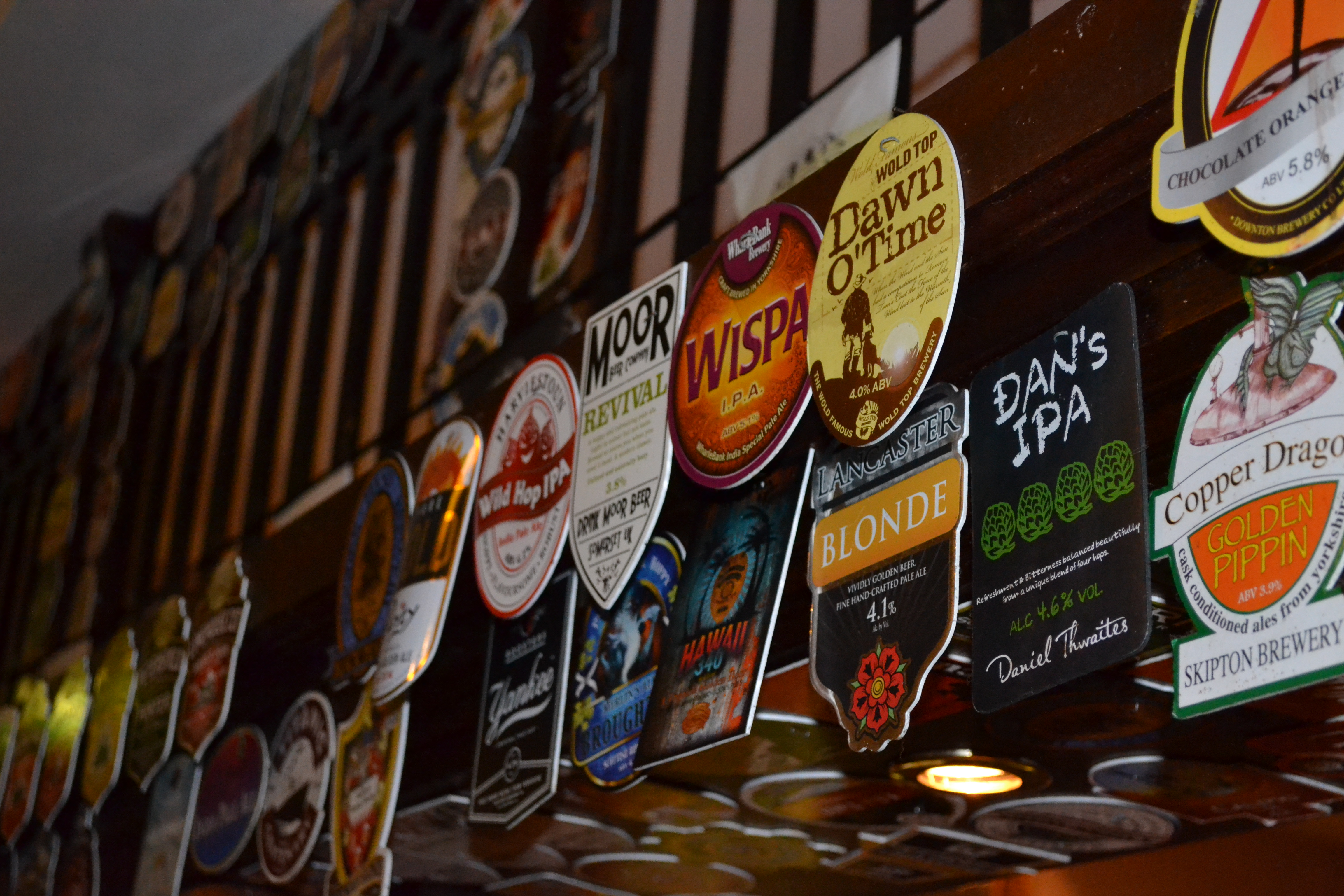
White Horse-13This year’s autumn festival marks the chain’s 140th birthday and showcases 50 cask ales (and ciders) on rotation. Your local will change the beers it has on offer every week or so – and will do so in consultation with nearby pubs to make sure one area isn’t flooded with the same IPA. Nicholson’s Cask Masters, the company’s trained beer experts who select the beers on sale in pubs, are on hand in each pub to talk punters through the range and offer recommendations.

The brand does a great line in nostalgia, buying up old British pubs in prime locations for (at least in London) the ultimate Dickensian drinking experience. It’s given them some fantastic locations in London – Soho, the West End, the City – but, as Nicholson’s Assistant brand manager Ben Lockwood tells us when we meet him for a glug-through the beers on offer, it doesn’t always make it easy to accommodate events us excitement-hungry Londoners require, like a real ale festival. And it is these excitement-hungry young drinkers that Nicholson’s hopes to attract with its IPA-heavy festival. Sales of cask ale are on the rise, Ben tells us, and the chain has seen a shift in the age of its punters to a younger, 25-34 audience.

DSC_0024Set around an old-style public bar, which dominates the centre of the pub, the White Horse creates what Ben describes as a traditionally British experience, particularly when coupled with the expertise and local knowledge of the landlord – Nicholson’s well-trained staff, who Ben says are encouraged to talk to customers and offer them samples. But – in the White Horse, at least – you run the risk of entering through the wrong door, having your view of the festival obscured by the bar, and leaving none-the-wiser. This is one potential pitfall of holding a festival in this kind of environment. This is the tradeoff, we guess, for holding a modern beer festival in central London in an environment built for 18th century gin-sippers.

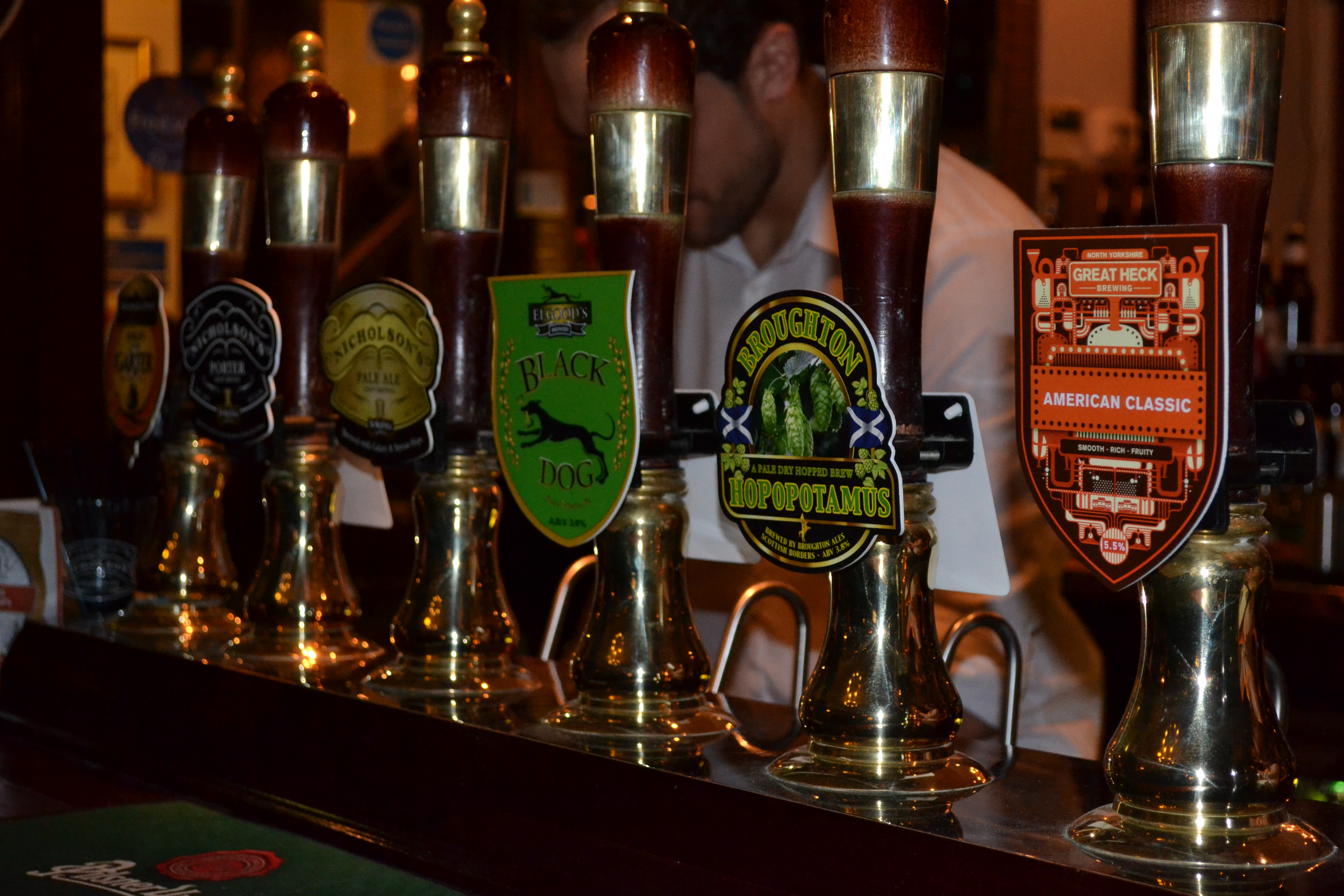
However, this certainly doesn’t affect the quality of the brews. We kick off our tasting with a half of the stunningly delicious Great Heck, an American IPA (5.5%). You can taste America in its breadth of the “c” hops – Cascade, Chinook and Columbus among others – but it’s well-balanced and warm enough to earn a place in an Autumnal line-up. Next up is Thwaite’s 13 Guns, another 5.5% stuffed with New World hops but brewed in Blackburn. It’s lighter than Great Heck – despite being the same abv – but as there’s a lot of halves ahead, this is no bad thing.

DSC_0021We wondered if Nicholson’s beer choices reflect the average punter’s beer taste – and particularly if they are mindful of the ever increasing number of women beer drinkers. “Times have changed,” Ben tells us. “Women drink what they want.” He isn’t surprised to hear we like dark beer – and remembers when a half of Guinness was the quintessential lady’s tipple – but says he would probably recommend something blonde and lemon-y, around 3.8%, to a first-time festivaller.

We move on to Nicholson’s own Porter, brewed by St Austell to a recipe from 1910, which makes an interesting change. Hopped with Fuggles and Styrian Goldings, it’s a rich, dark toasty beer. We were interested in the brewer’s choice of British hops, but Ben told us that a popular taste for zingy, new world hops is endangering home-grown varieties.

Feeling slightly guilty, ICIP tucked into his next suggestion – Broughton’s Hopopotamus (3.8%). Following the Porter it feels a bit lighter – this would make a tasty session beer. Although now the Amarillo, Cascade and Chinook taste less like grapefruit and more like GUILT. We finish off with a half that isn’t part of the festival – Cameron’s Gold Bullion (4.3%) – but makes for a light beer with a citrus-y finish.

Avowed cider newbies, we weren’t sure what to do when Ben offered us a parting half of Orchard Pig’s Explorer Bib (4.5%). ICIP wondered what we were missing when we walked straight past the wall of ciders at the GBBF – and, turns out, we were missing quite a lot. This cider is fragrant and smooth, packing more punch than you’d expect from it’s 4.5%.

We staggered out of the White Horse pub-based beer fest converts. It’s all too easy to sniff at big-brand endeavours like Wetherspoon’s festival – but corporate dollar, at least in Nicholson’s case, has devolved to local expertise (in the form of its Cask Masters), a great spread of beer. You’ve got almost a month to enjoy them – meaning there’s less of an excuse for panic-downing eight halves of whatever you can reach – and, crucially, you can have your fill without fear of being swept into the Thames by a passing seasonal hurricane.

Nicholson’s Autumn Beer Festival runs until 17th November.

– ED